At a glance
- Lisbon is steep enough that the city built funiculars and a public lift rather than argue with the hills. Several central streets are hard work on foot in either direction.
- Calcada portuguesa is hand-laid limestone and basalt, set by hand and polished smooth by use. It is beautiful, it is slippery when wet, and it shakes everything with wheels.
- The lanes of Alfama and Mouraria predate cars. Anything wider than a small van either cannot enter or spends the visit reversing out of somebody's doorway.
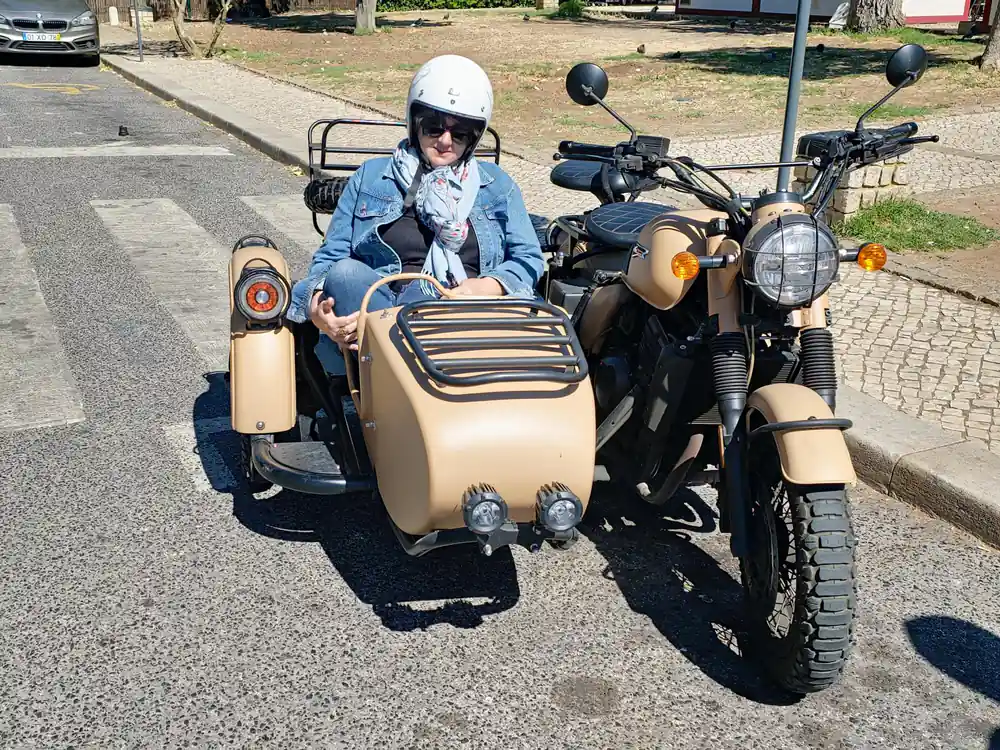
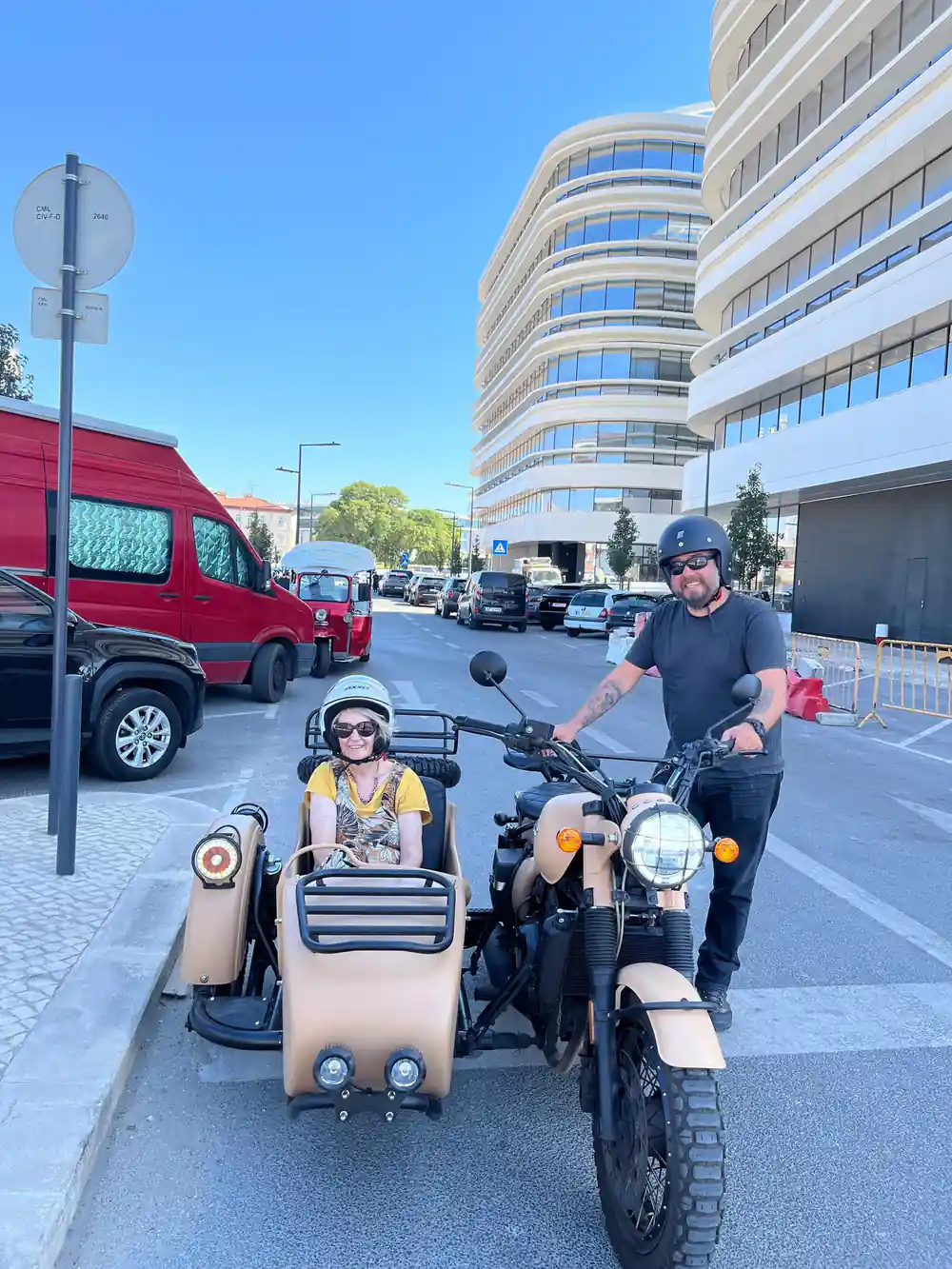
- Narrow enough for the lanes, low enough to feel the stone rather than fight it, and stable on three wheels where a two-wheeler would be nervous on a wet camber.
Seven hills, and what that phrase leaves out
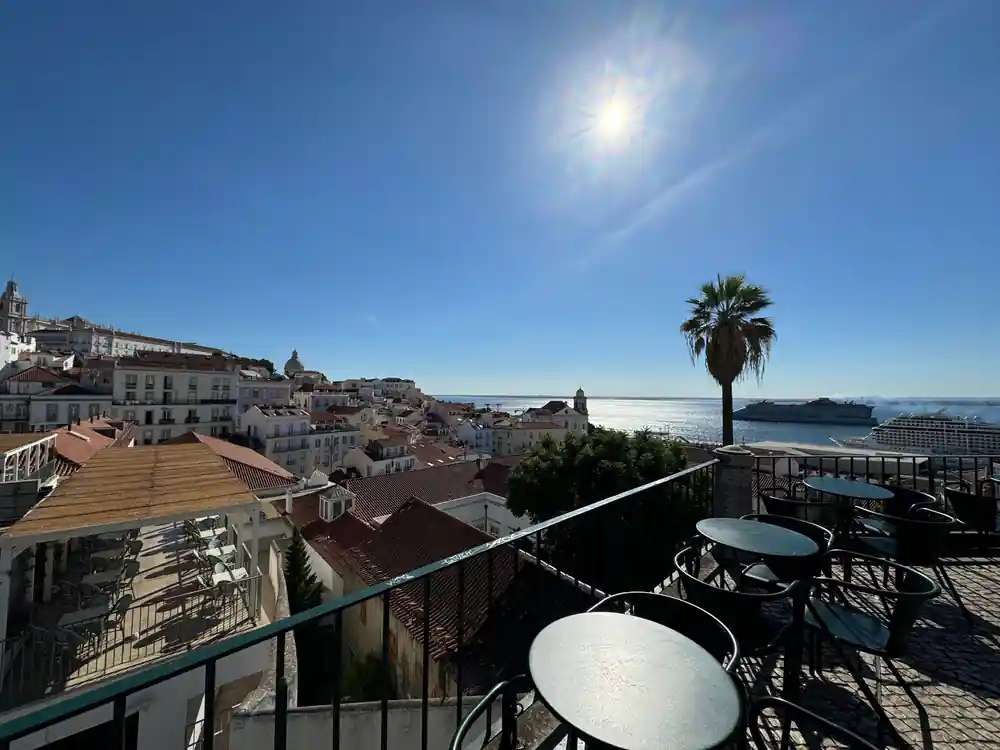
Lisbon is described as a city of seven hills, a convention borrowed from Rome and not to be taken as a survey. What is true is the shape it describes: a city that rises from the Tagus in a series of steep ridges with valleys between them, so that almost any journey across the centre involves going up, coming down, and going up again.
The consequence is that Lisbon never developed the flat grid that most European capitals grew into. Streets follow contours, or they give up and become stairs. Squares appear where a hill briefly relents. Neighbourhoods that look adjacent on a map are separated by a climb that turns a five minute walk into fifteen and a warm day into an ordeal.
This is why the city invested so heavily in machinery to defeat its own topography. The funiculars and the great iron lift in the middle of the city are not tourist attractions that happen to move people; they were transport infrastructure built because the hills were a genuine problem for ordinary daily life.
The paving, which is the other half of the story
Calcada portuguesa is the pale limestone and dark basalt mosaic that covers pavements and many streets across the city. It is laid by hand, stone by stone, by craftsmen using a hammer and a bed of sand, and the patterns range from plain to elaborate waves and figures. Nothing else gives a city quite this surface, and it is one of the reasons Lisbon photographs the way it does.
It also has consequences. Hand-laid stone is never perfectly flat, it settles unevenly over decades, and centuries of feet polish the limestone to a shine. In the dry it is grippy enough. In the rain it becomes genuinely slippery, which every resident knows and every visitor learns once.
For anything on wheels, the surface is a constant low-frequency shake. Suspension designed for asphalt has nothing useful to do with it. This is not a complaint about Lisbon; it is simply the condition under which any vehicle here operates.
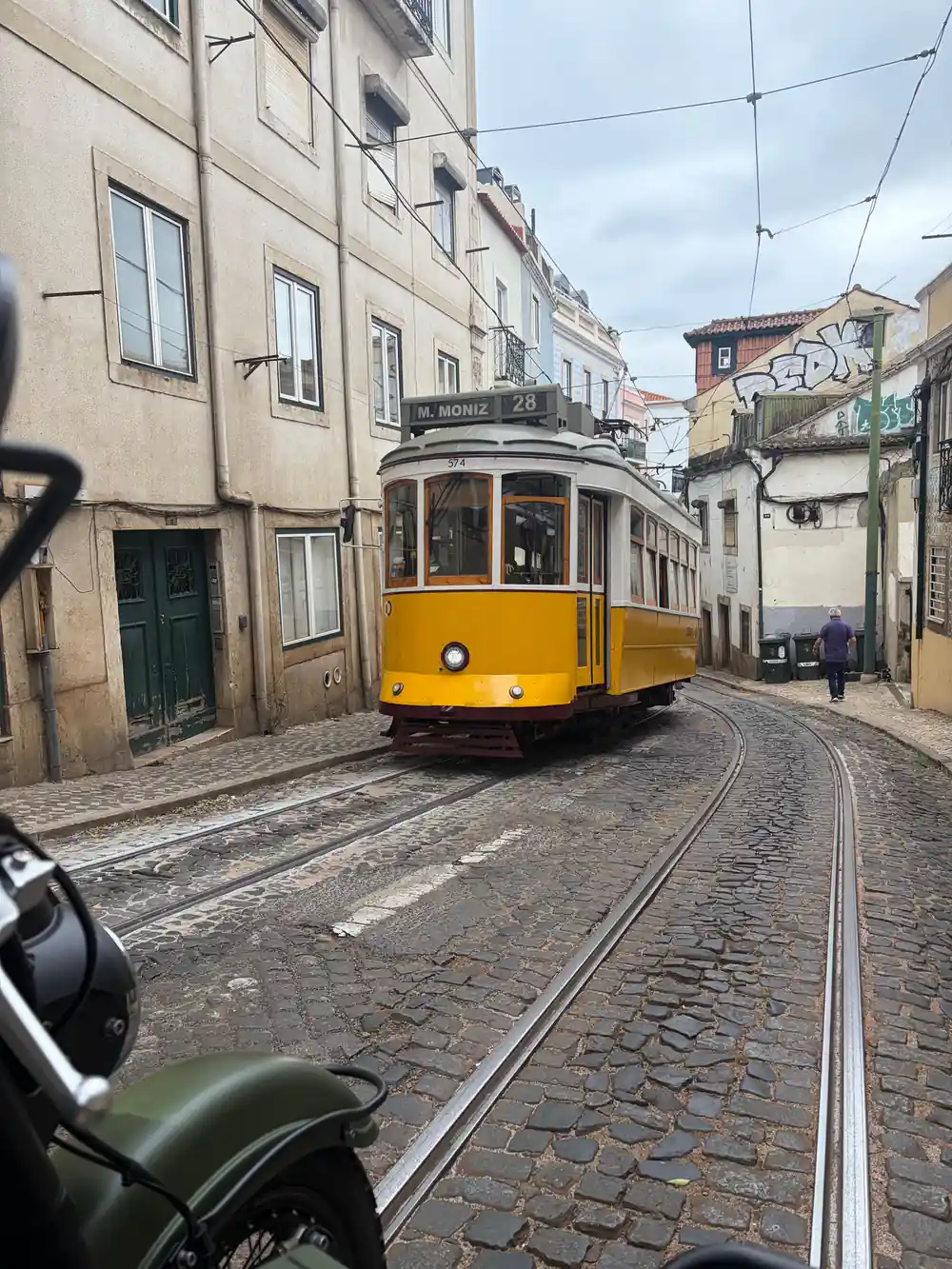
Hand-laid limestone, a serious gradient, and a lane the width of a doorway
Why most vehicles struggle
A coach is out of the question in the old quarters, and this is not a matter of difficulty but of geometry: it does not fit, and where it fits it cannot turn. Coach tours of Lisbon therefore operate on the wide modern avenues and the riverside, which is a legitimate way to see parts of the city and misses the parts most people came for.
A car manages more but not much more. The lanes of Alfama were laid out for pedestrians and pack animals, many are one way by necessity rather than by regulation, and residents park in them because they live there. A car in these streets spends a great deal of time stationary, reversing, or discovering that the gap ahead is narrower than the mirrors.
Walking works and is wonderful, and it is also the option that pays the gradients in full. Most visitors do a serious amount of it and reach a point in the afternoon where the next hill is simply not happening.
What three wheels do about it
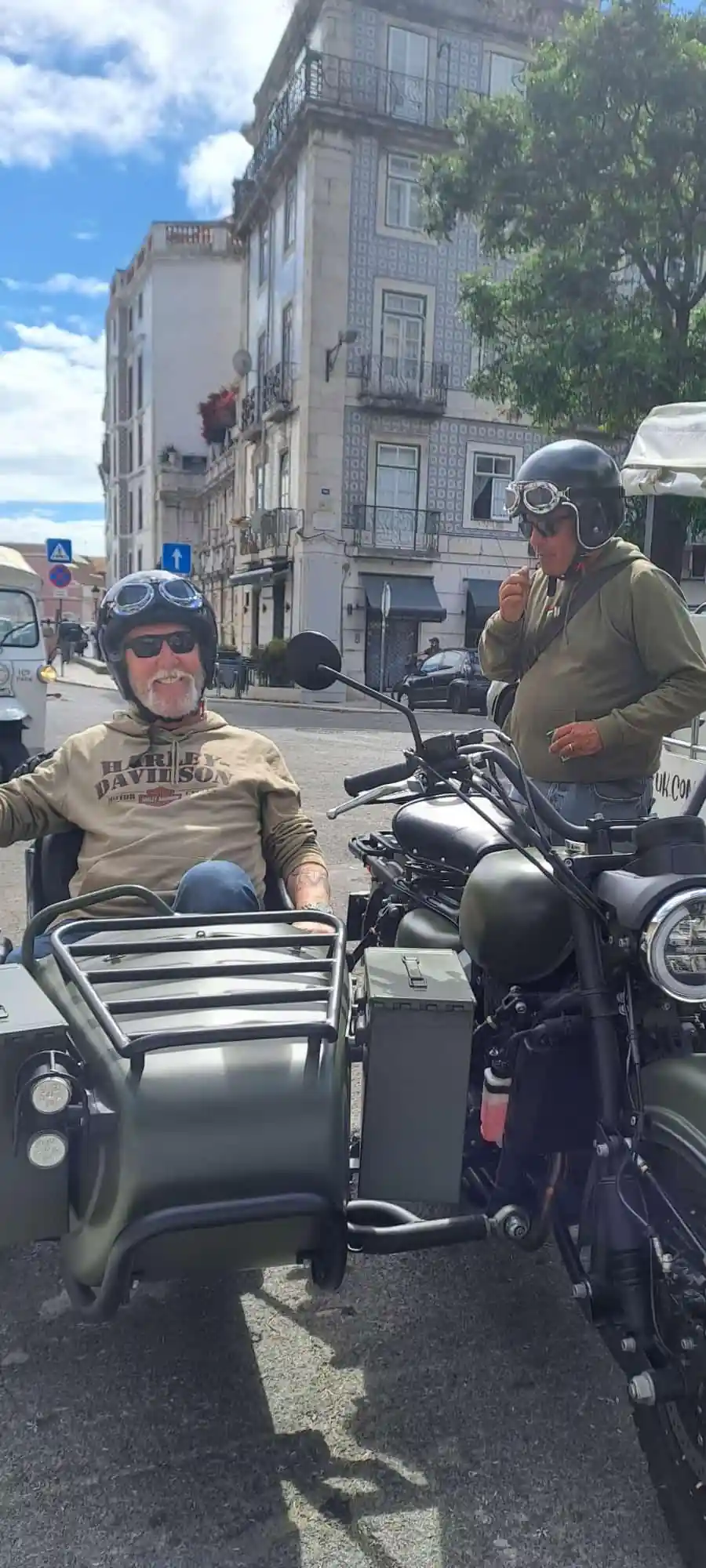
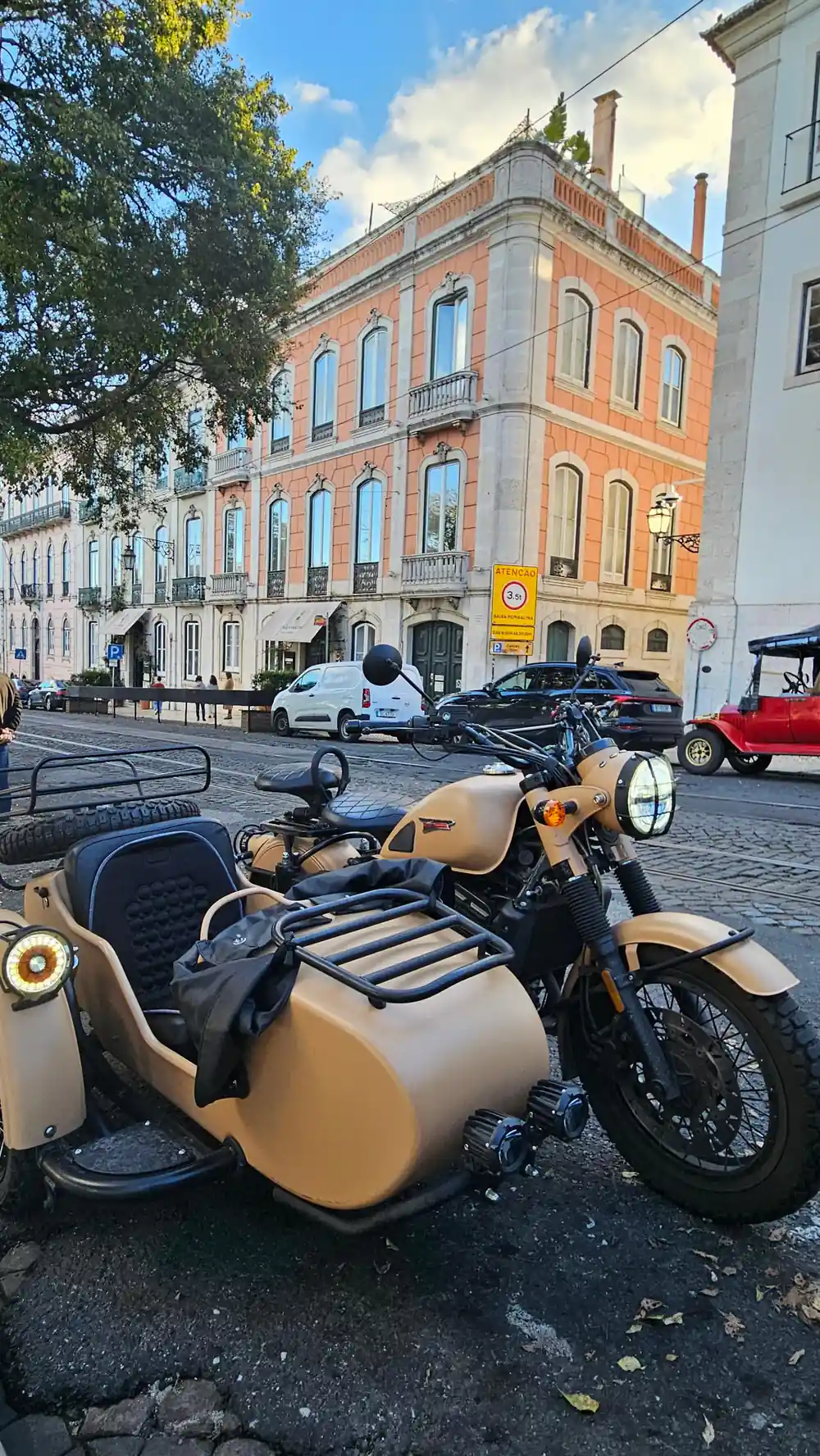
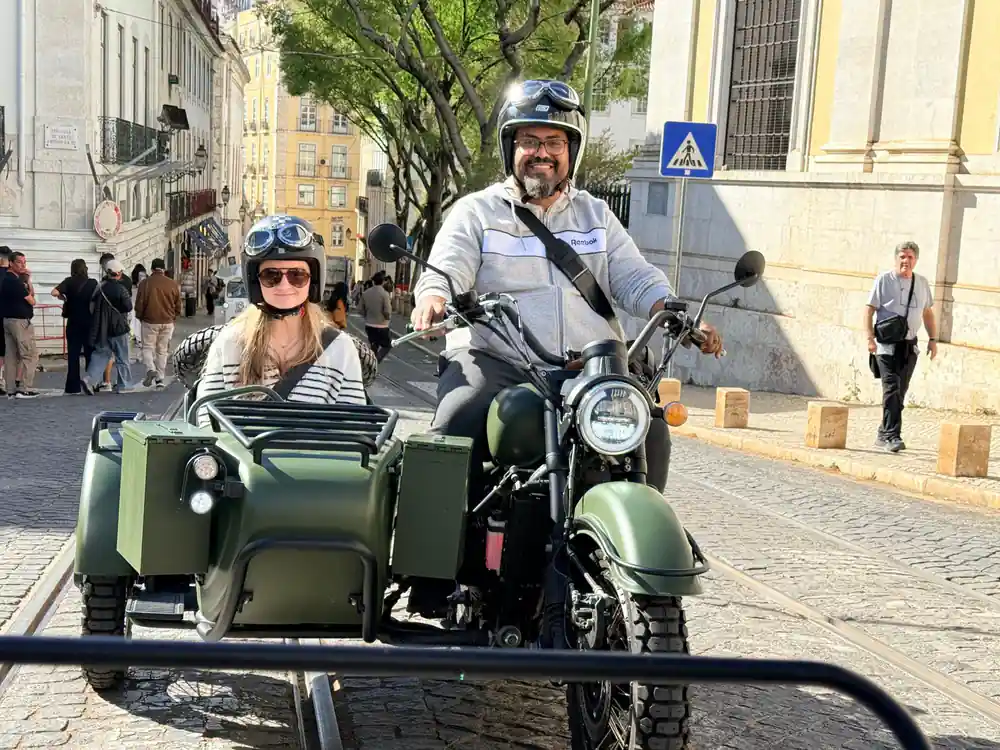
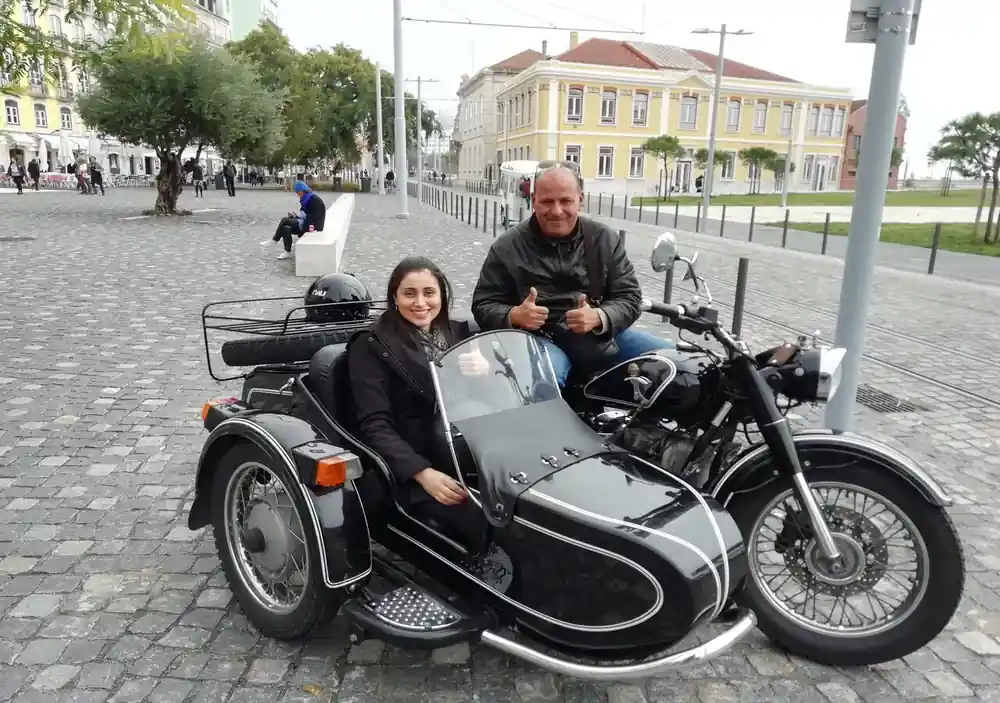
A sidecar outfit is roughly the width of a small car and considerably shorter, and unlike a car it can be manoeuvred by hand at walking pace when the situation demands it. That combination is what lets it use the lanes properly rather than skirt them, and it is why the route can include places a four-wheeled tour would have to describe from a distance.
On the cobbles, the third wheel is the advantage. A solo motorcycle on wet polished limestone on a cambered slope is a machine asking for trouble, and riders here treat those conditions with respect. An outfit cannot fall over in the same way, so it can take a wet cobbled hill at a sensible speed without drama.
The gradients are simply an engine problem, and an engine solves them. What the passenger notices is not effort but angle: sitting low in the chair on a steep street, you are tilted back or pitched forward far enough to feel exactly how severe the hill is, which is information a car conceals entirely.
1755
The earthquake of 1755 flattened much of Lisbon and produced the planned grid downtown, which is why the medieval lanes uphill feel so different.
The neighbourhoods this opens up
Alfama is the obvious case. It survived the earthquake that flattened much of the city, so its street plan is medieval rather than planned, and it is a maze of lanes, stairs and small squares stacked on a hillside below the castle. Almost none of it is navigable by an ordinary tour vehicle, and all of it is what people picture when they picture Lisbon.
Above and beside it, Graca and Mouraria offer the same character with fewer visitors, and the streets connecting them are exactly the kind of steep narrow links that reward a small vehicle. Across the valley, Bairro Alto and the streets below it are flatter in places and dramatically not in others.
The pattern in all of them is the same: the interesting thing is usually up a lane, and the lane is usually too small, too steep or both. A machine that can go up it changes what a three and a half hour tour can physically contain.
What this means for you in the chair
You will feel the stone. It comes up through the seat as a continuous texture, changing as the paving changes, and after ten minutes you stop noticing it as a nuisance and start reading it as information about where you are. People consistently describe this afterwards as one of the things that made the city feel physical rather than photographed.
You will also feel the gradients in your body rather than in an engine note. On the steepest streets the chair sits noticeably nose-up or nose-down, and looking along a road that appears to fall away in front of you is a specifically Lisbon sensation.
The practical advice is small: hold onto anything loose, and wear shoes you can stand on polished stone in, because you will be getting out at the top of these hills to look at the view.
Let the machine take the hills you have been avoiding
from US$116Reserve now & pay later