At a glance
- Your eye line lands somewhere near the waist of people on the pavement, which turns every building in Lisbon into something you look up at rather than across at.
- The chair is open. At any speed above walking pace you feel the air, and conversation mostly happens at the stops rather than on the move.
- The outfit does not lean, so corners are planted rather than tipped. On cobbles and steep cambers that stability is exactly what you want.
- People wave, children point and drivers give way out of curiosity. Being looked at is part of the experience and it takes about ten minutes to enjoy it.
The first two minutes
Getting in is the only genuinely awkward part and it happens once. You step over a low side, lower yourself into a seat that is closer to the ground than you expected, and find that your legs go forward into a footwell rather than down. There is usually a blanket. The driver steadies the machine while you do it and has watched several hundred people do the same thing slightly ungracefully.
Then the engine starts and you discover how much of the machine you can feel. The vibration comes up through the seat, the exhaust is somewhere behind your right shoulder, and the first movement is a surprise because it is sideways as well as forward. The outfit pulls away with a slight lean of its own that has nothing to do with you.
By the end of the first street it is normal. This is the consistent report from almost everyone: two minutes of novelty, then a complete recalibration, after which sitting a metre from the road at the height of a bumper feels like an ordinary way to see a city.
What low actually does to a city
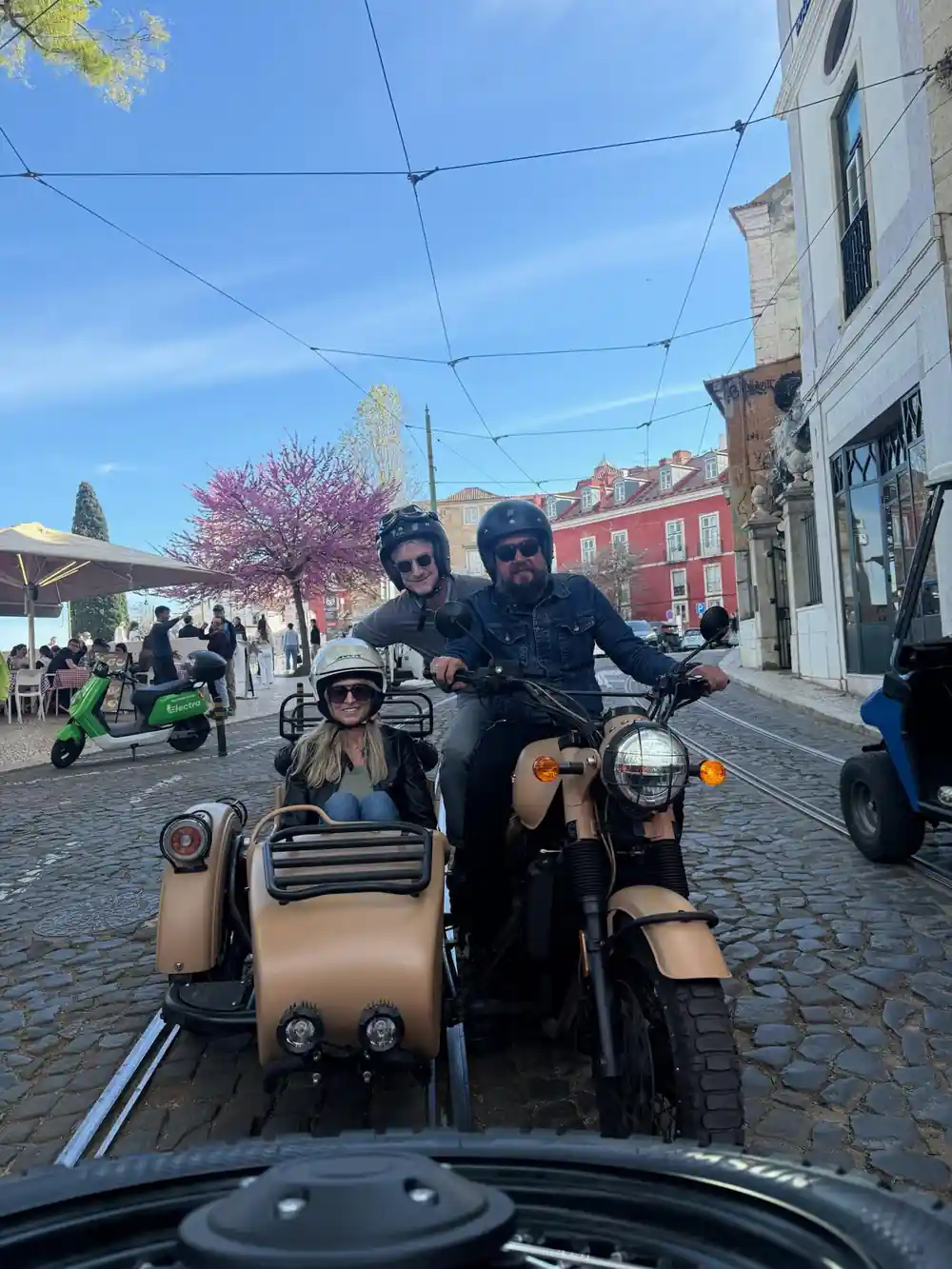
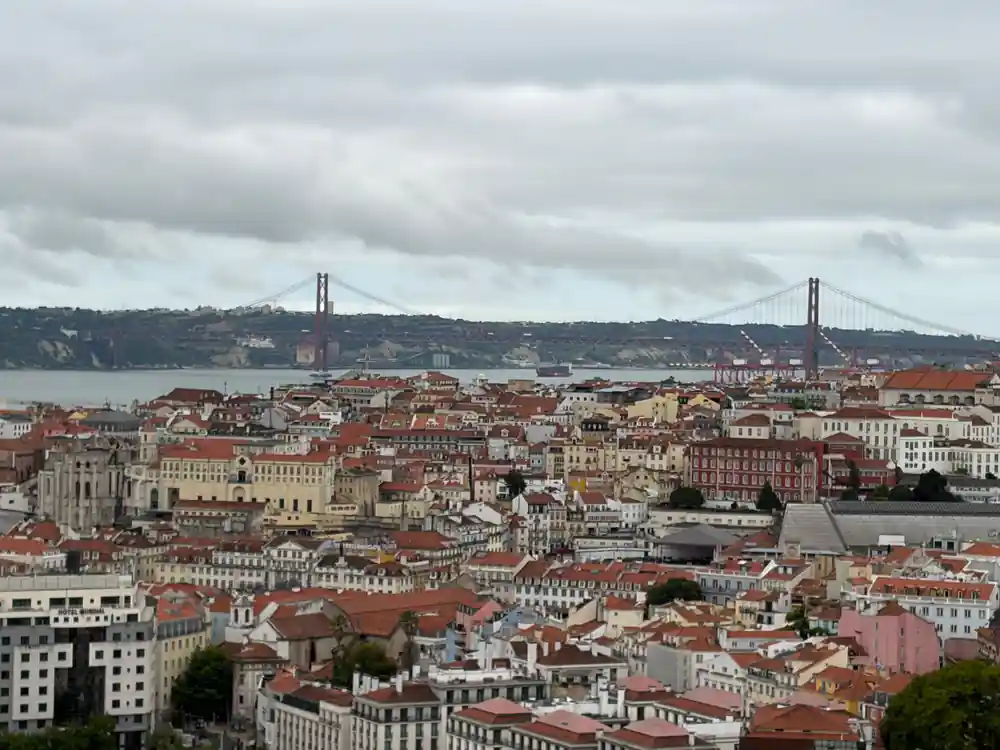
Height is the thing nobody anticipates. From a coach you look down on Lisbon and it flattens. From a car you look through a frame. From the chair you are underneath it, and the city goes vertical: tiled facades rising away from you, wrought iron balconies overhead, washing lines strung between upper windows, and the sky arriving in strips between the buildings.
It also changes the scale of the streets. A lane that a car would report as tight feels generous from the chair, because you can see both walls and the machine is genuinely narrow. The reverse happens on the wide avenues, where you sit noticeably below the traffic and are extremely aware of it.
Cobbles are the other consequence. Lisbon is paved in hand-laid limestone almost everywhere it matters, and from a low seat you feel the pattern change under the wheel. It is not uncomfortable so much as constantly informative, and it is one of the things people describe afterwards without having expected to.
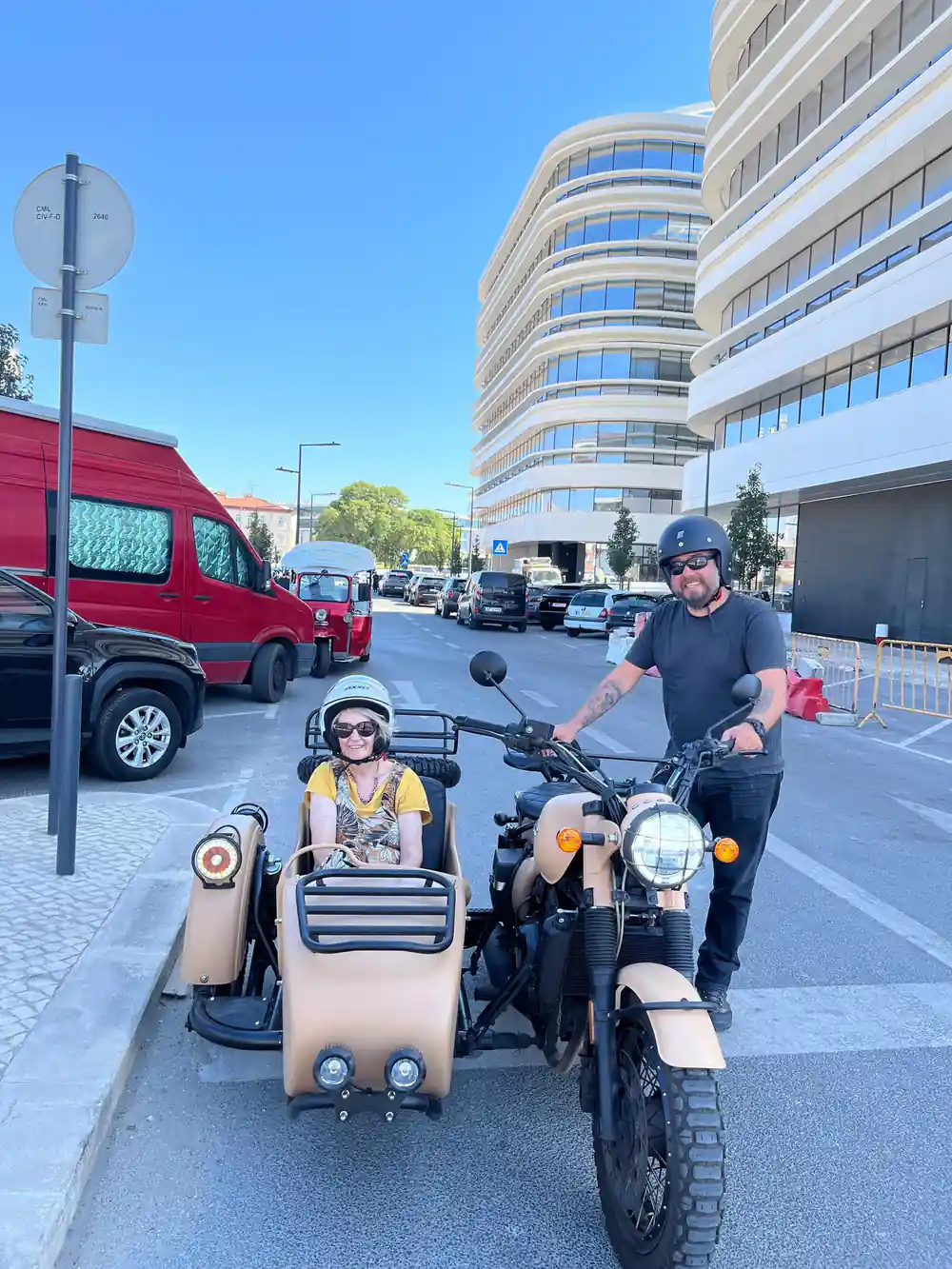
Bumper height, open sides, and a city that suddenly goes vertical
Noise, wind and the conversation problem
The chair is open at the top and the sides, so weather and air arrive unfiltered. At town speeds this is pleasant in almost any conditions and genuinely cooling in summer. On the faster stretches between quarters it is a wind you lean into, and anything loose will leave. Hats are the classic casualty.
Sound works the same way. The engine is close, the exhaust note bounces off the walls of narrow streets, and the city itself is louder when nothing is filtering it. This is atmospheric rather than unpleasant, but it does mean that talking while moving is a limited proposition, particularly if the guide is on a separate machine.
So the shape of a good tour is different from a coach tour. The information arrives at the stops, standing at a viewpoint with the engine off, rather than as a continuous commentary. In practice this suits the material, because the things worth explaining are usually the things you are looking at.
The stopping is the point
A sidecar can park almost anywhere. It occupies less road than a car, it can be turned in a space a car would need three attempts for, and it is welcome at viewpoints where a coach would be an act of aggression. The practical result is that the tour stops far more often than a vehicle tour normally does.
That changes the rhythm completely. Instead of a route punctuated by two long halts, you get a series of short ones: five minutes at a viewpoint, two minutes at a corner because the light is doing something, a pause at the top of a lane so you can walk twenty metres and look down it. The city arrives in pieces rather than in a list.
It also means the tour is negotiable. If you want longer somewhere, saying so is normal and expected. Most drivers are already reading whether you have finished looking before they suggest moving on.
3h 30m
Three and a half hours in the chair, and almost none of it spent sitting still: the machine parks where a car cannot, so the stops come constantly.
Being looked at
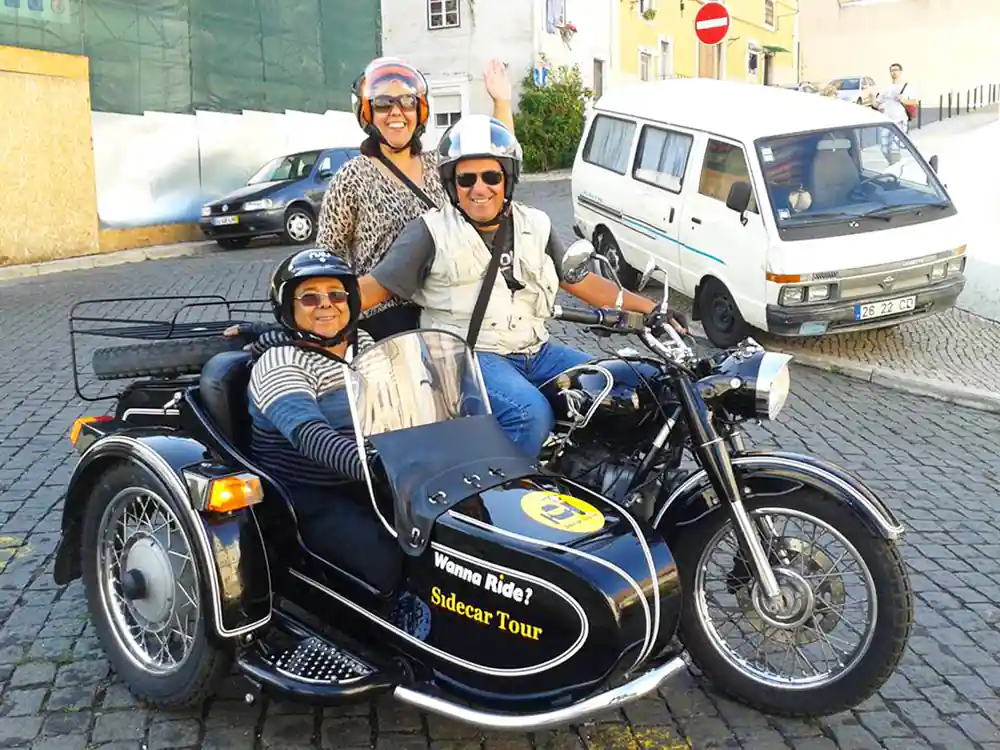
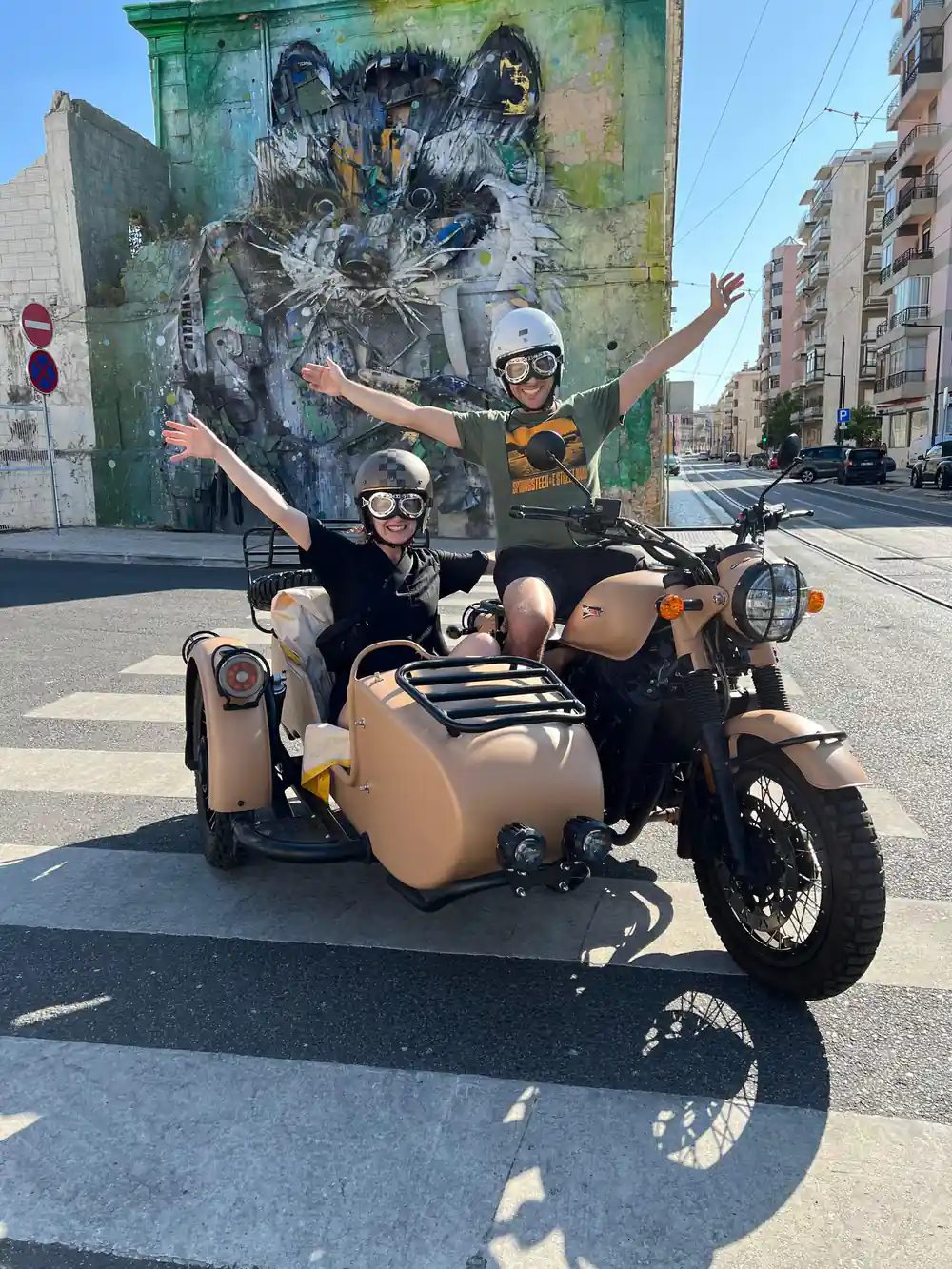
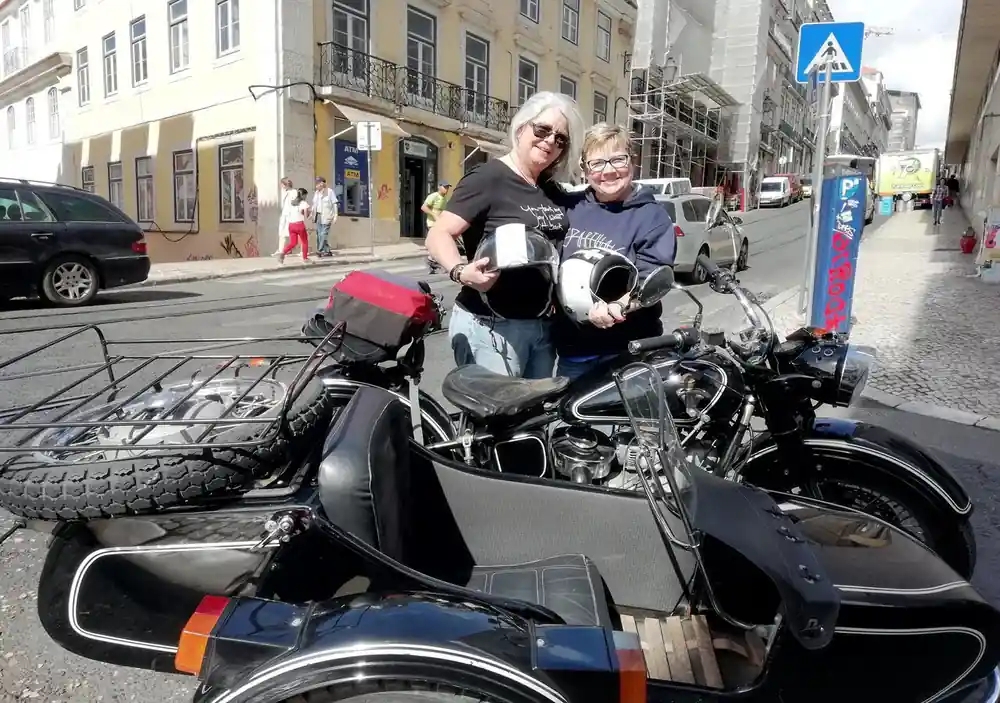
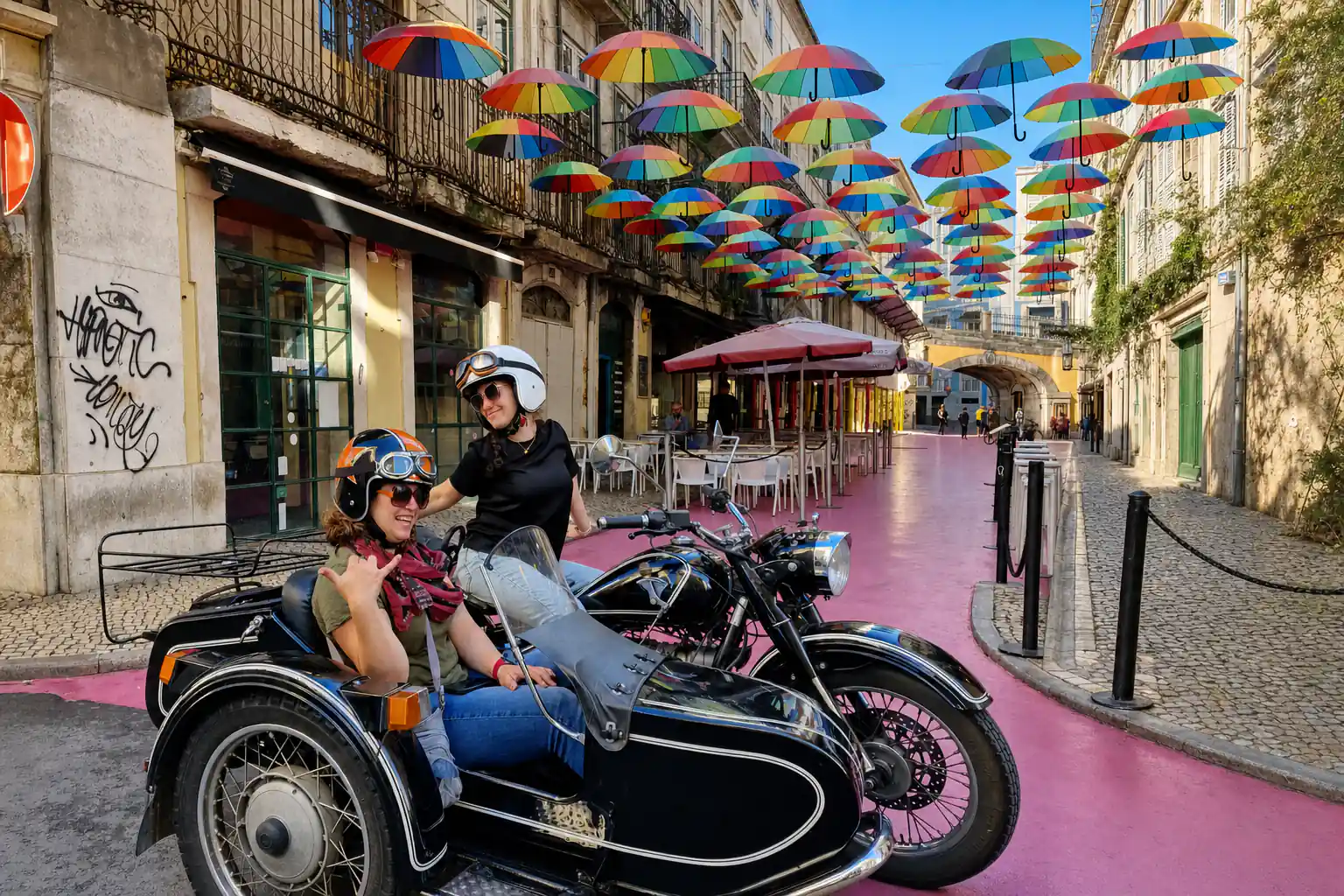
You will not be inconspicuous. A vintage outfit going through a European city centre draws attention from everybody: people on terraces turn round, children wave with real enthusiasm, other drivers let you out for no reason beyond wanting a better look, and at least one person per stop will ask the driver about the machine.
For some people this is the best part and for others it takes adjusting to. The useful thing to know is that the attention is entirely benign and mostly directed at the vehicle rather than at you. After a while it stops registering, except that it makes the whole afternoon oddly sociable.
It is also why the photographs come out well. Drivers on these tours take pictures at every stop almost as a reflex, and the machine in the frame turns a standard viewpoint photograph into something that says where you were.
What to expect physically
It is a low seat with a supportive back, a footwell and usually a blanket, and three and a half hours in it is comfortable for most people. You are not doing any work. The main physical demands are the getting in and out at each stop, and the low-level buzz of an old engine underneath you.
If you have a bad back or restricted hips, the entry and exit are the thing to think about rather than the sitting. It is worth asking the operator directly before booking, because they know their own machines and can tell you exactly how high the side is.
Otherwise the only real preparation is a windproof layer and sensible shoes. You will be getting out at every viewpoint and standing on cobbles, and both of those are more pleasant in something other than sandals.
Find out what the city looks like from a metre off the road
from US$116Reserve now & pay later