At a glance
- The chair is open, so moving air is the constant rather than the forecast. A windproof layer makes the difference between comfortable and cold in any season.
- Families do this tour regularly, but the seating arrangement varies between machines. Ask the operator when you book rather than turning up and hoping.
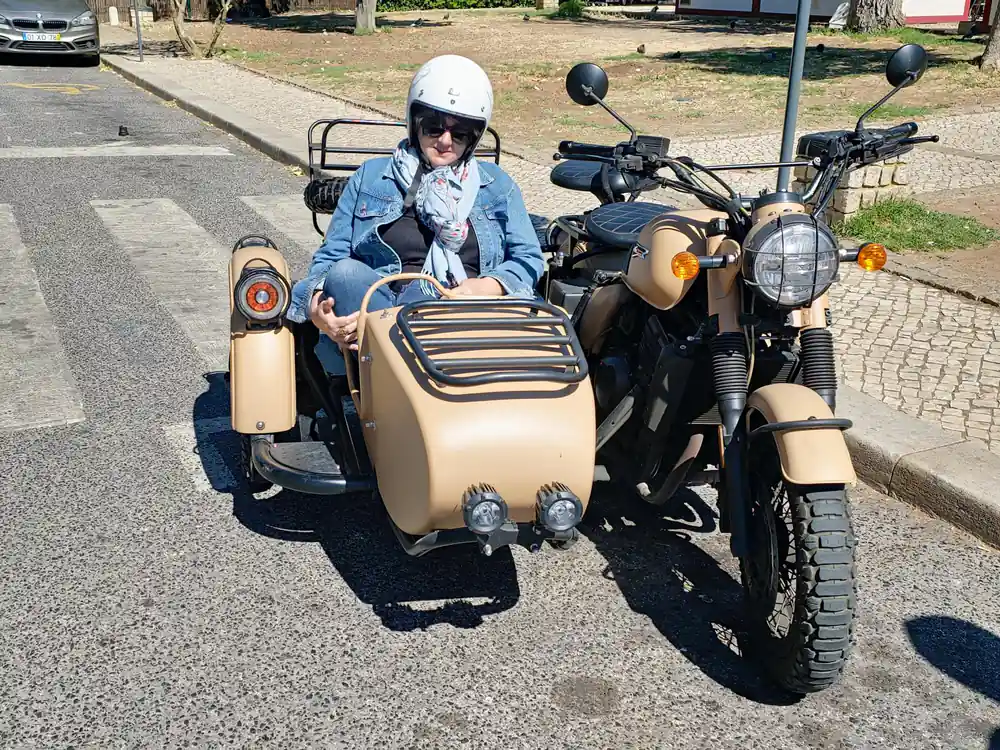
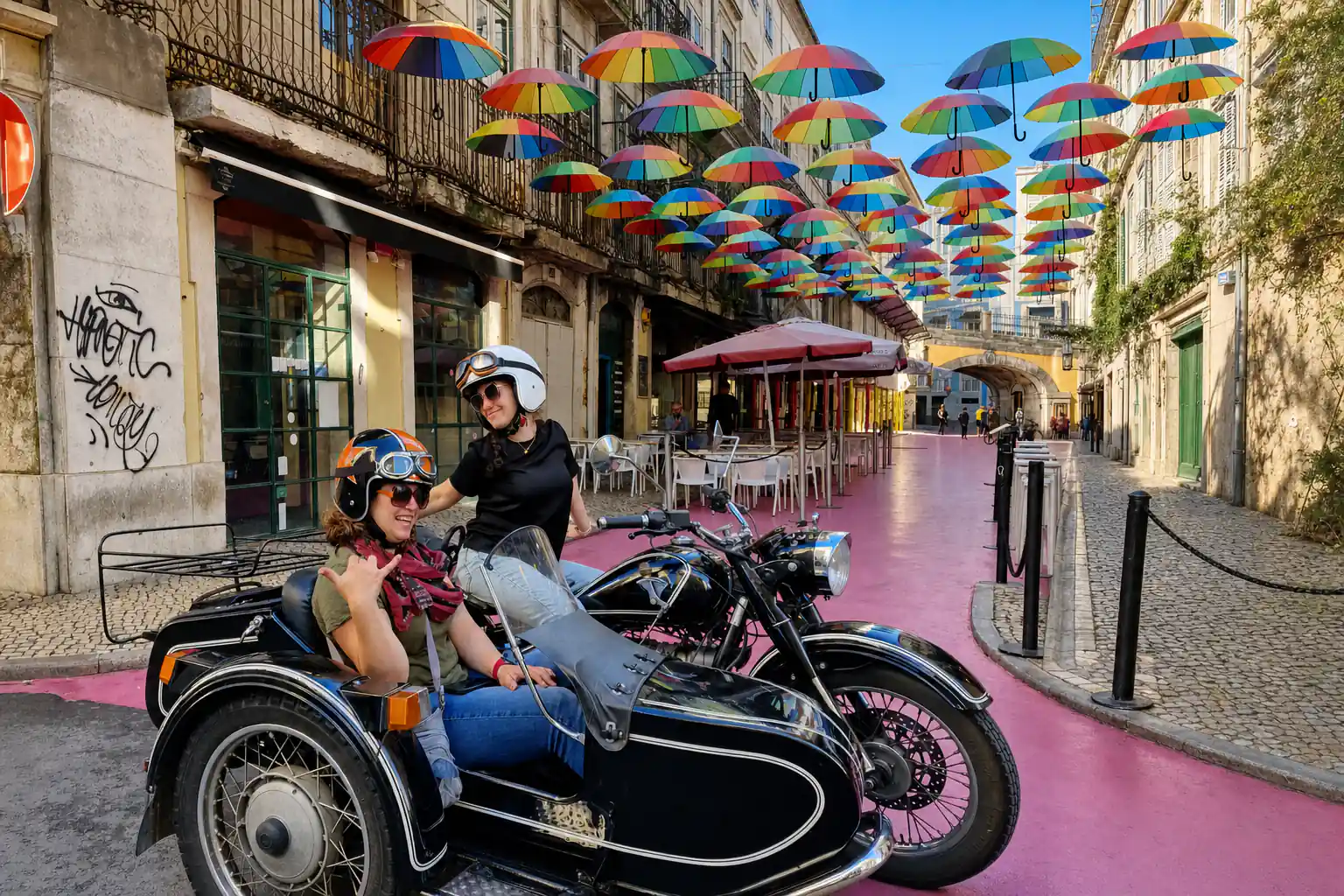
- You step over a low side and lower yourself into a deep seat. That is the movement to think about if you have restricted hips, knees or back.
- Storage in a sidecar is genuinely small. Take a camera, a jacket and a way to pay for a coffee, and leave the rest at your accommodation.
What to wear, season by season
The governing fact is that you are in an open vehicle moving through air, so the temperature you experience is lower than the temperature on the forecast. This is welcome in July and significant in January. In every month of the year, a windproof outer layer is the single most useful thing you can bring, and it is the item people most often wish they had.
In summer, light long sleeves beat a vest: you are exposed to sun for extended periods with no roof, and the moving air disguises how much of it you are getting. Sunscreen and something to keep hair out of your face are both worth more here than usual. In spring and autumn, add a layer you can remove at the stops.
Between November and March, treat it as an outdoor activity rather than a vehicle journey. A proper jacket, something around the neck, and the acceptance that a shower is possible. Lisbon winters are mild by northern European standards but the wind on an open machine is real.
Shoes, hats and the things that blow away
Footwear matters more than people expect, because the tour involves getting out at every stop and standing on hand-laid limestone. That surface is uneven at the best of times and slippery when wet, so closed shoes with some grip are the sensible choice and sandals are the classic regret.
Hats are the standard casualty of an open chair. Anything without a strap will eventually leave, usually at the least convenient moment, and chasing it is not always possible. Either bring one that fastens or accept that it lives in a bag between stops.
The same logic applies to scarves, loose maps, and anything light in an outside pocket. Sunglasses are worth having for the wind as much as the sun, and if you wear contact lenses you will notice the airflow more than most.
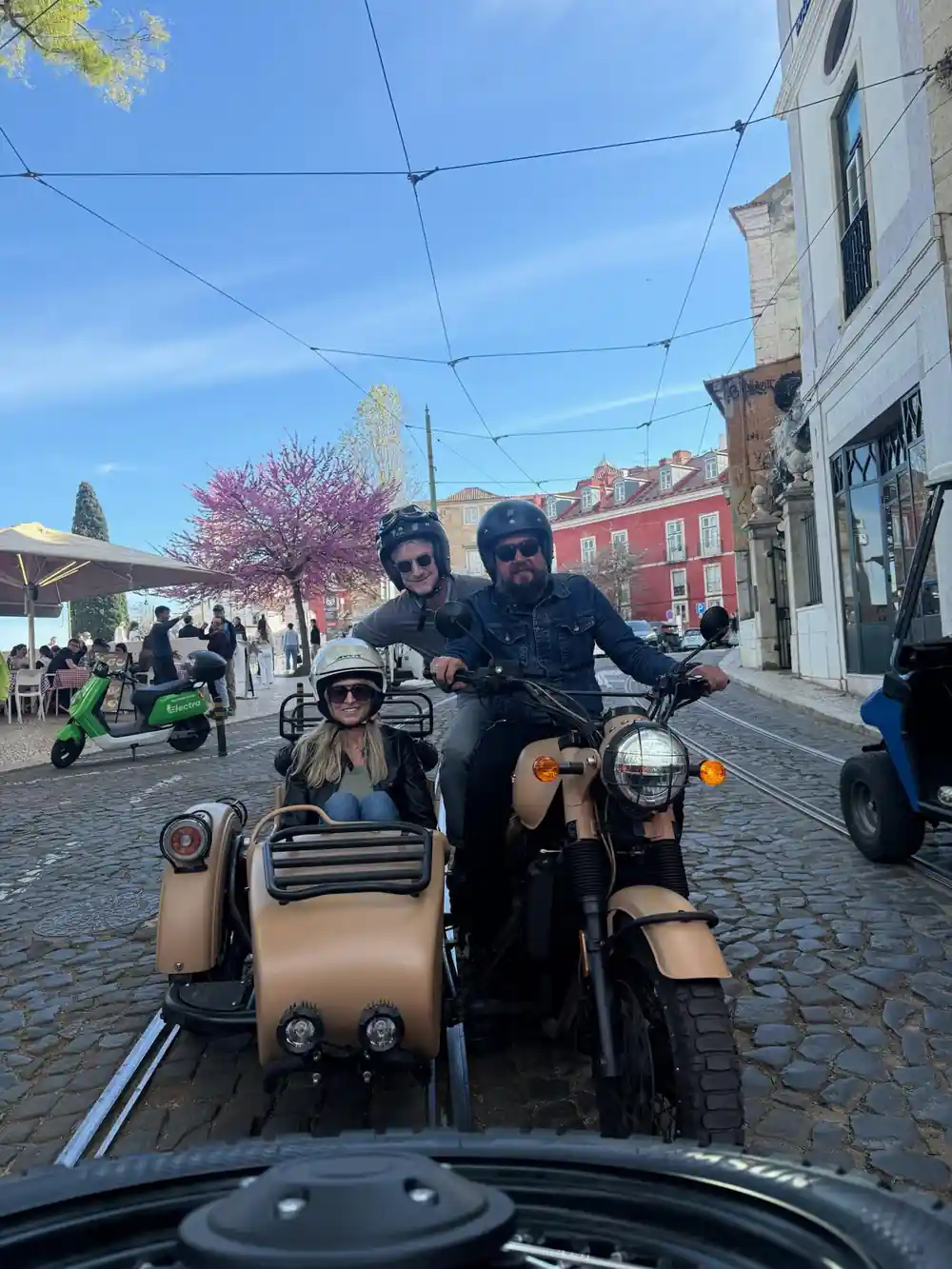
A blanket over the knees and a windproof jacket: the whole packing list
Riding with children
Families do this regularly and children generally love it, for the obvious reason that a vintage motorcycle with a chair on the side is a more exciting object than a coach. The attention the machine attracts in the street is part of the appeal for them rather than an embarrassment.
The caveat is that the seating arrangement is not standardised. Machines differ, the number of passengers a given outfit can carry differs, and what is appropriate for a specific age or size is a question for the operator about their own vehicle. This is genuinely worth asking at the time of booking rather than discovering on the morning.
For a family with more than one child, ask whether more than one machine can run together. It is often possible and it is a much better answer than trying to fit everyone into a single chair.
Mobility, and the honest version
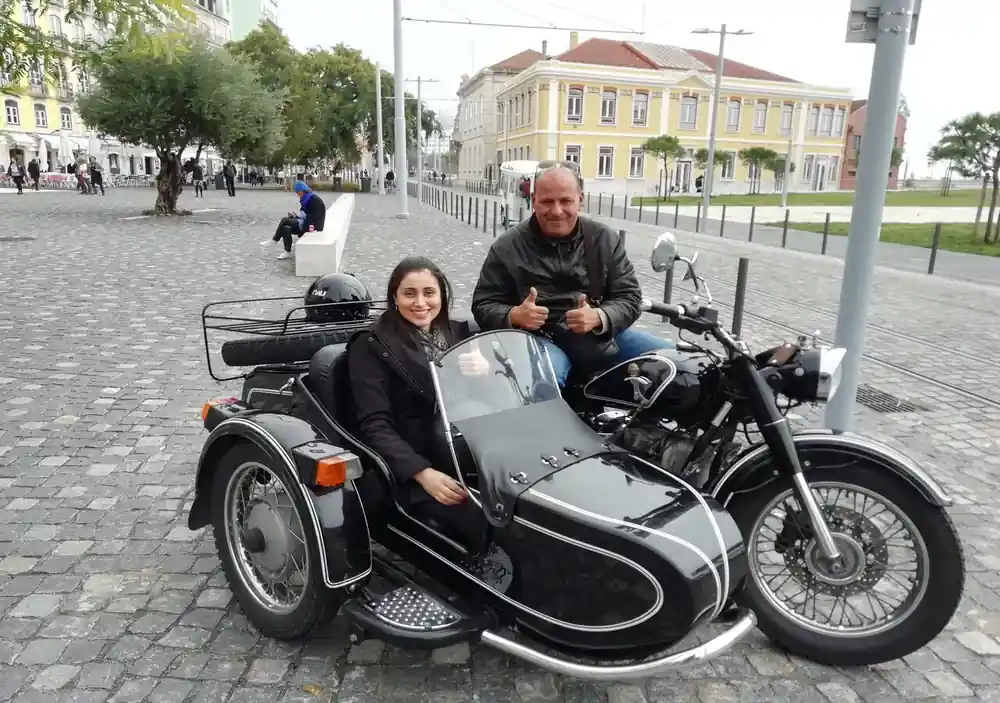
Entry and exit are the whole question. You step over a side that sits low to the ground, then lower yourself into a seat with your legs going forward into a footwell. Getting out reverses that from a low starting position. For most people this is unremarkable; if you have a bad back, stiff hips or restricted knees, it is the thing to weigh up.
Once you are in, the ride itself asks nothing of you. It is a supported seat and you are stationary in it for three and a half hours minus the stops, which is easier on the body than walking the same route would be by a very wide margin.
The other consideration is the stops themselves. Every viewpoint involves standing on uneven stone and often a short walk on a slope. If that is difficult, say so when you book, because a driver who knows can choose stops accordingly and stay closer to the machine.
3
Guides on this tour work in three languages, English, Portuguese and Spanish, so say which you would prefer at the time of booking.
What to bring, and what to leave behind
Storage is the constraint. There is a small space behind or beside the seat and that is all, so the correct approach is a small bag rather than a day pack. A camera or phone, a jacket, sunglasses, a way to pay for a coffee, and whatever medication you need. That is the list.
Leave shopping, laptops and full-sized backpacks at your accommodation. There is nowhere sensible to put them, and a bag on your lap for three and a half hours in an open vehicle is a worse experience than it sounds.
Entrance tickets and food are not included in the tour, so if you intend to go inside somewhere or stop to eat, carry the means to do it. Most people do not go inside anything: the tour is about the streets and the views rather than the interiors.
Booking questions worth asking
Three questions cover almost everything. How many passengers can this machine carry, and in what arrangement. How high is the side you step over. And what happens if it rains, which for an open vehicle is a legitimate question rather than a pessimistic one.
Add a fourth if language matters to you: guides here work in English, Portuguese and Spanish, so saying which you prefer at the time of booking means the right driver is assigned rather than the nearest one.
Finally, give the pickup address precisely, including the entrance or floor if the building is one of the older ones with an ambiguous door. Being outside a couple of minutes early is a genuine kindness in streets where there is nowhere to wait.
Bring a jacket, leave the bag, and let the machine do the hills
from US$116Reserve now & pay later