














What a sidecar tour of Lisbon actually is
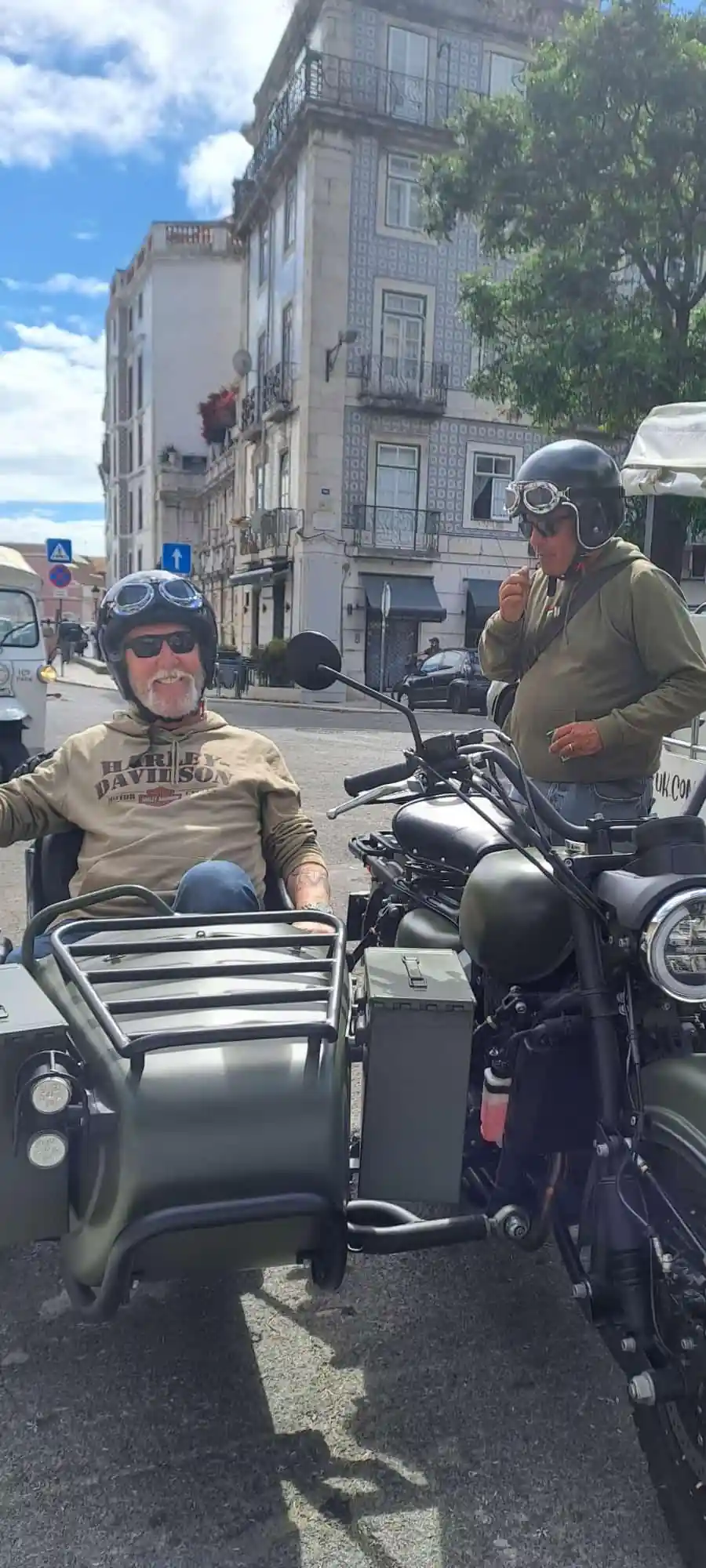
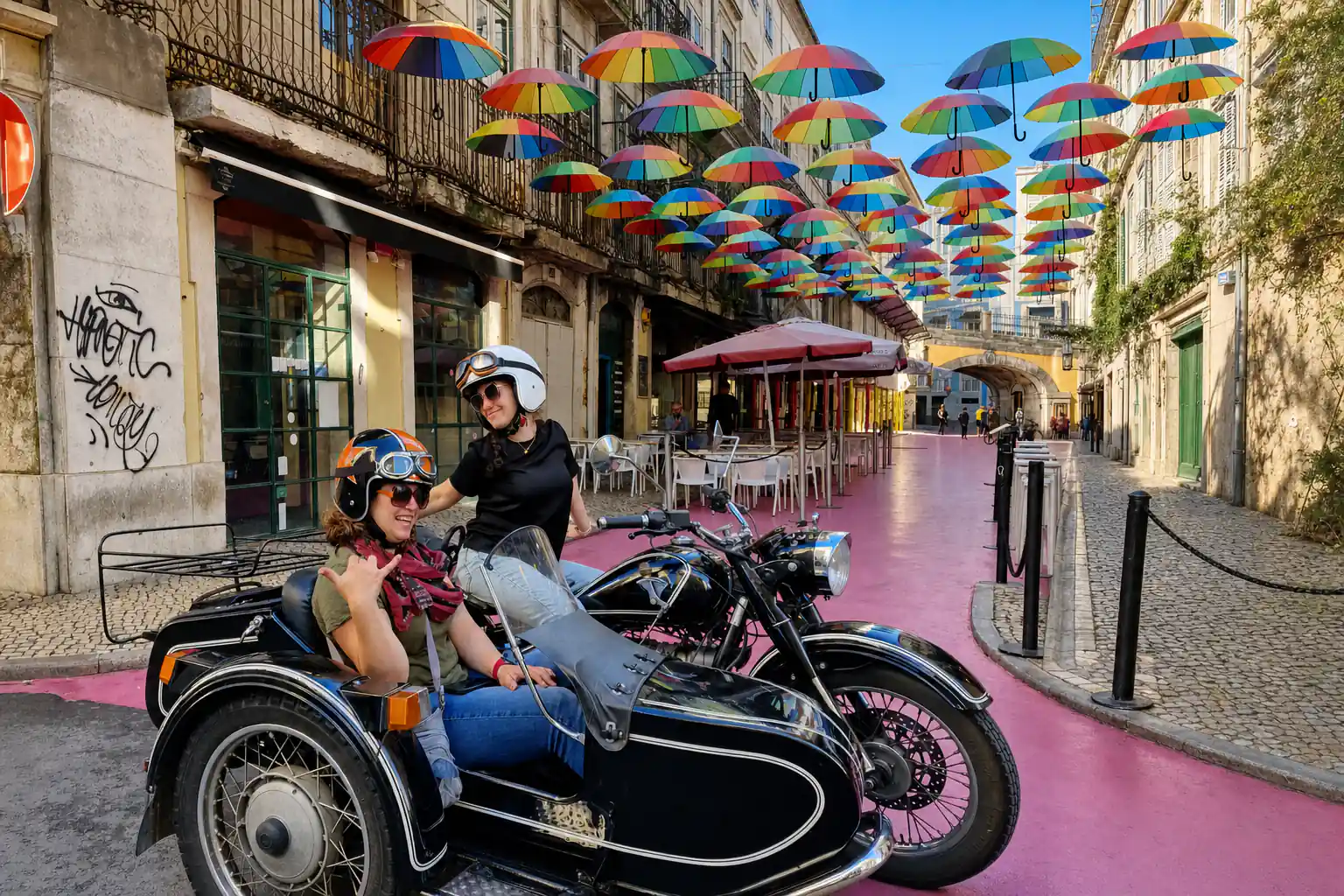
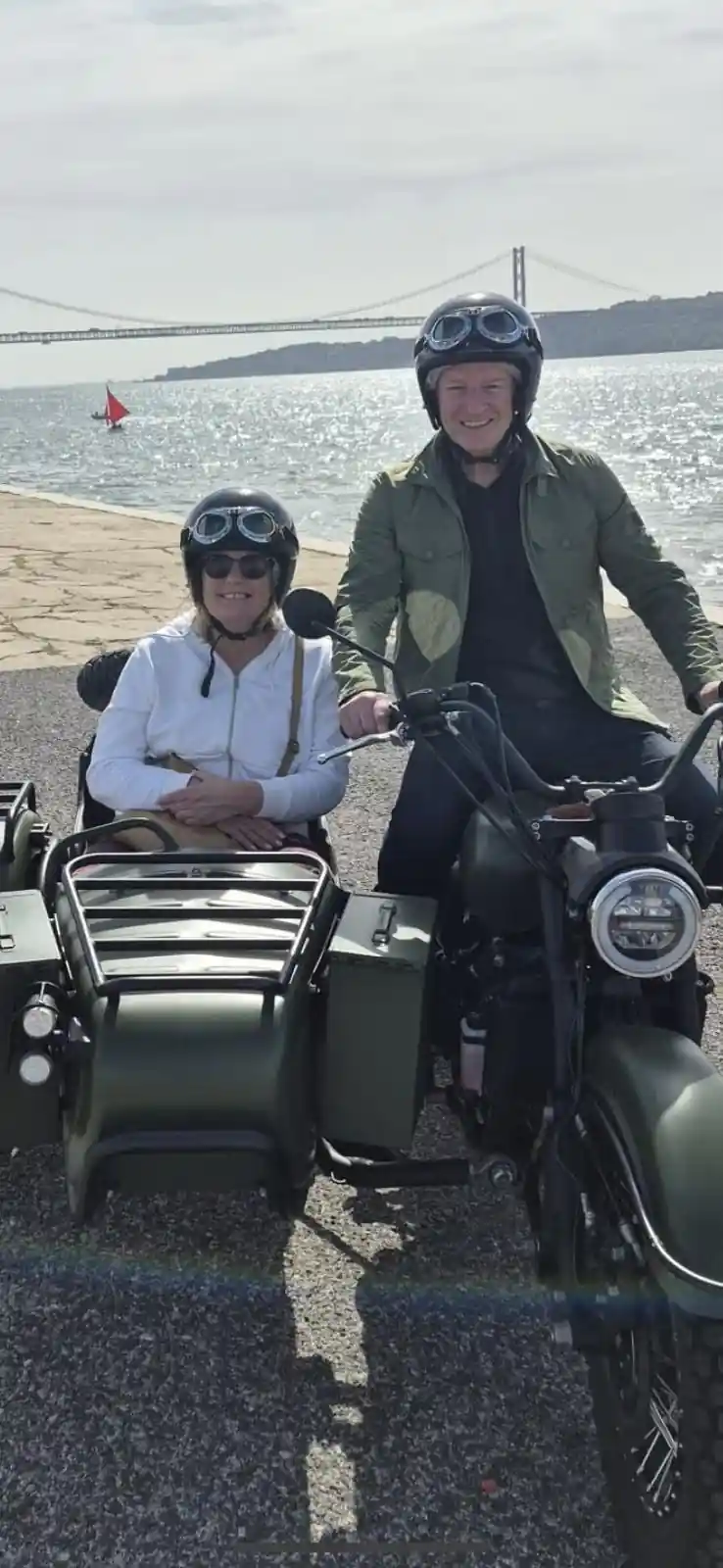
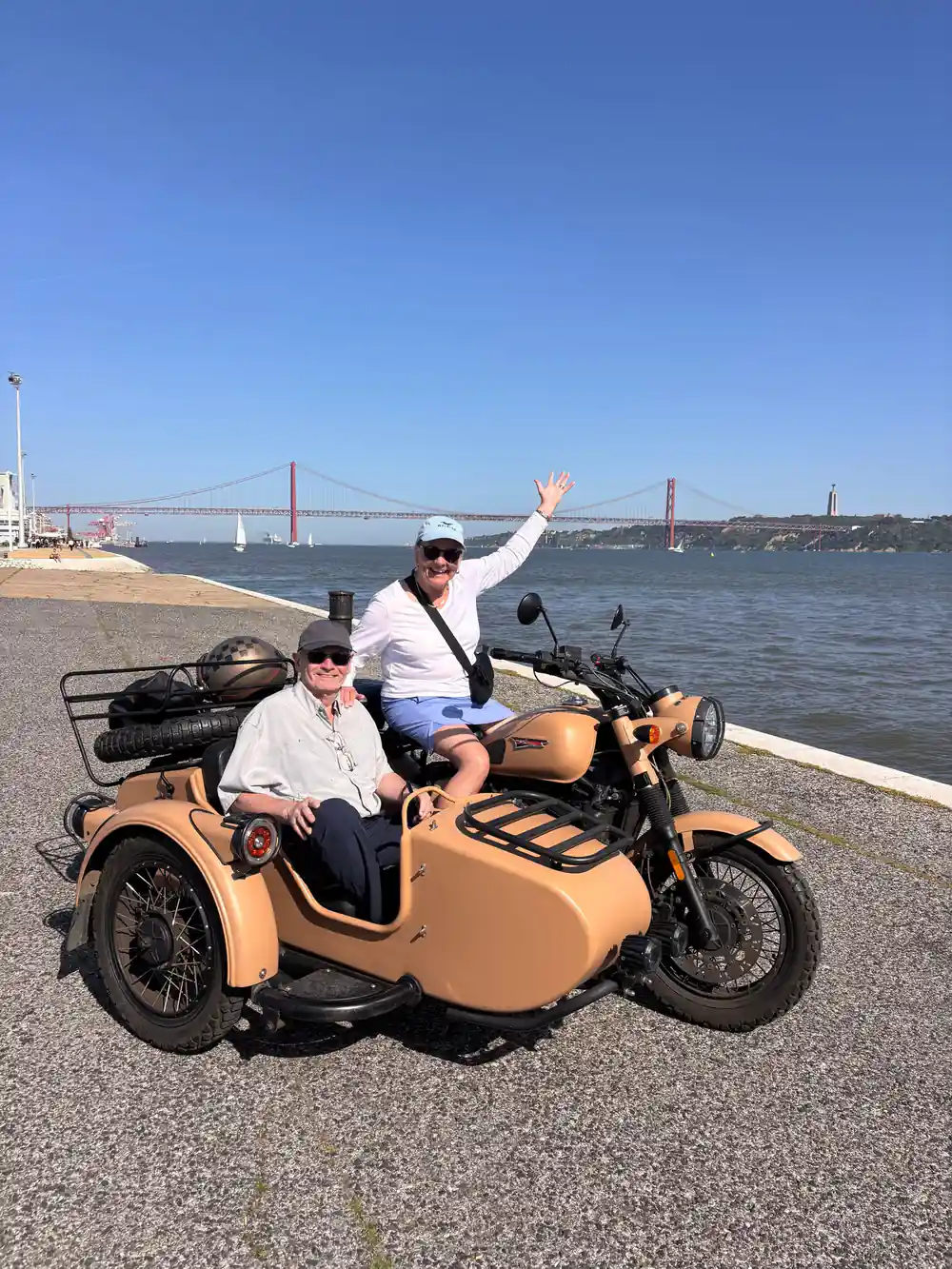
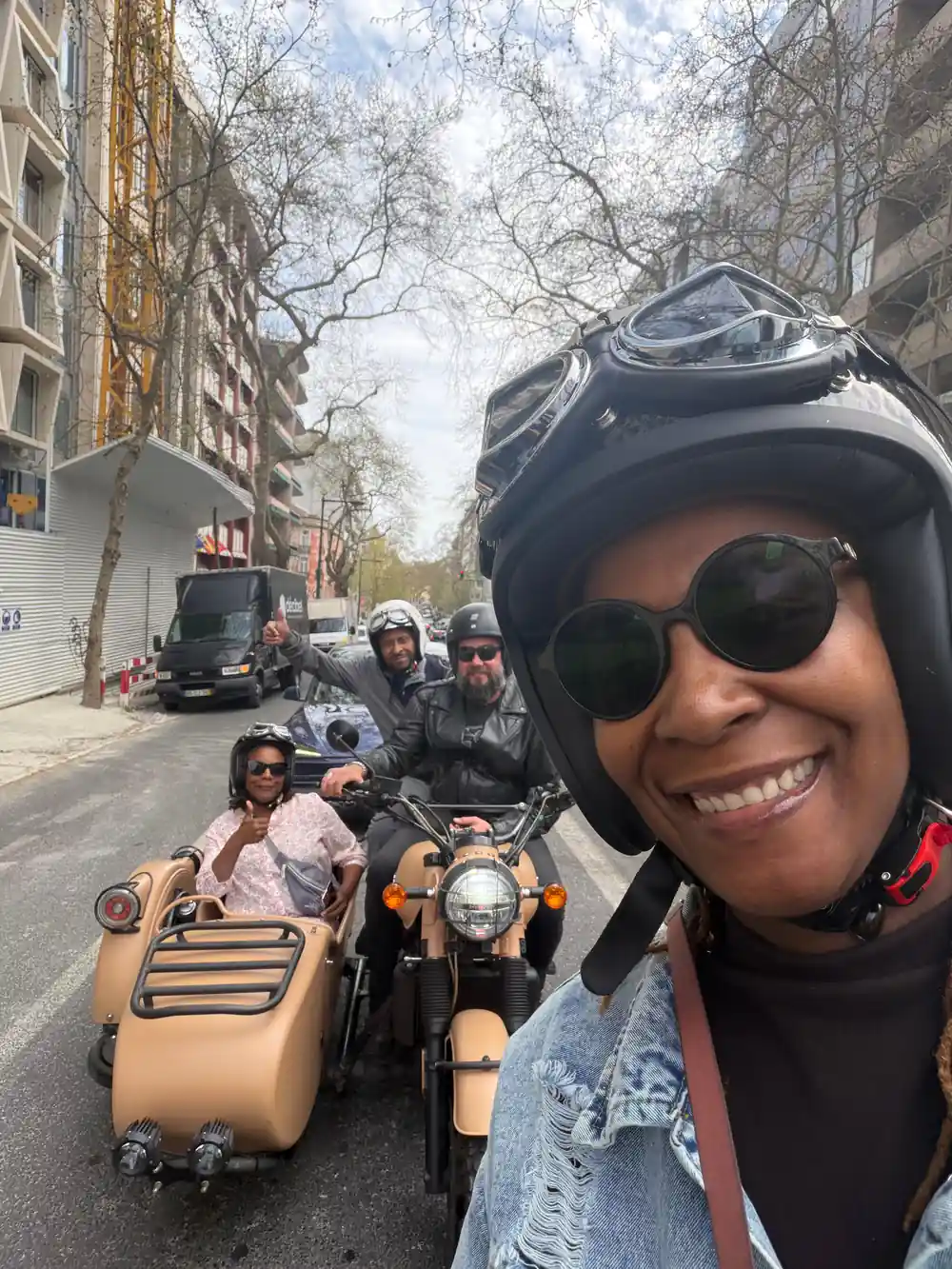
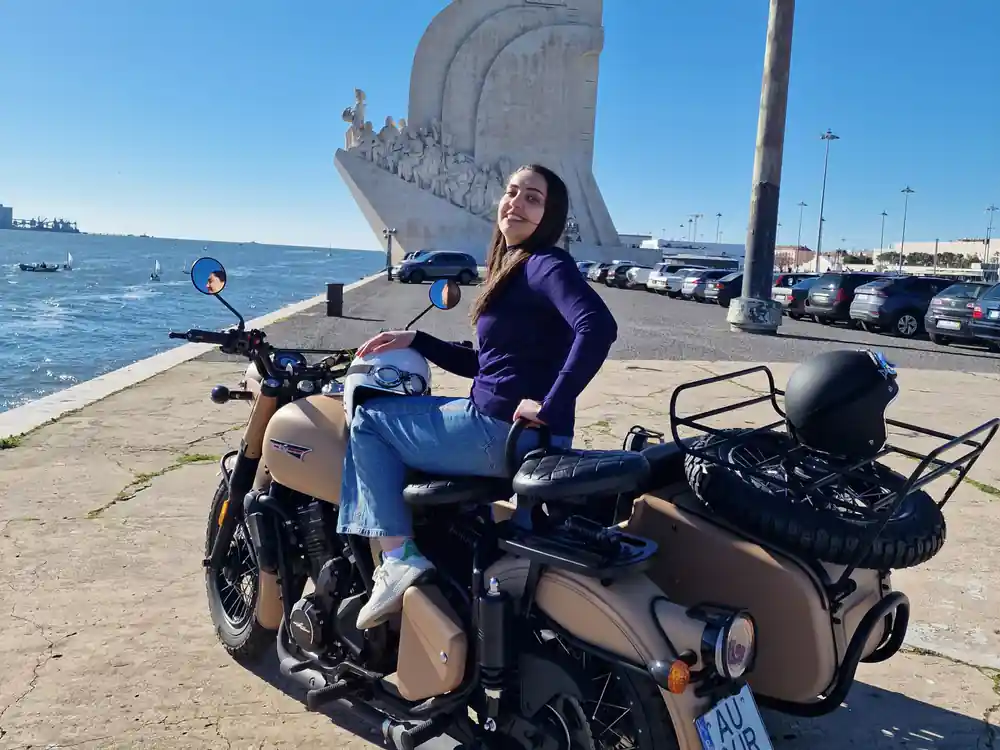
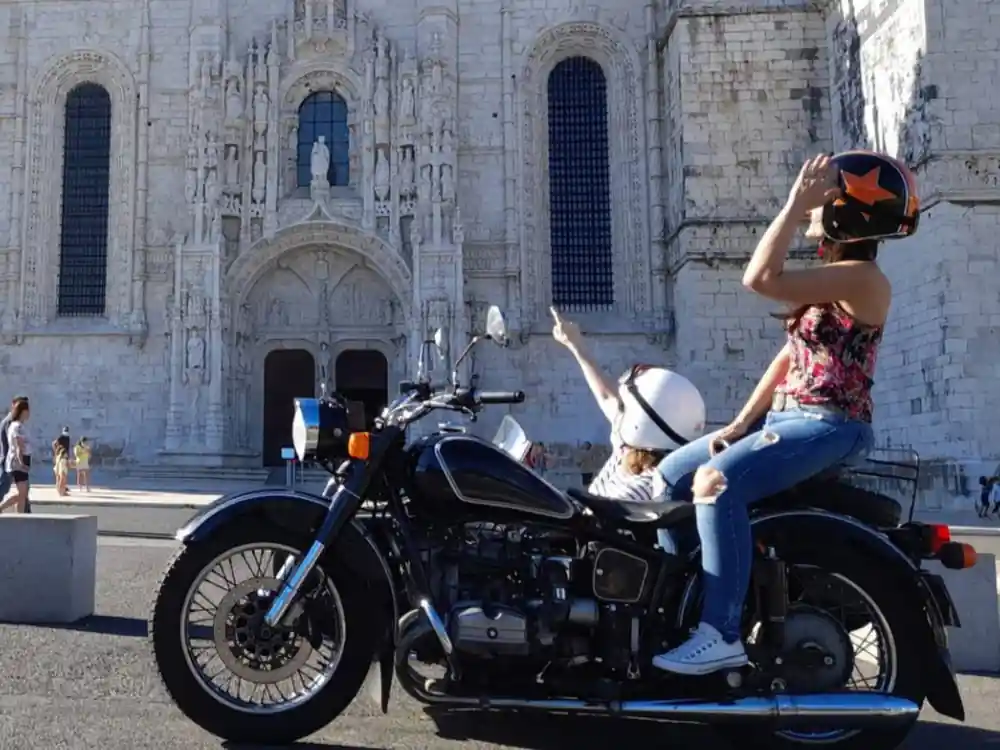
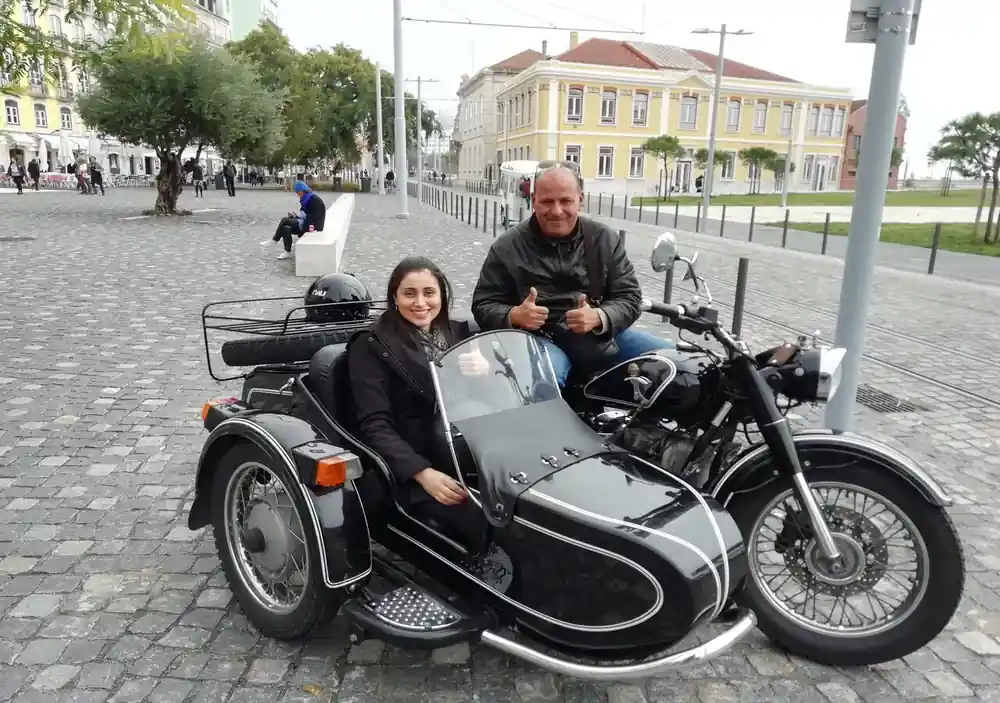
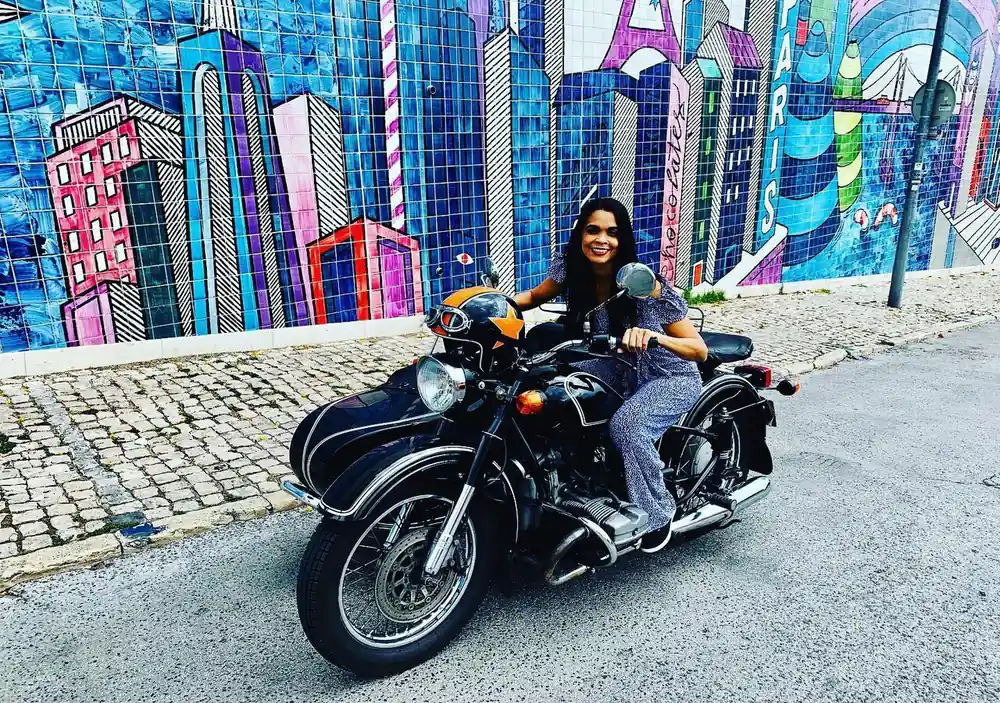
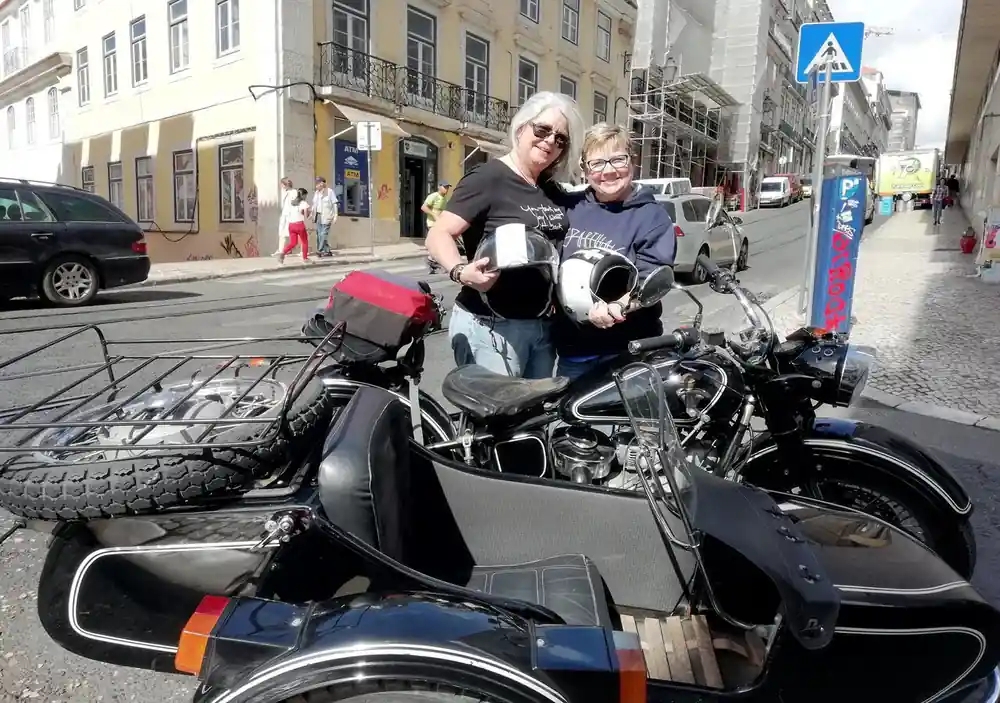
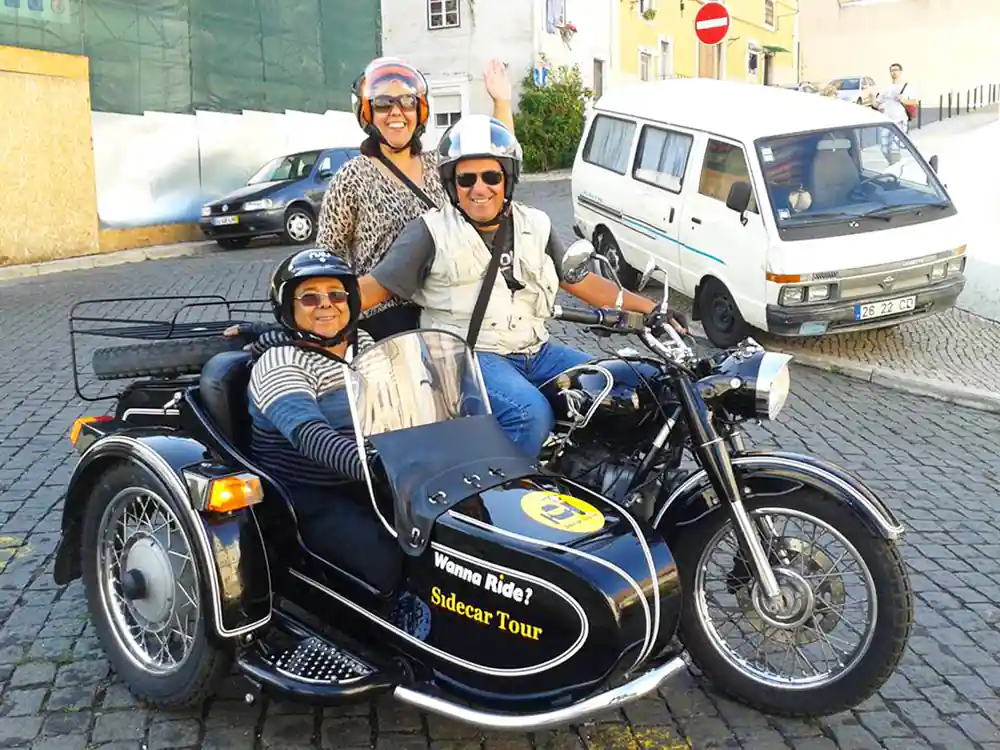
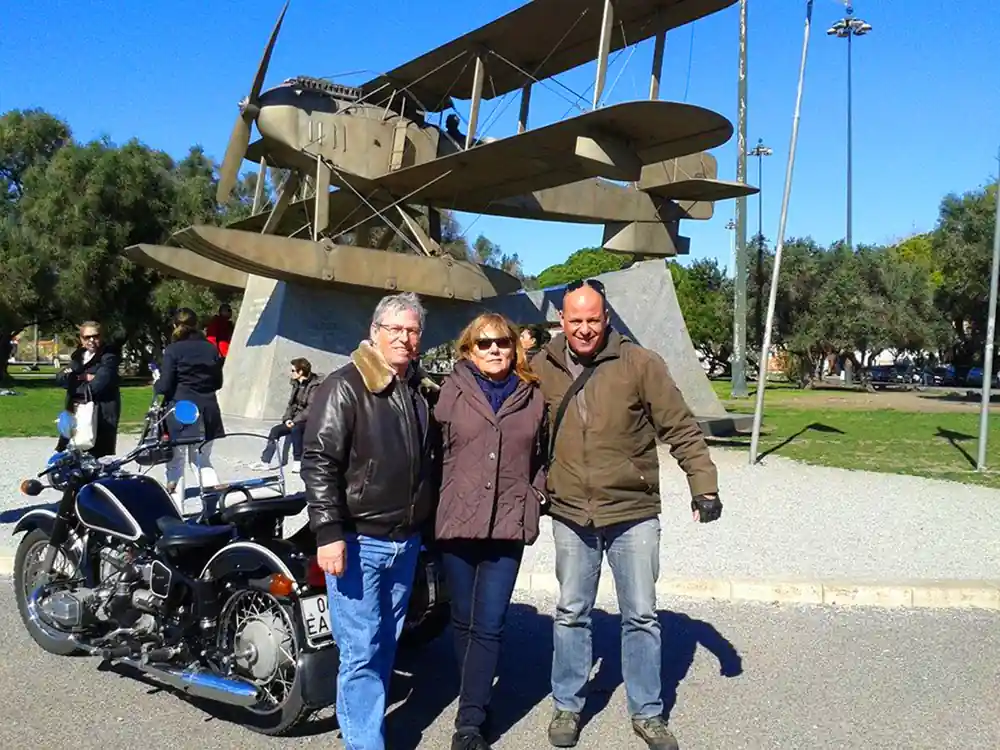
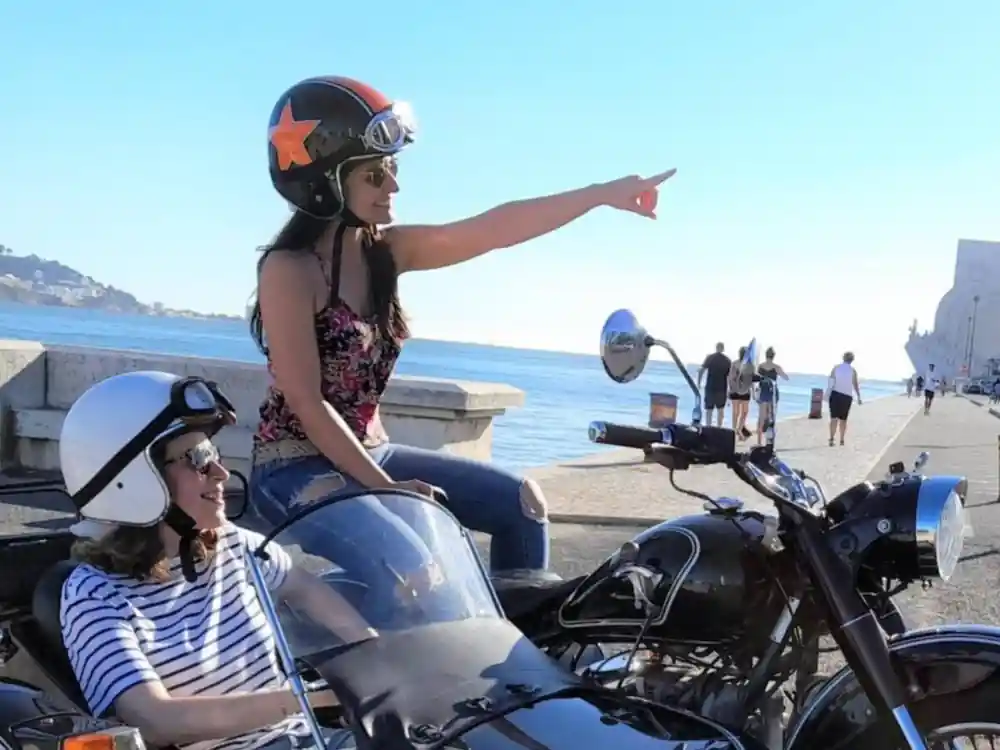
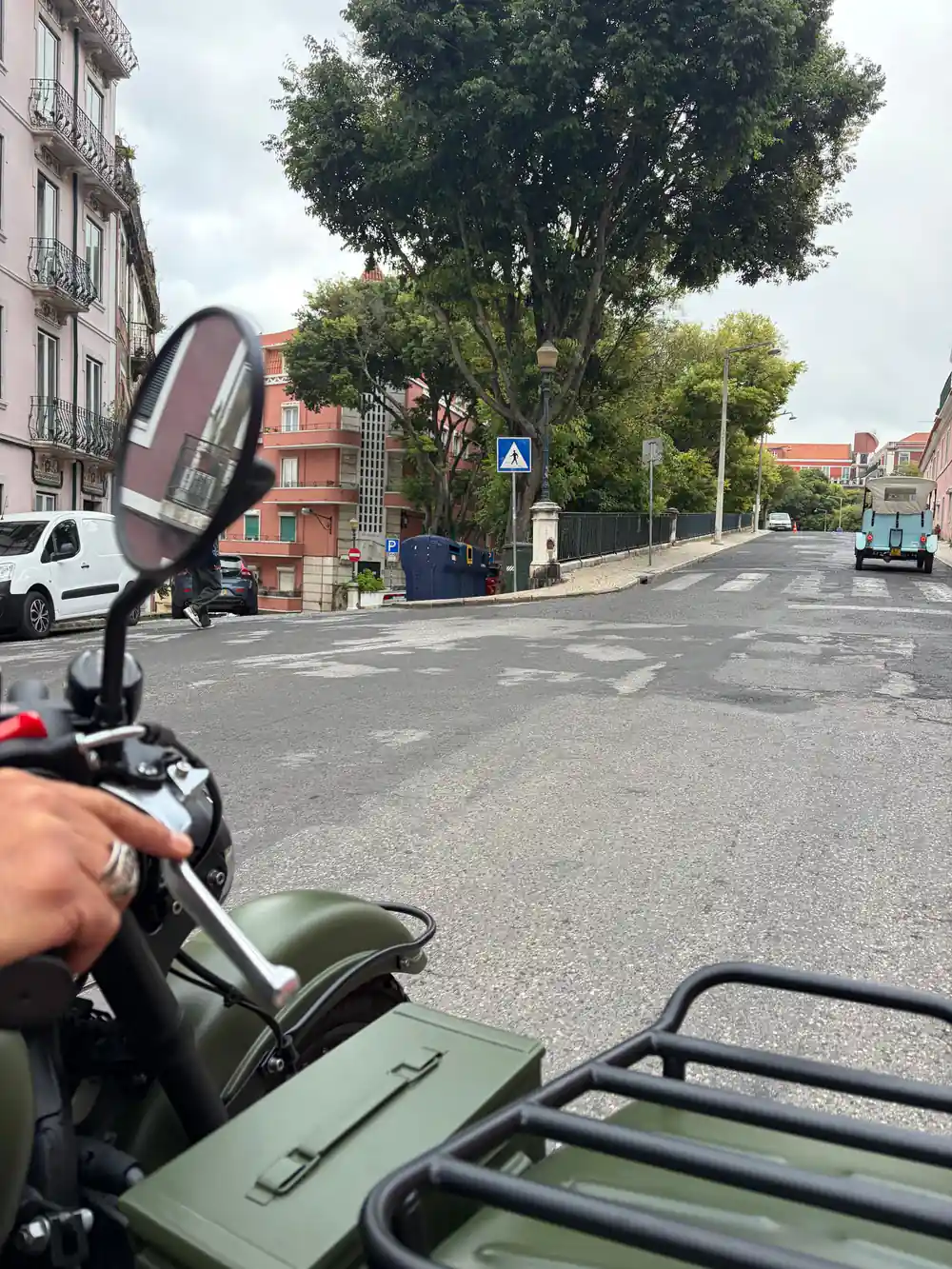
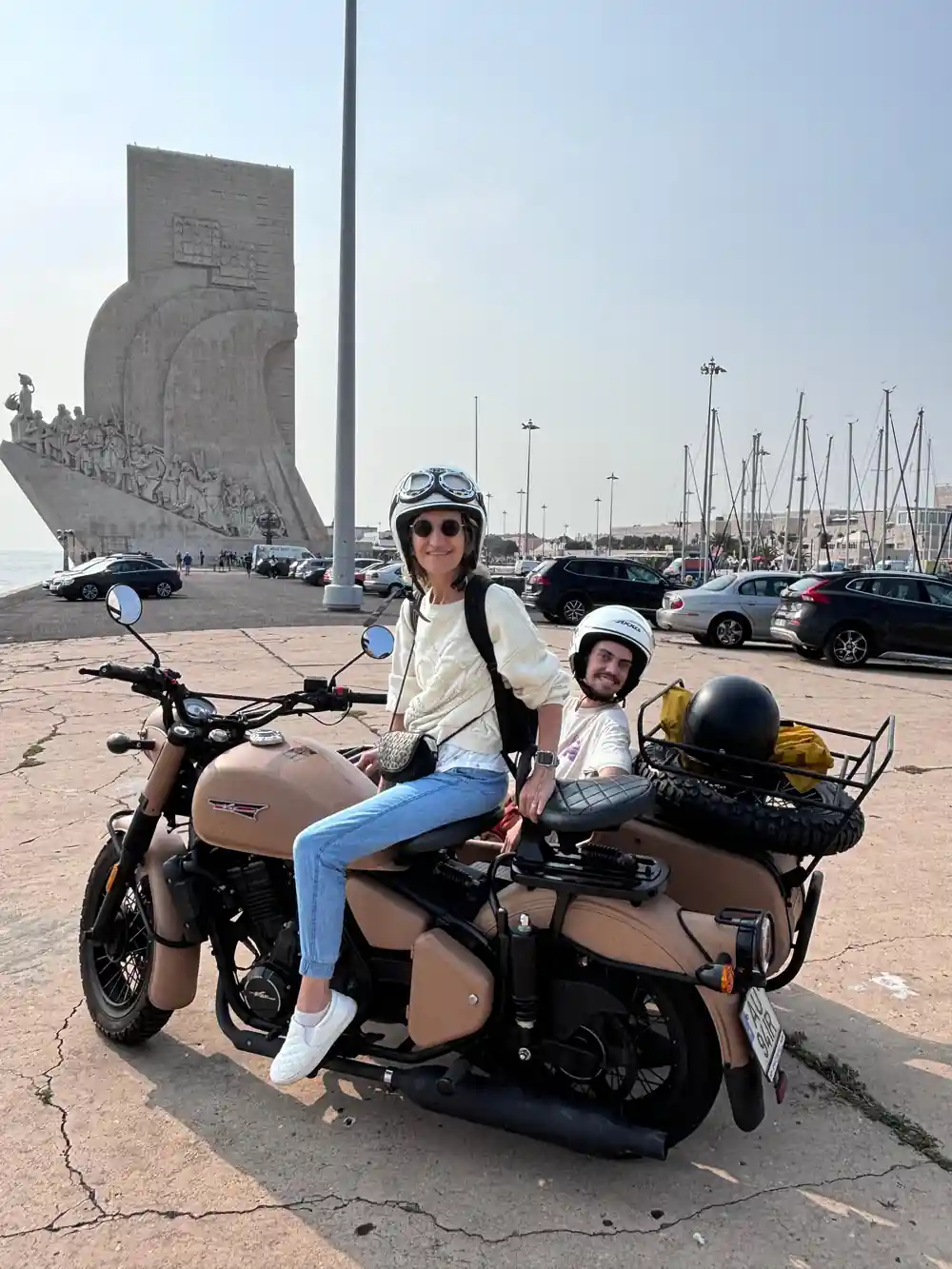
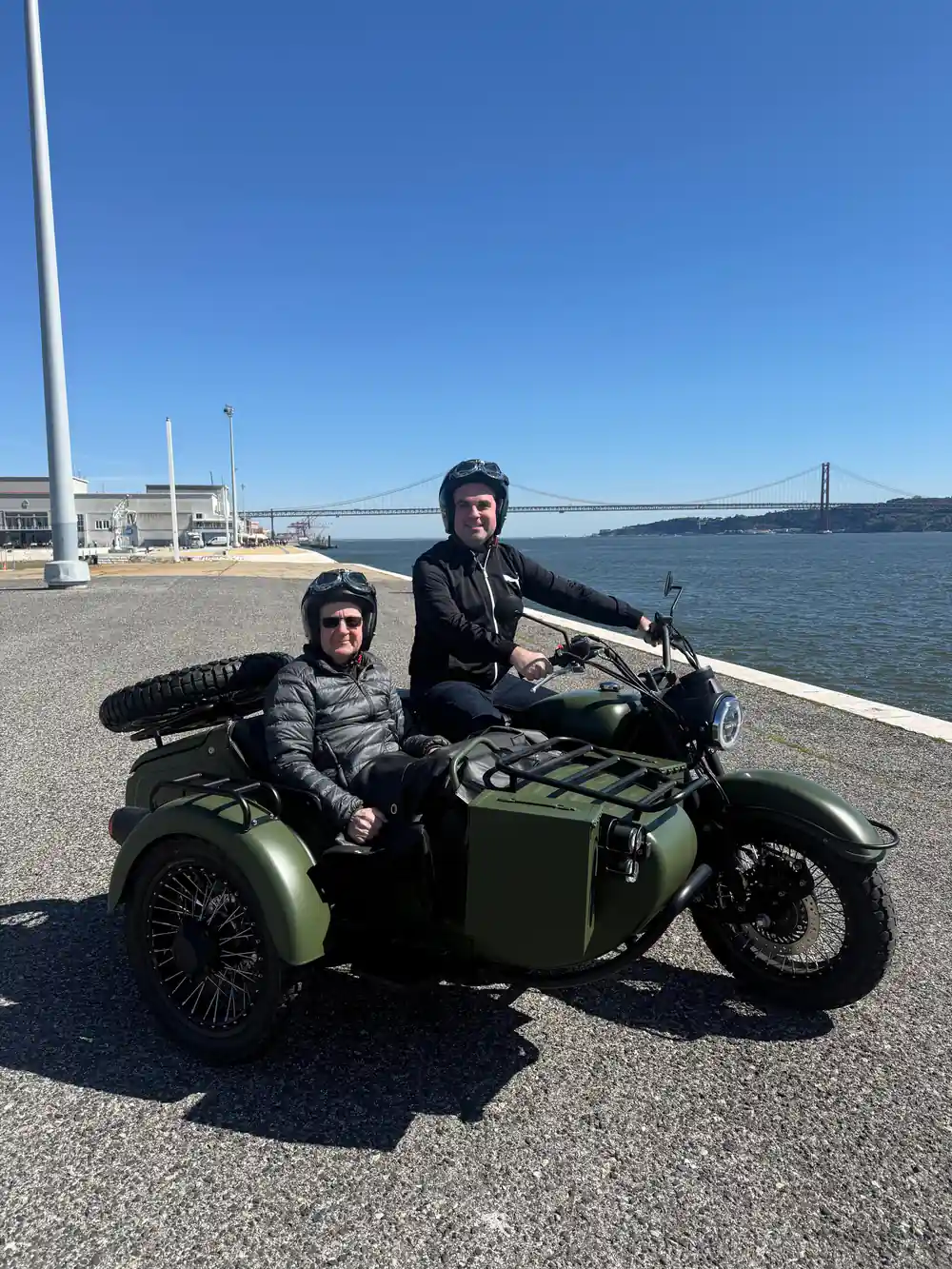
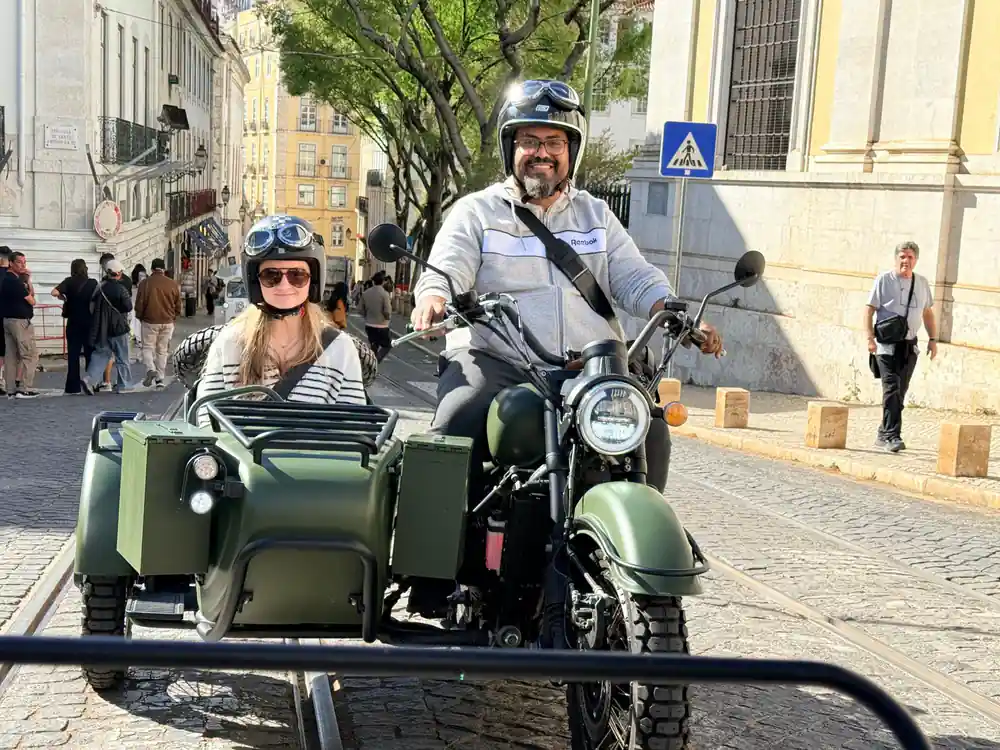
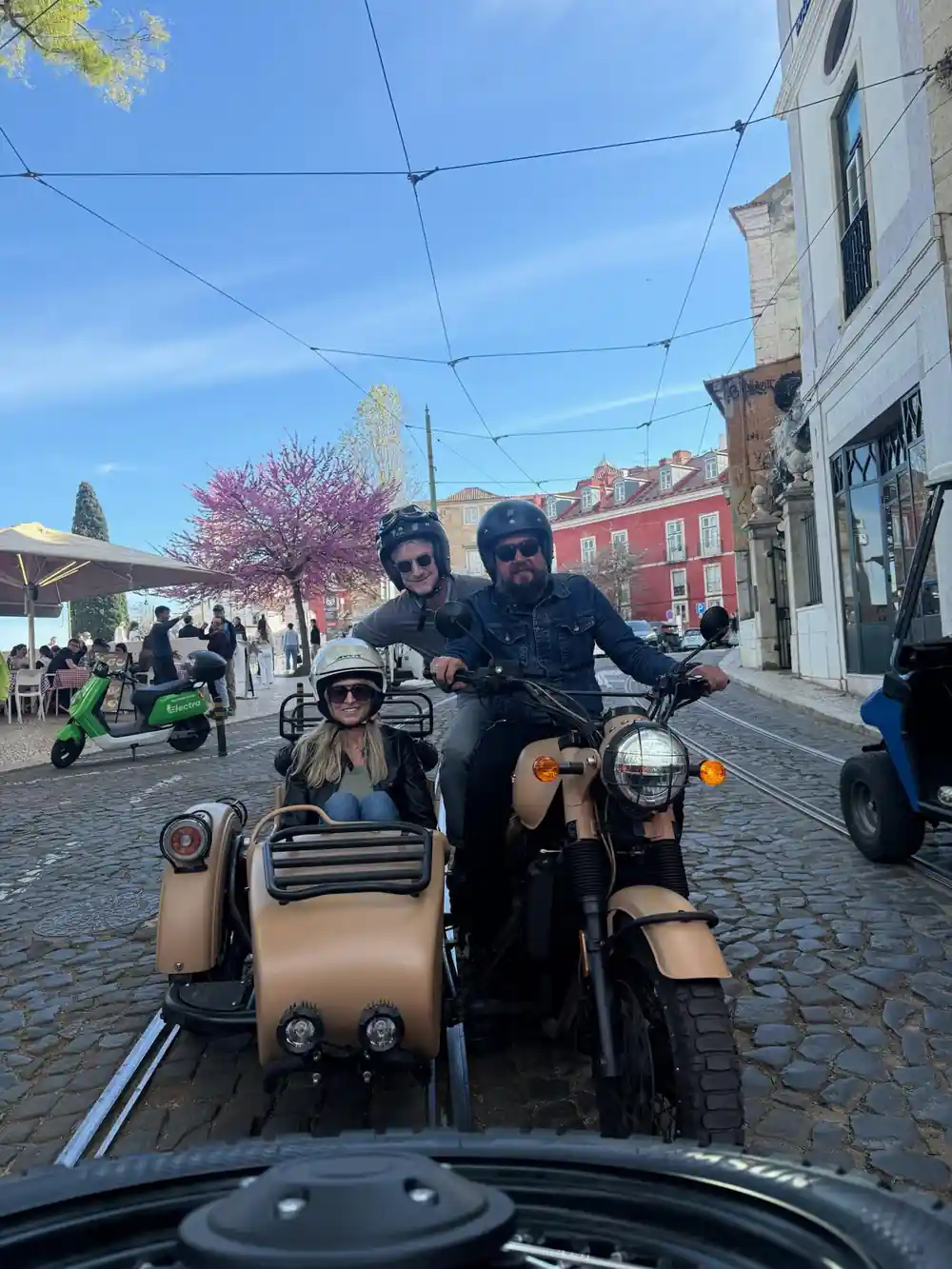
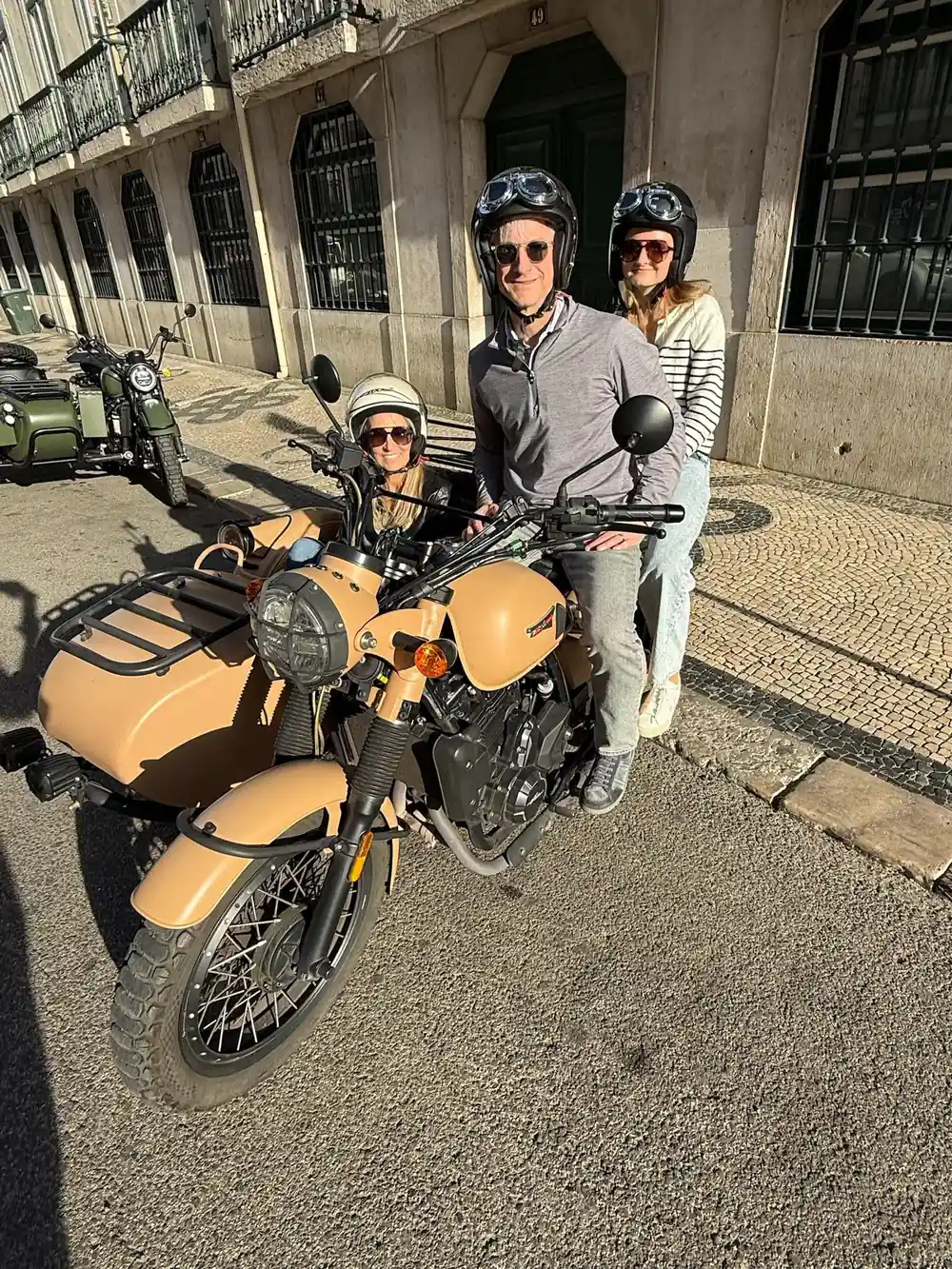
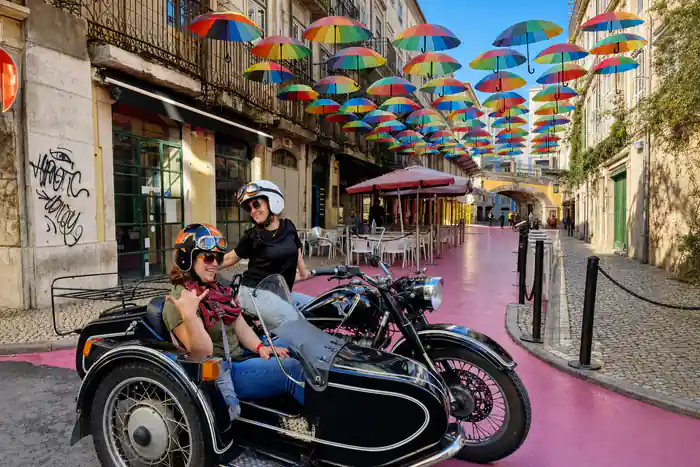
You do not ride pillion. You sit in a chair bolted to the side of a motorcycle, at roughly the height of a car bumper, facing forward with the road running past your elbow. The driver rides the bike alongside and slightly above you, and the whole rig moves as one object. It is a strange sensation for the first two minutes and completely natural after that.
The tour runs three and a half hours. Pickup and drop-off at your hotel are part of it, which in a city this steep matters more than it sounds: you are not walking to a meeting point or working out which metro exit is the right one. The bike arrives, you get in, and the city starts immediately.
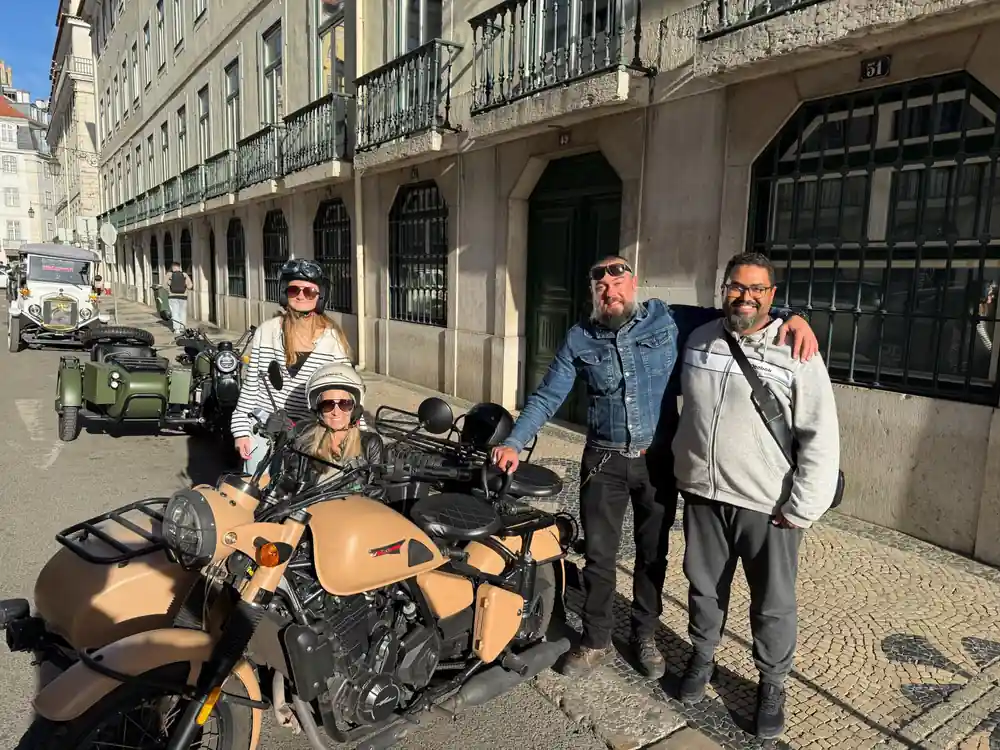
There is a guide and a driver, and depending on the outfit those may be the same person talking to you over the noise of the engine or a second machine running alongside. What you are buying is not transport between landmarks. It is a way of being in the streets rather than looking at them through glass.
Why the machine suits this particular city
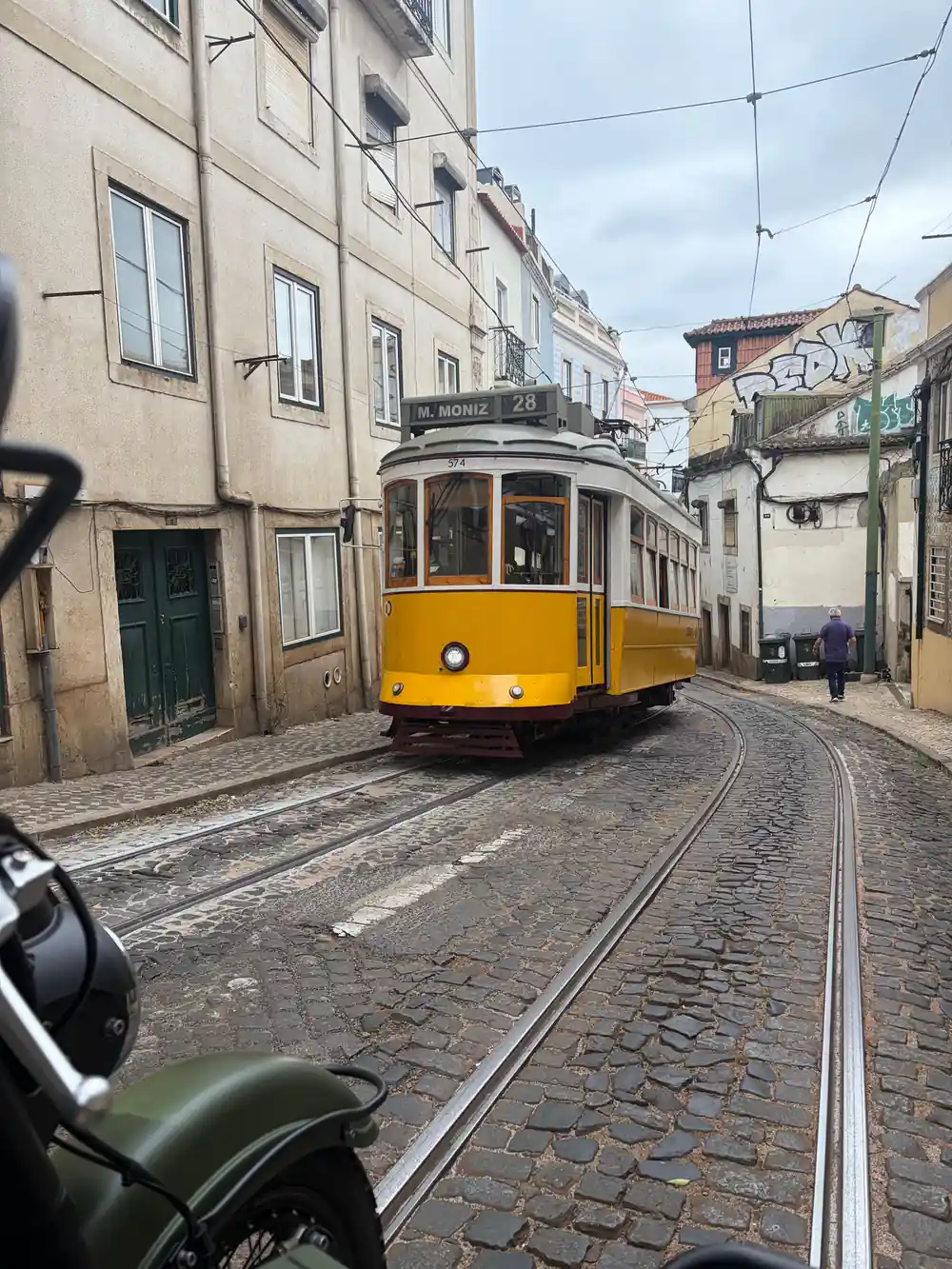
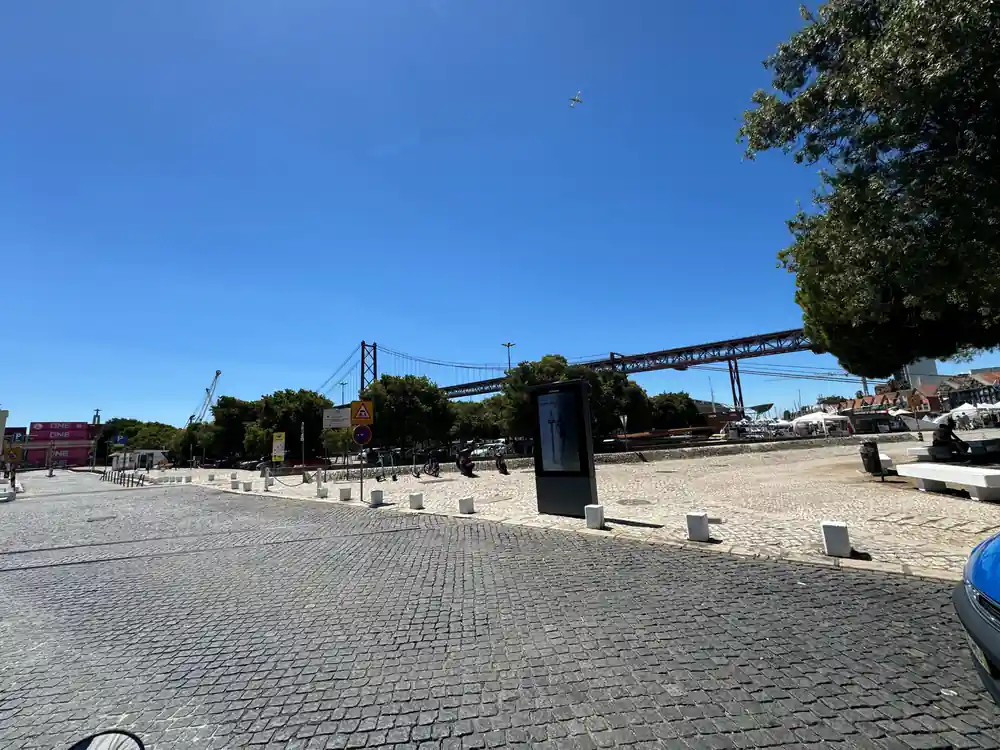
Lisbon punishes vehicles. The historic lanes in Alfama and Mouraria were laid out for people and mules, the gradients are severe enough that the city built funiculars rather than fight them, and almost every surface is calcada portuguesa, the hand-laid limestone mosaic that looks beautiful and rides like corrugated iron. A coach cannot enter most of it. A car can, barely, and spends the whole time reversing.
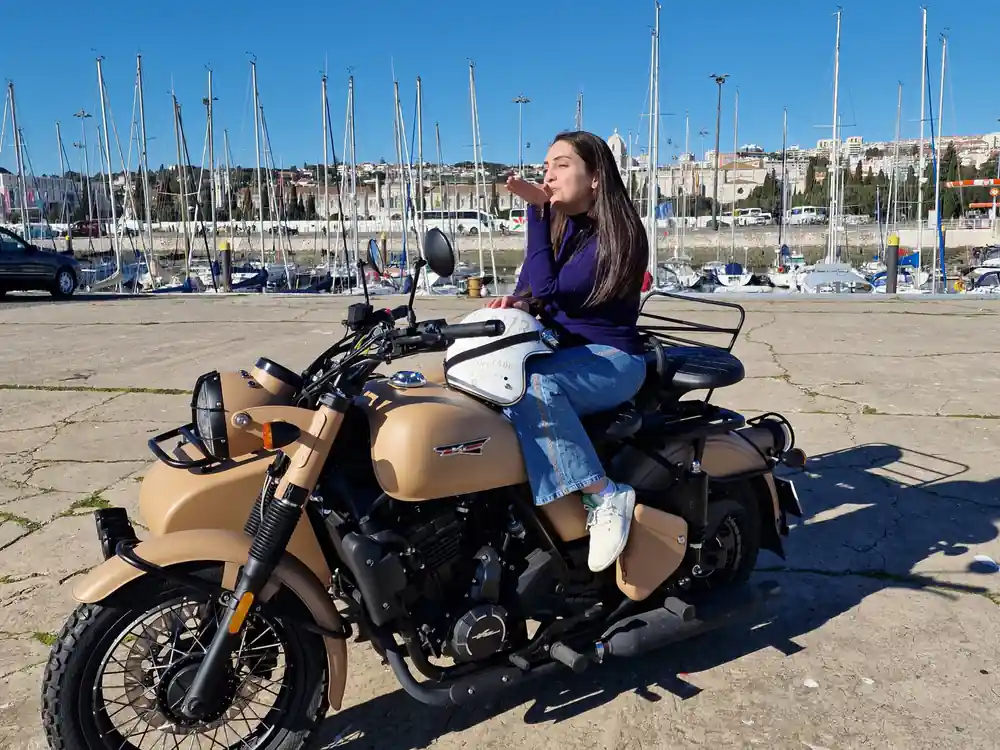
A sidecar outfit is narrow, short and low. It fits where a car fits and turns where a car cannot, and because you are sitting almost on the road surface the cobbles become part of the experience rather than a complaint. The rig cannot lean the way a solo motorcycle does, so it takes corners flat and deliberate, which at the speeds these lanes allow is exactly right.
The other half of the argument is height. Lisbon is a vertical city, and its best moments are the ones where a lane suddenly ends and the whole river is in front of you. An open vehicle at road level gives you those moments without a windscreen pillar in the way.
How the three and a half hours tend to go
The shape is consistent even though the exact route is the driver's to decide on the day. You are collected, you spend the first stretch getting out of the traffic and into the old quarters, and then the pace drops and the stopping starts. Viewpoints, a square, a street worth walking twenty metres of, back in the chair, on to the next.
Three and a half hours is long enough to cross the city properly and short enough that you are not exhausted at the end of it. It fits comfortably into a morning or an afternoon, which is why many people book it on their first full day and then use the rest of the trip to go back on foot to the two or three places that caught them.
Stops are conversations rather than a timetable. If you want longer somewhere, say so. If the light is doing something worth photographing, the driver will usually already be pulling over.
What you will actually see from the chair
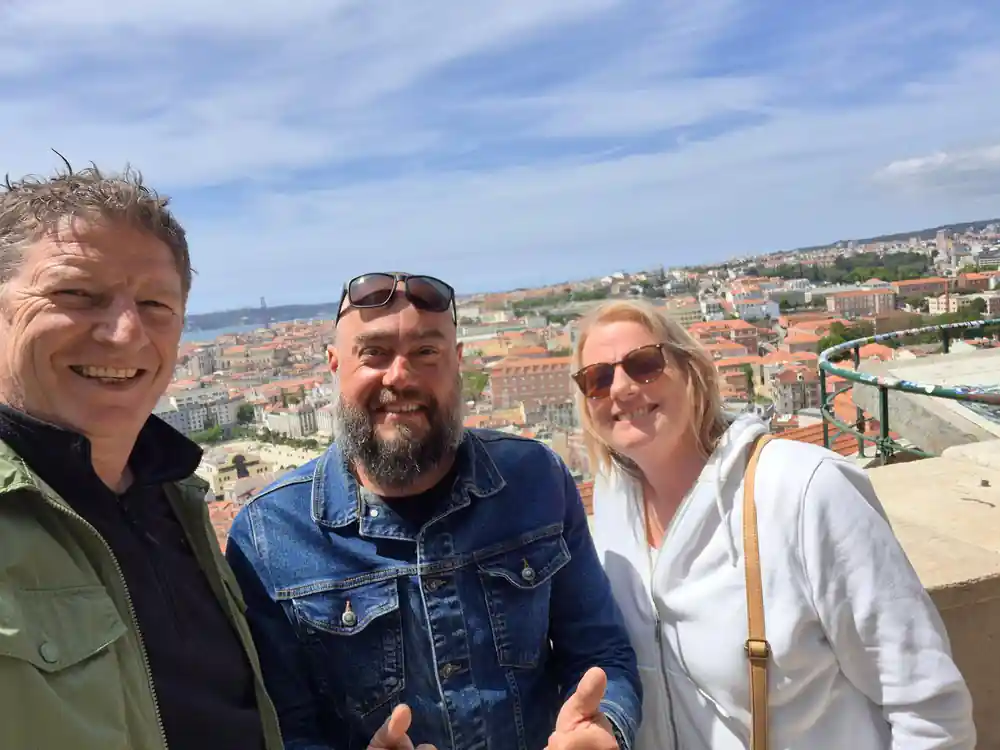
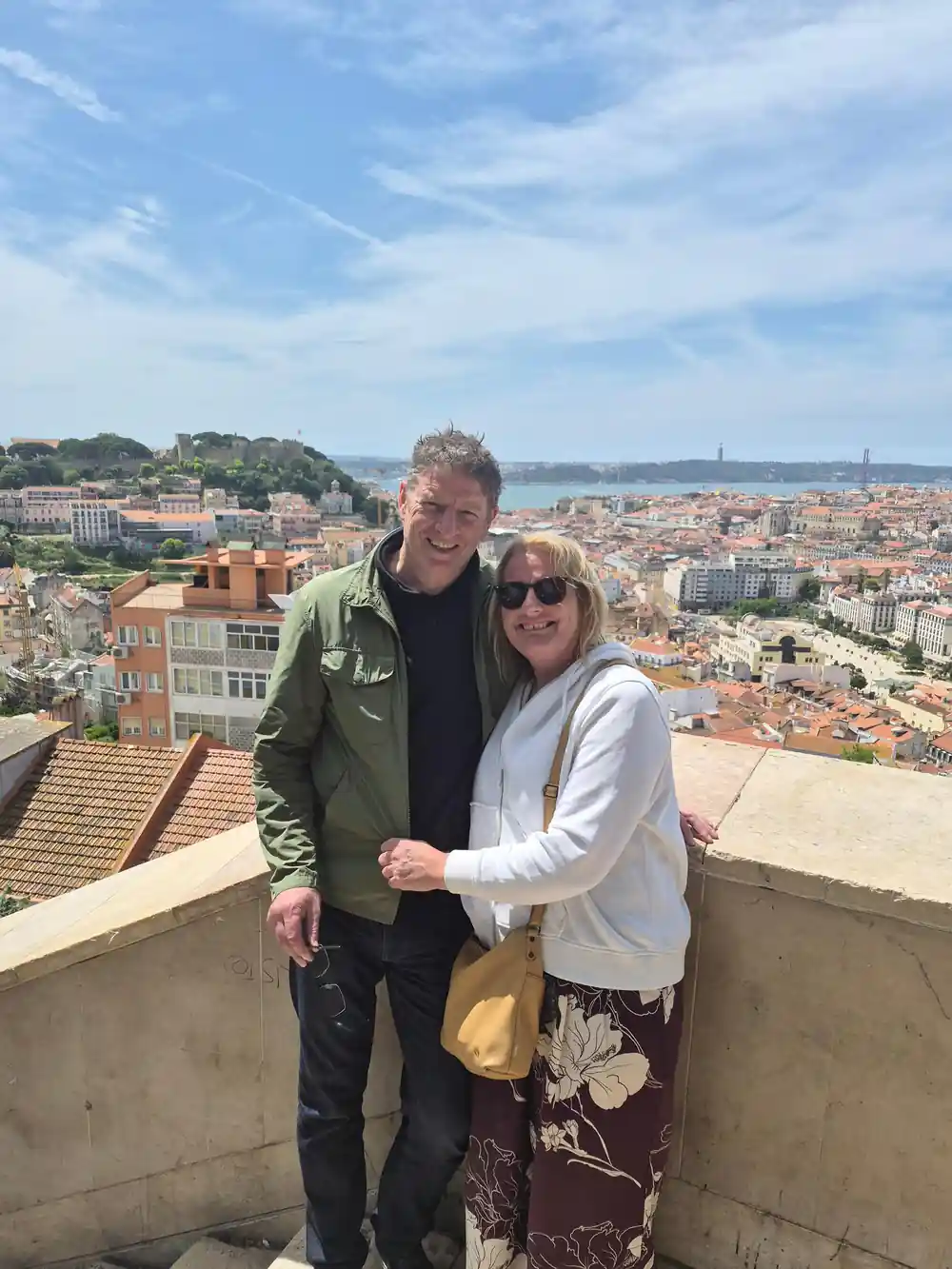
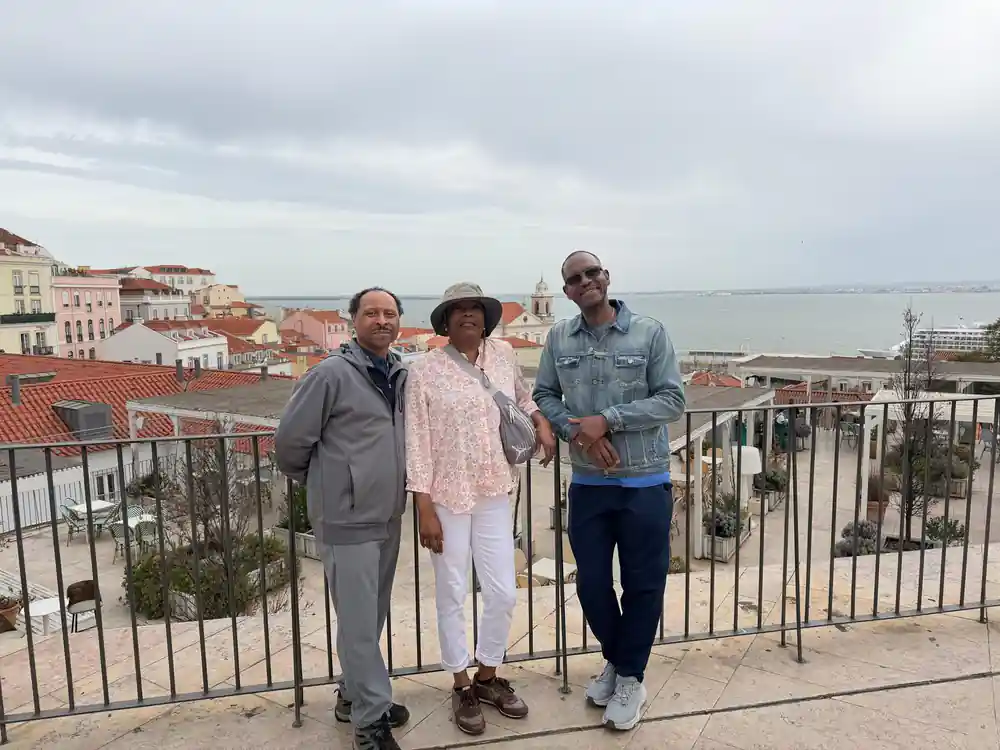
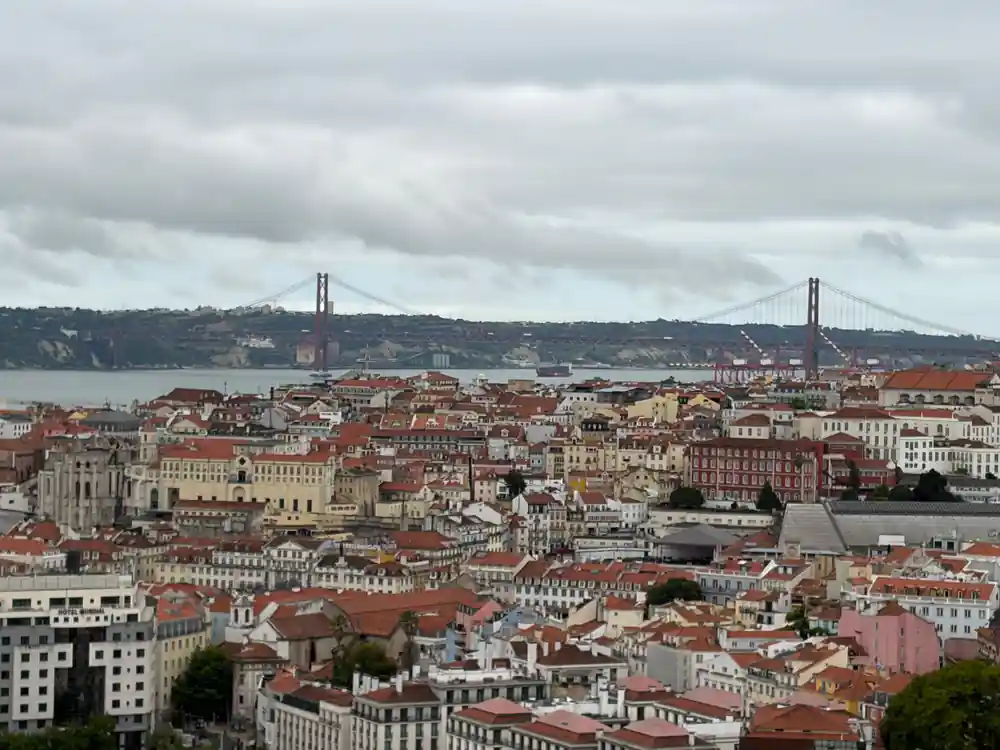
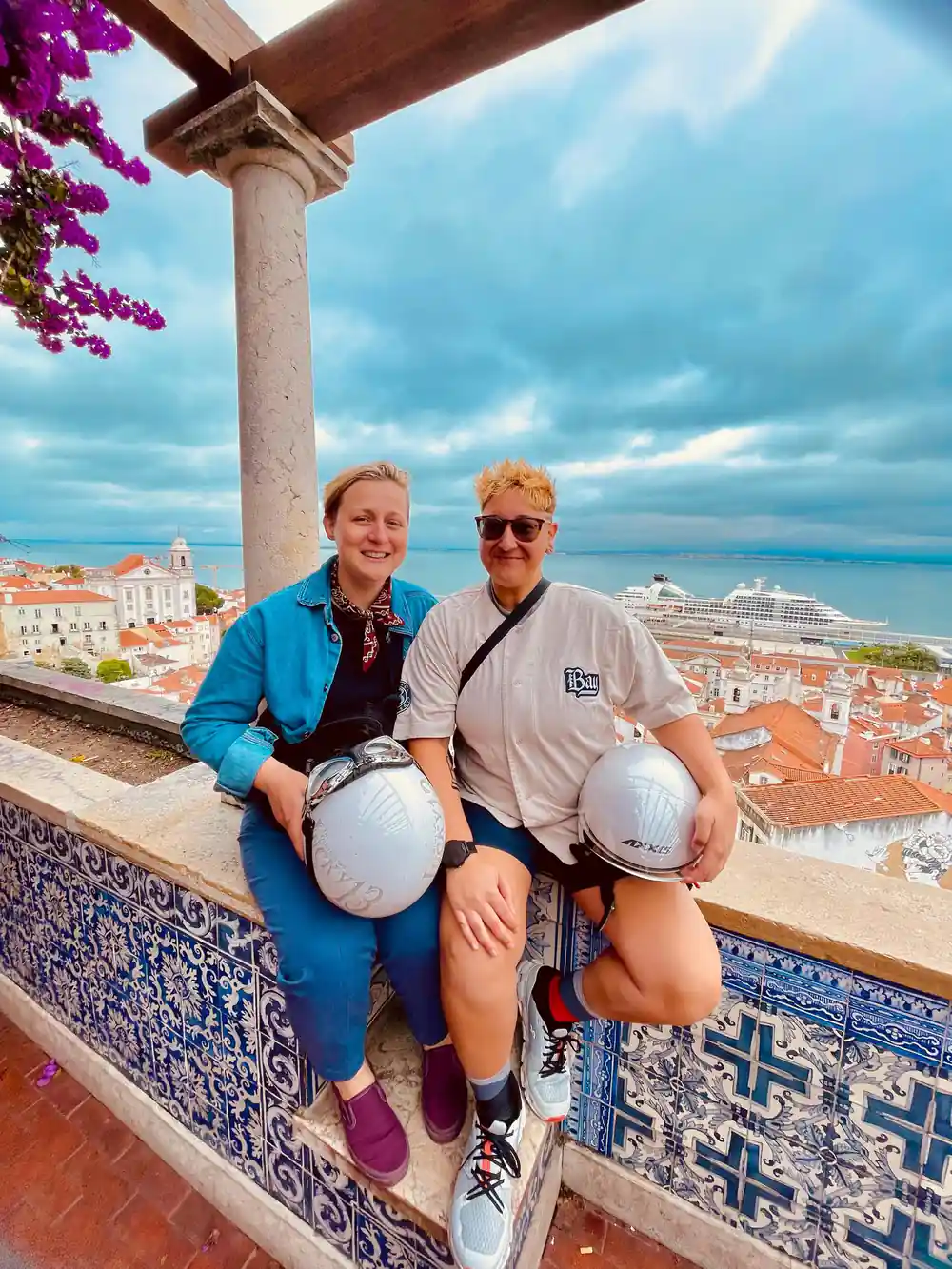
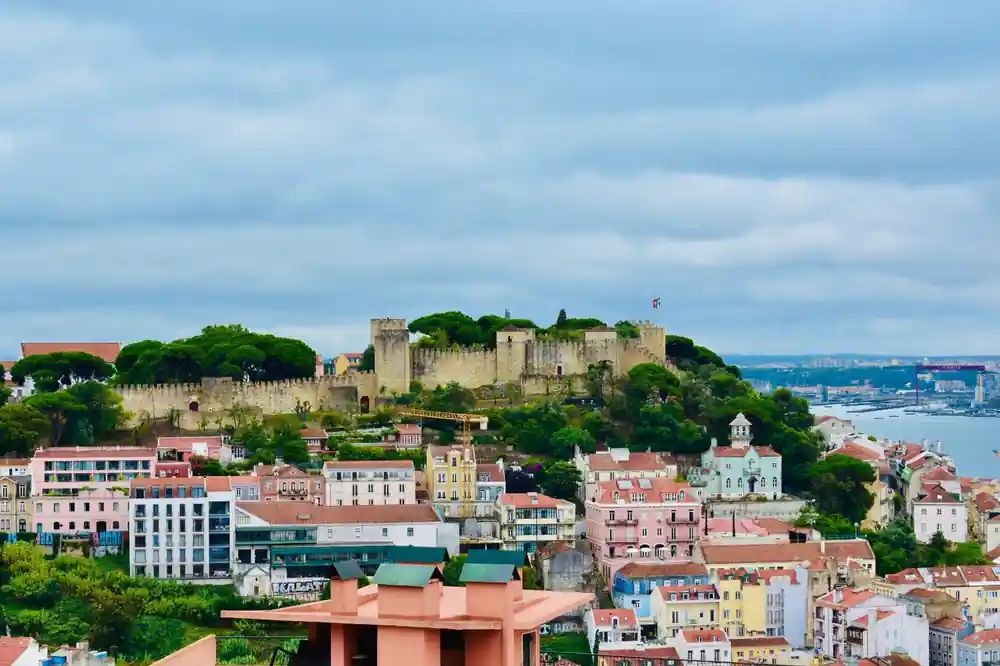
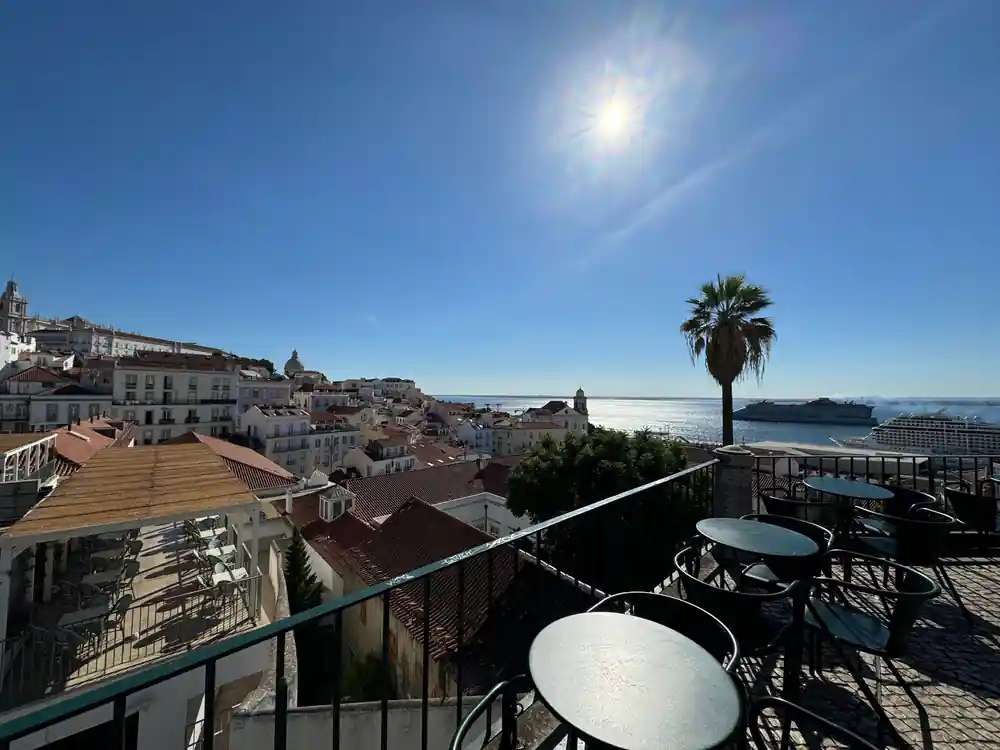
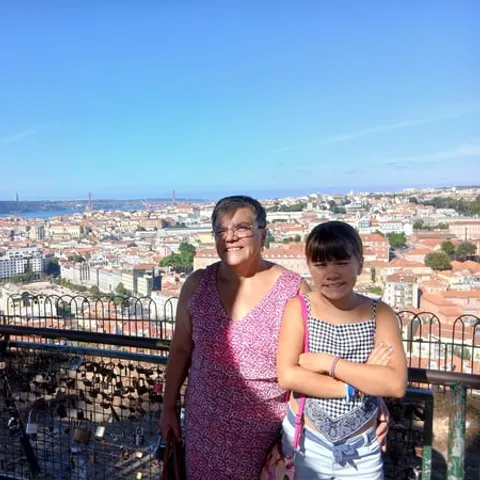
Lisbon from a sidecar is mostly a sequence of elevations. The city is arranged so that you climb, arrive at an opening, look out over terracotta roofs to the Tagus, and then drop back into the lanes. The viewpoints, the miradouros, are where the city puts its benches and its best moments, and they are the natural stopping points for a vehicle this size.
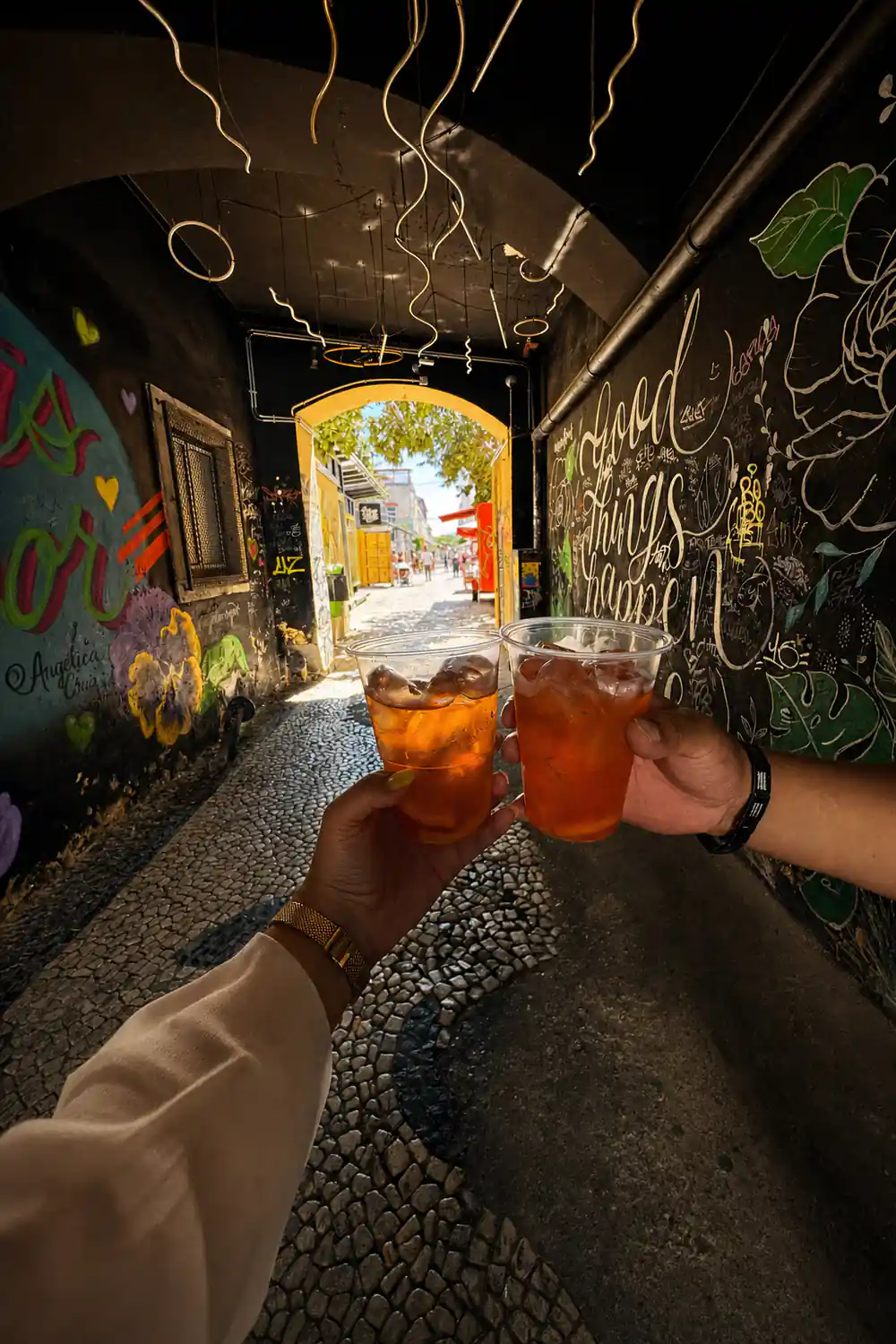
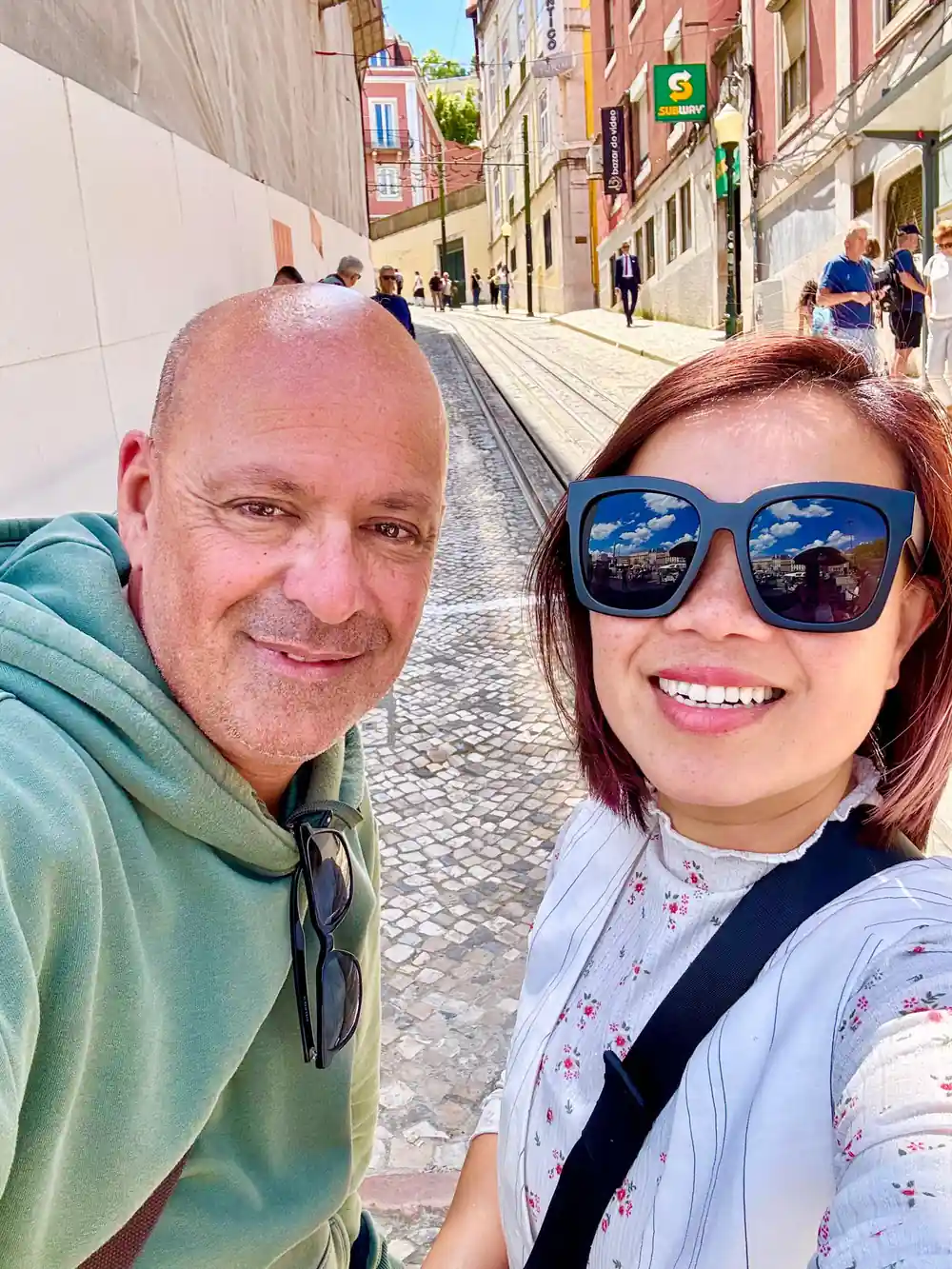
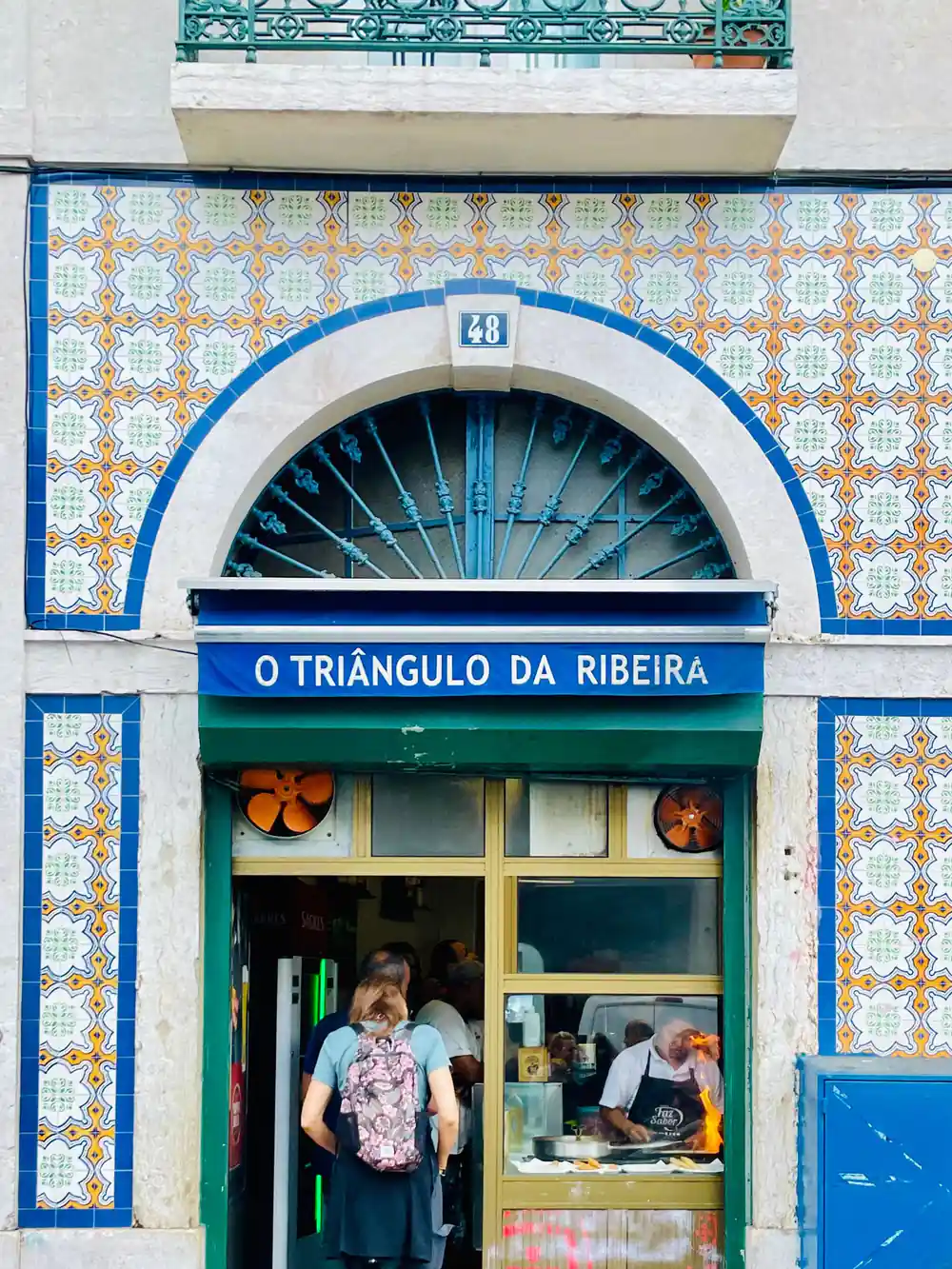
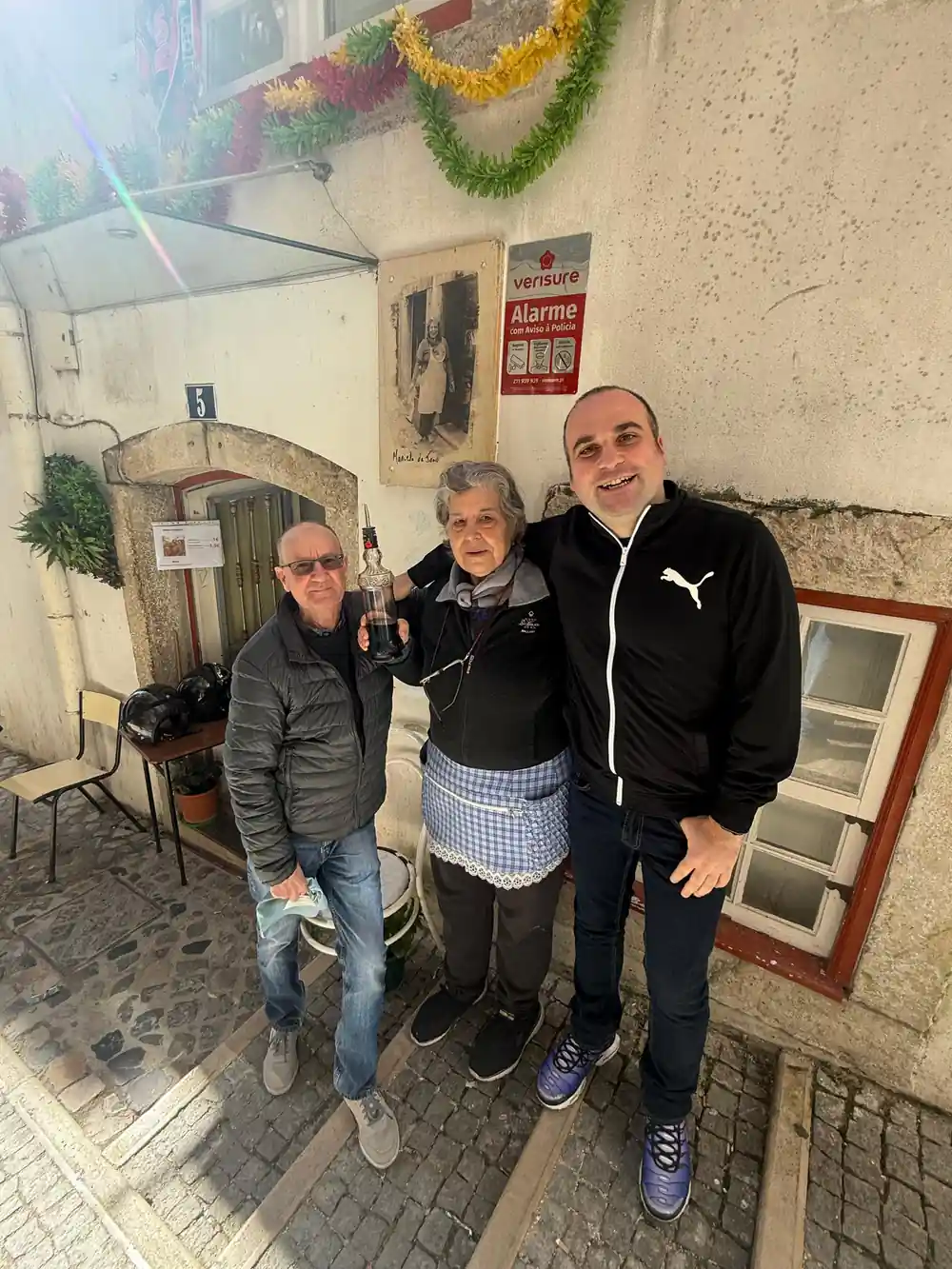
Below them are the quarters that give the city its texture: washing strung between windows in Alfama, azulejo tiles across whole facades, tram rails polished silver by use, and the sound of a fado guitar leaking out of a doorway in the late afternoon. At road level you get all of this at the pace you would get it walking, without doing the climbing.
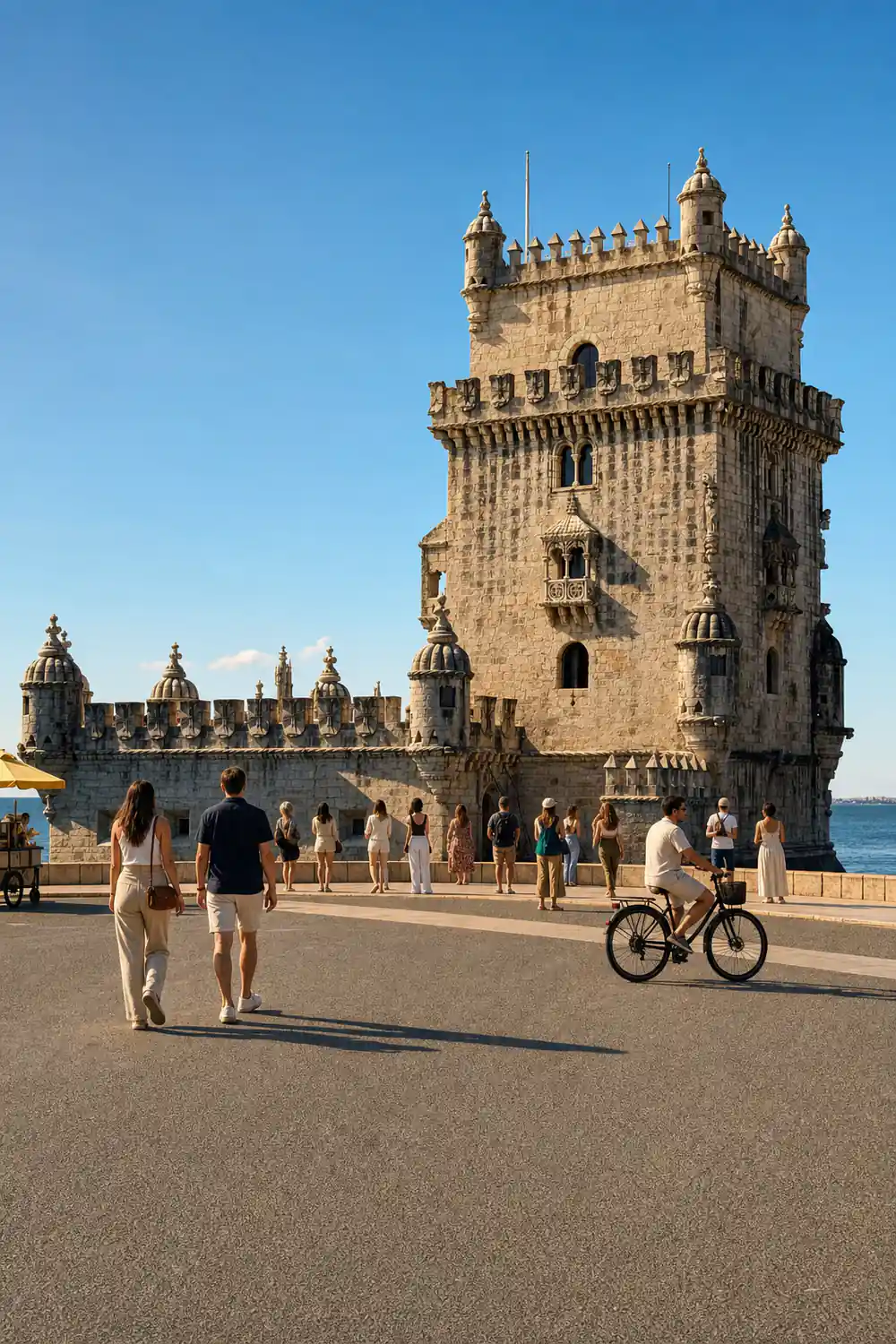
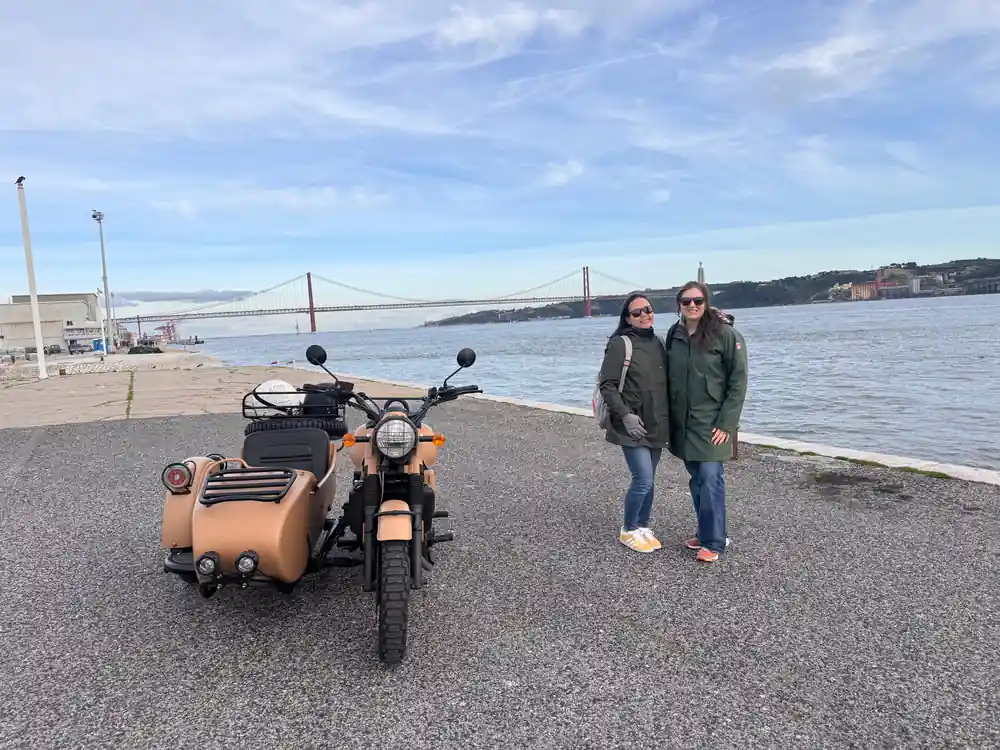
The river is the other constant. Lisbon faces water so wide it was called a sea for centuries, and much of what makes the light here famous is that surface throwing it back at the hills.
Who it suits, and who should think twice
It suits anyone who has looked at a map of Lisbon, seen the contour lines and quietly worried about them. It suits photographers, because you are outside and low and the driver will stop. It suits people who have been here before and want the city rearranged rather than re-listed, and it suits a first visit as an orientation that is actually enjoyable rather than dutiful.
Getting into the chair means stepping down and folding yourself into a low seat, and getting out is the same in reverse. That is straightforward for most people and awkward for anyone with limited mobility, so ask before booking rather than on the morning. If you are travelling with children, ask about the seating arrangement when you book, because it varies by machine.
Weather is the honest caveat. This is an open vehicle. Lisbon is generous about that for most of the year, but between November and March a shower is entirely possible, and the answer is a jacket rather than a cancellation.
Booking it without getting it wrong
Two decisions matter. The first is time of day: morning light is cleaner and the lanes are emptier, late afternoon is warmer and the viewpoints are at their best, and both are good for different reasons. The second is what you do afterwards, because a sidecar tour is unusually good at generating a list of places you now want to walk back to.
Give the pickup address exactly as your accommodation is registered, including the floor or the entrance if it is one of the older buildings, and be outside a couple of minutes early. Lisbon streets do not offer many places to wait with a motorcycle and a chair.
Entrance tickets and food are not part of it, so if you want to go inside somewhere or stop for a coffee, bring the means to do it. Everything else is arranged.