At a glance
- Hotel pickup and drop-off are part of the three and a half hours, so the time is measured door to door rather than from a meeting point somewhere in the city.
- The machine parks where a car cannot, so the tour is a sequence of short halts rather than a long drive with two breaks in it.
- Traffic, weather, light and what you have already seen all move it. The shape stays the same; the specific streets are the driver's call.
- Long enough to cross the city properly, short enough to leave the rest of the day intact. Many people book it early in a trip and walk back to favourites later.
Why the clock starts at your door
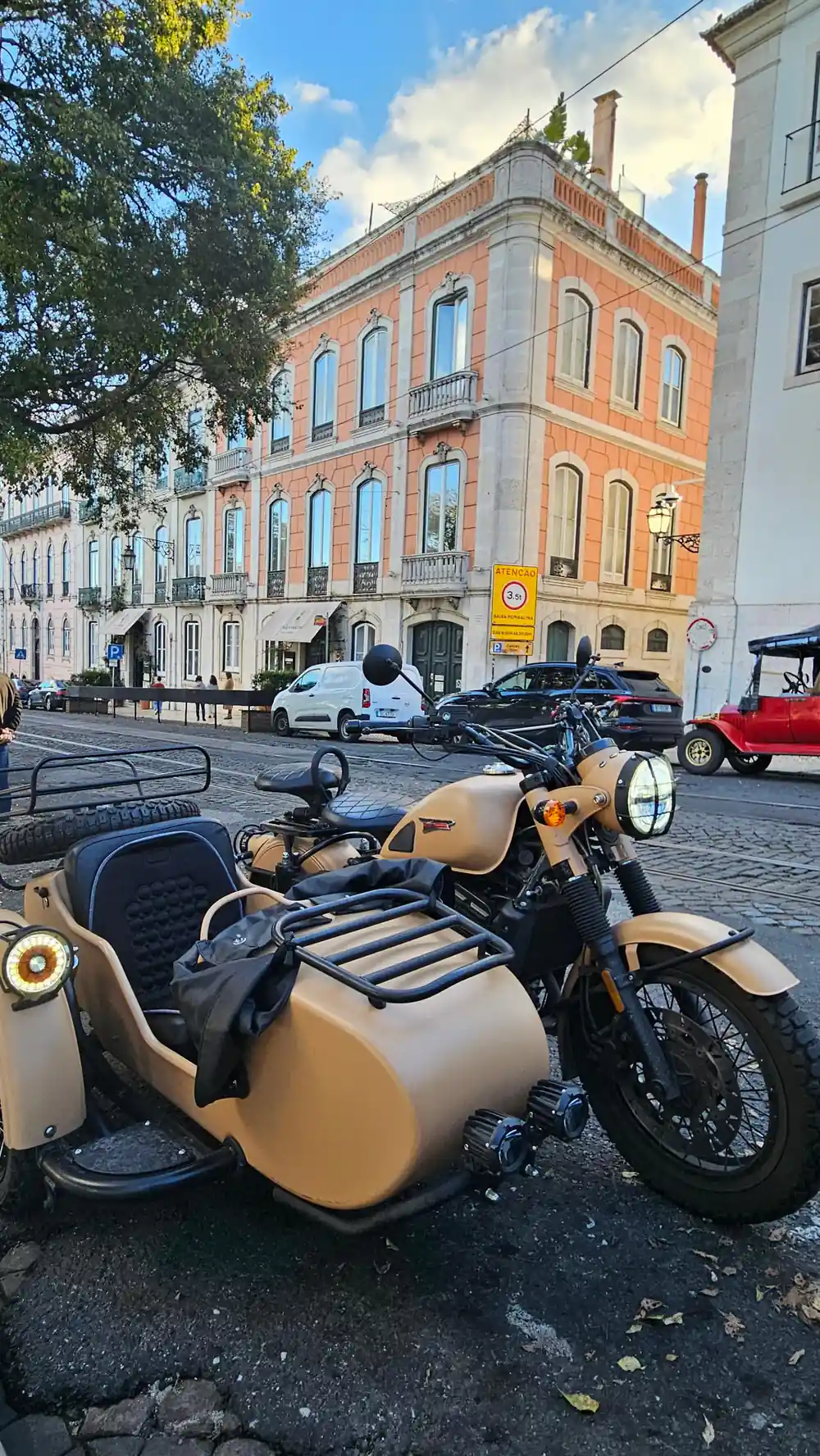
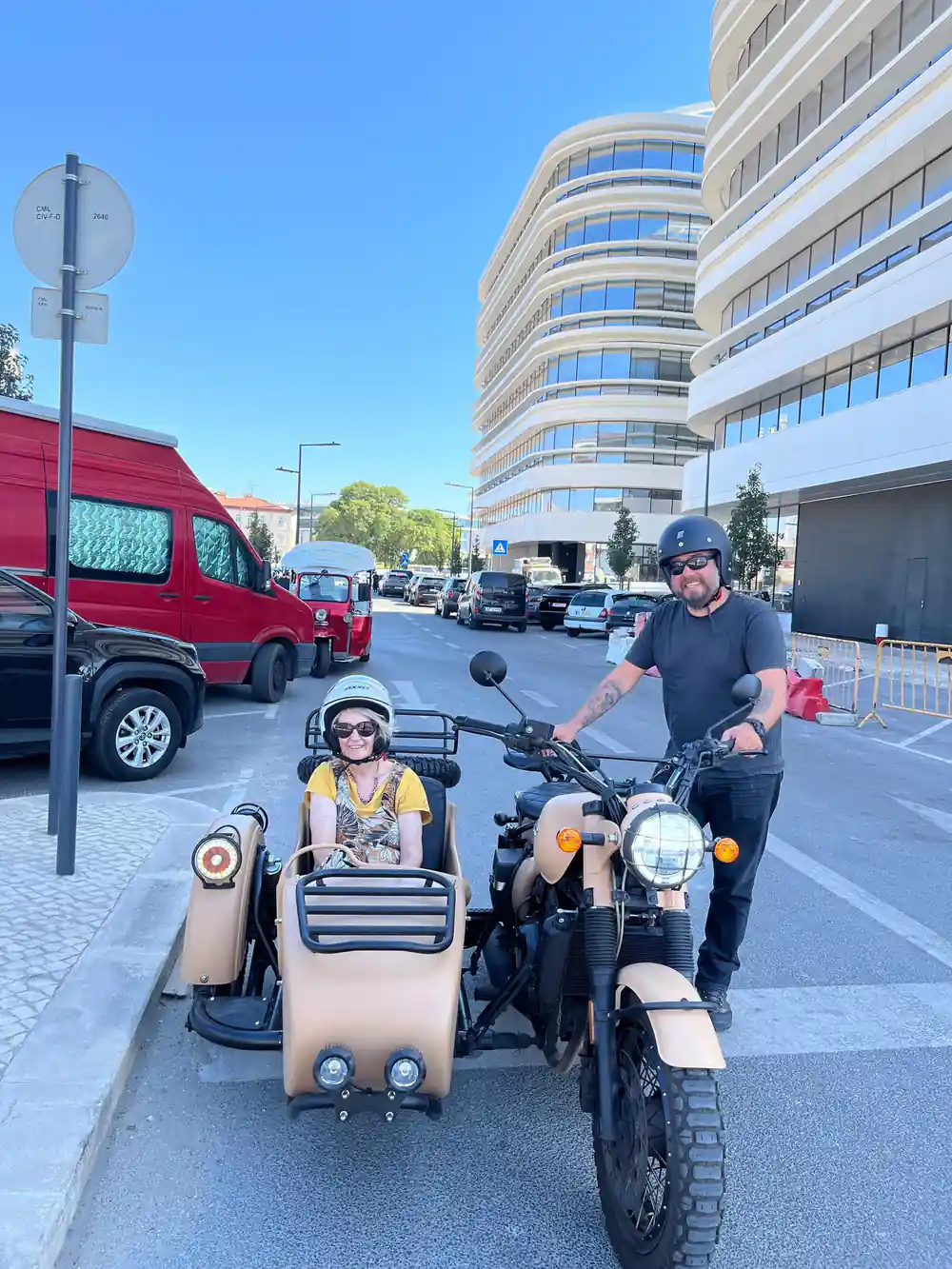
Hotel pickup and drop-off are included, and in Lisbon that is worth more than it sounds. The alternative in a city this steep is a walk to a meeting point that may be uphill, or a metro journey that ends with a climb, and either one means arriving warm and slightly behind. Here the machine comes to the address you gave and leaves you back at it.
It also removes the most common source of confusion on any tour, which is finding the guide. There is no square to identify, no umbrella to look for and no ambiguity about which corner. If your accommodation is on a lane too narrow to stop in, the operator will name the nearest point they can wait, and it will be a short walk rather than a journey.
The practical implication is that three and a half hours is genuinely three and a half hours of tour, not two and a half hours plus the logistics of getting to it.
The first stretch
The opening portion is transitional. Depending on where you are staying, there is usually a run through ordinary city traffic to get from the modern parts of Lisbon into the historic ones, and this is the fastest and least interesting part of the tour. It is also where you find out what the machine feels like at speed and get the wind properly in your face.
This is deliberate rather than wasted. Arriving into the old quarters from outside gives you the contrast between the planned nineteenth century avenues and the medieval lanes above them, which is most of what there is to understand about the shape of Lisbon.
Once the streets narrow, the pace drops sharply and stays down. From that point onward the tour is conducted at something close to walking speed with the engine doing the climbing.
The middle, which is the tour
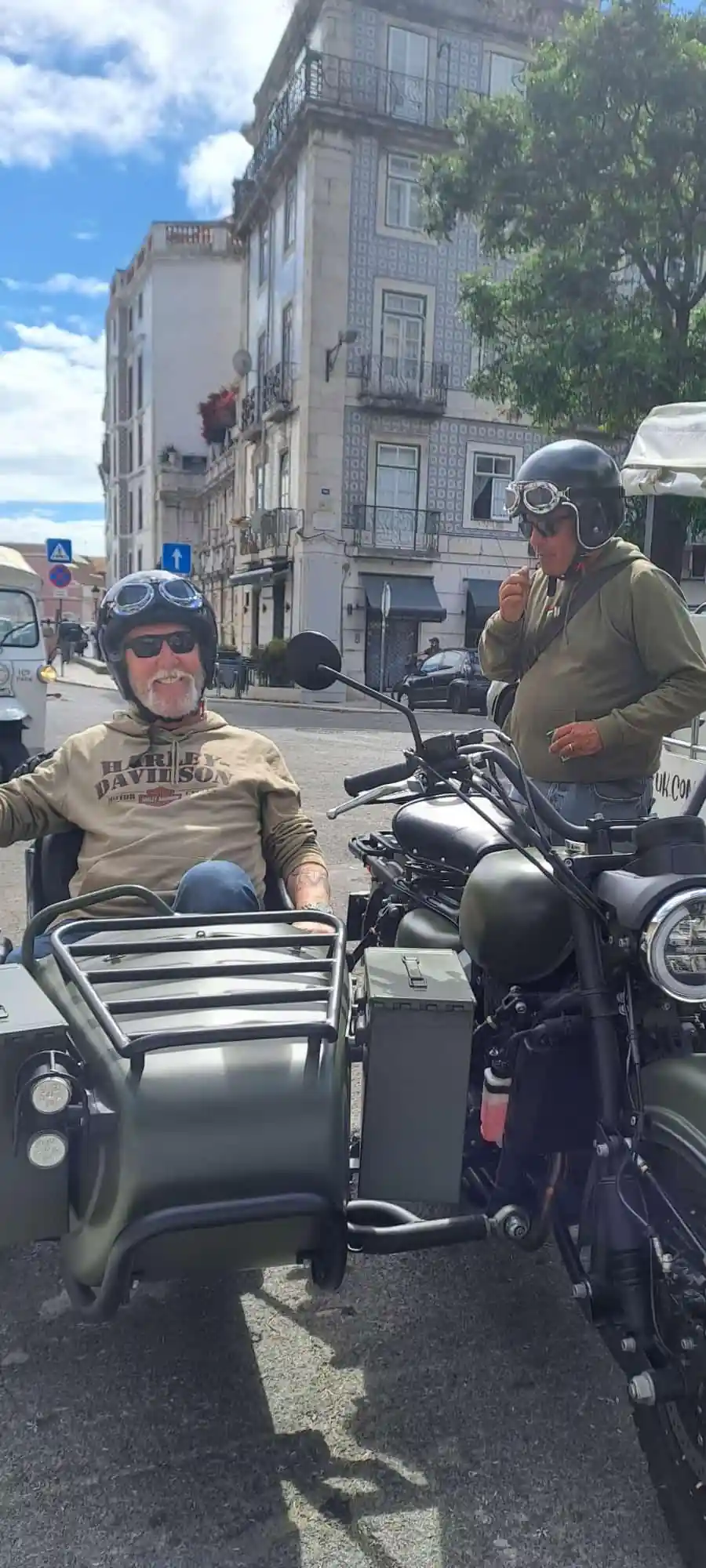
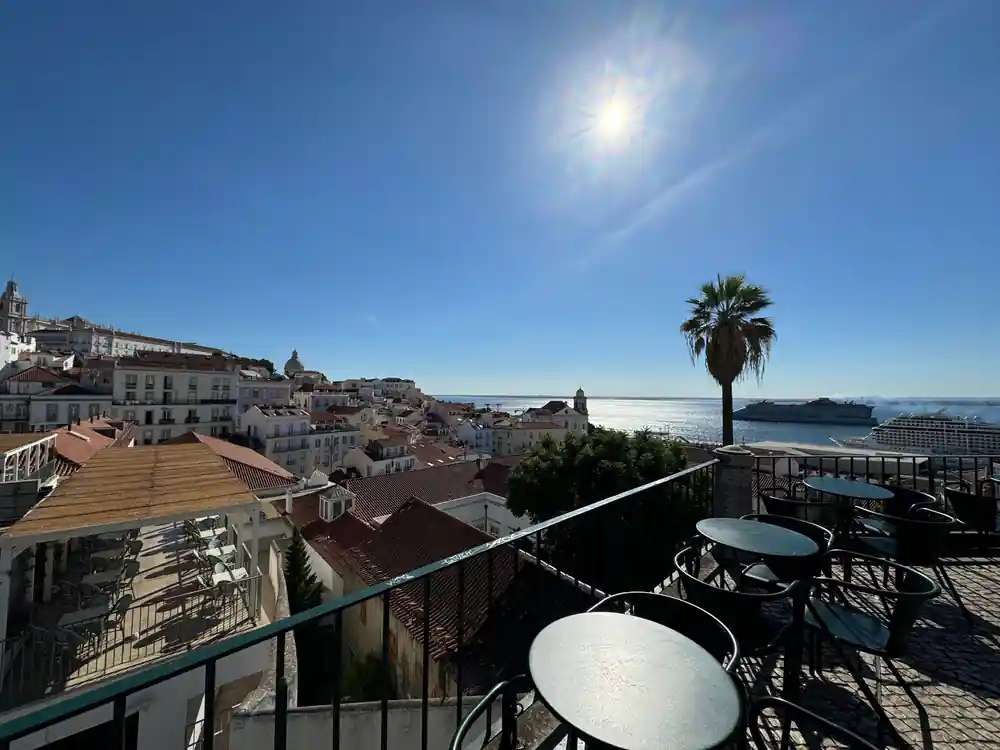
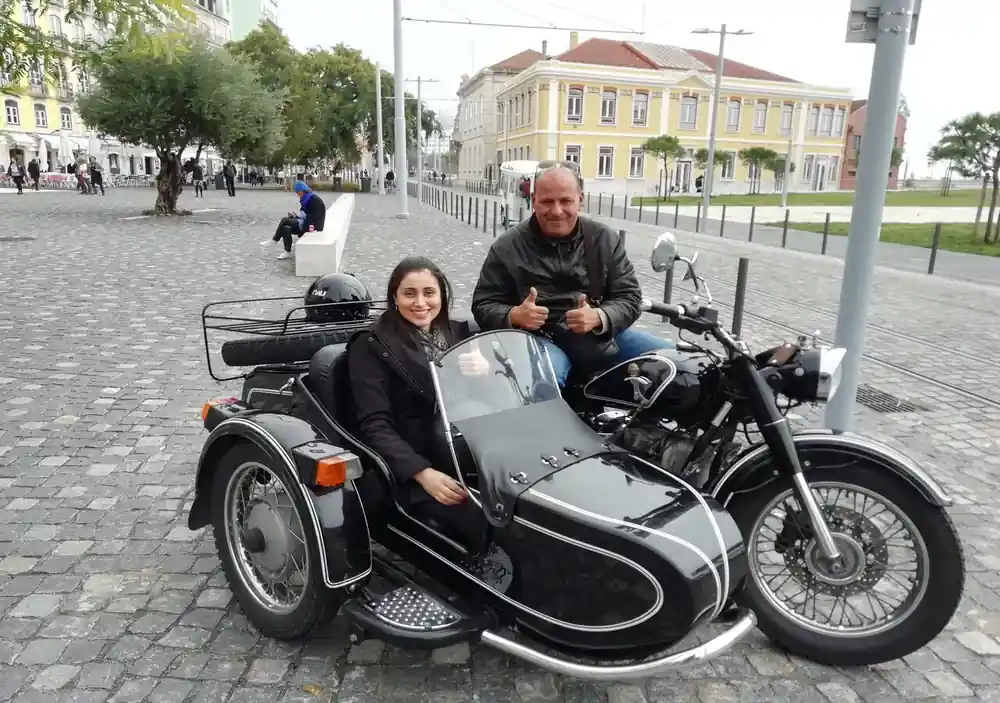
The core of the three and a half hours is a loop through the hill quarters with repeated stops. The exact sequence varies, but the rhythm is consistent: climb a lane, stop at a terrace, stand and look and be photographed, back in the chair, drop down the other side, cross to the next hill, repeat.
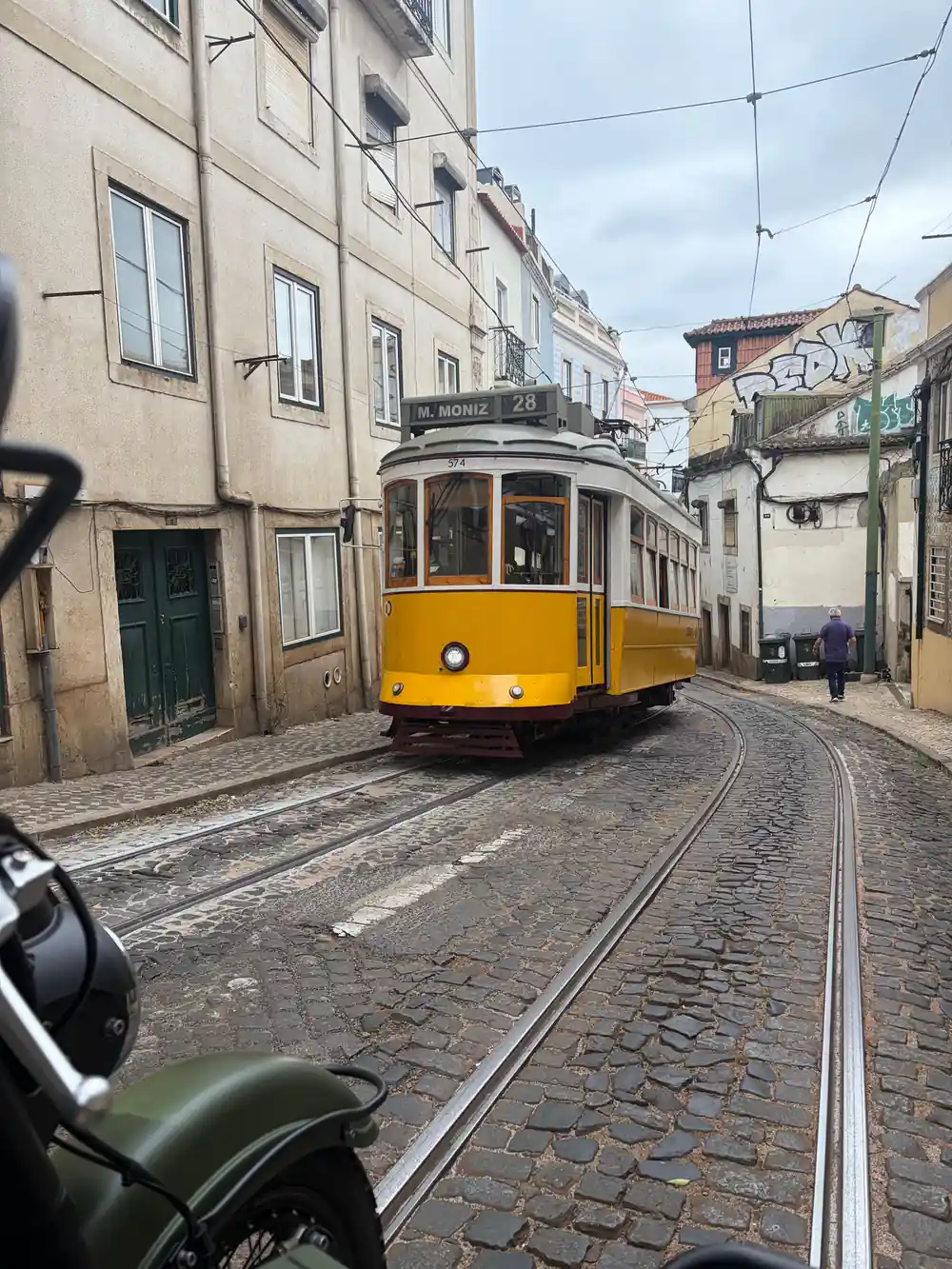
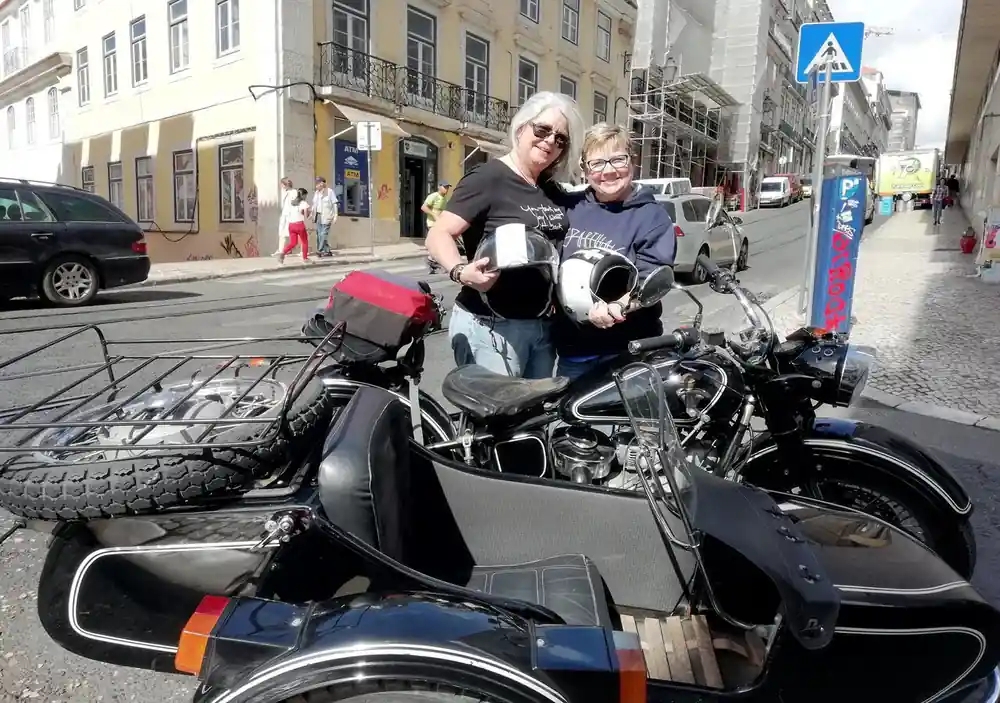
Between the terraces there are the smaller stops that make the difference: a corner where the tram line and a decorated facade line up, a square with a fountain, a doorway with a view down a flight of steps. These take two minutes each and there may be several of them, and they are the ones people remember.
There is normally at least one stop long enough to buy a coffee if you want one. Food and drink are not part of the tour, so this is your own arrangement, but the pause is usually built into the shape of the afternoon.
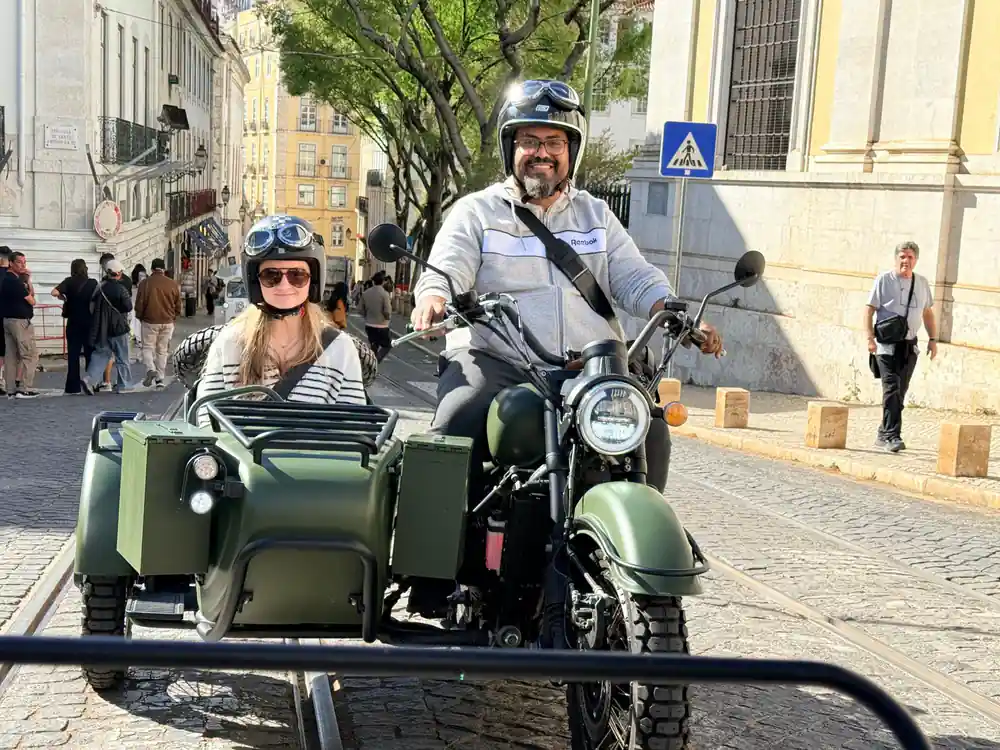
Most of the three and a half hours is spent stopped, not moving
What moves the route around
Traffic is the largest factor. Lisbon has cruise ship days, festival days and ordinary weekday congestion, and a driver who does this daily knows which approach will be blocked at eleven in the morning. Expect the order of the stops to be arranged around that rather than around a printed itinerary.
Light is the second factor, and a good driver plans for it. The western terraces are at their best late in the day and the eastern ones early, so a morning tour and an afternoon tour of the same city are legitimately different tours with a different sequence.
The third is you. If you spend fifteen minutes at the first viewpoint because it is the best thing you have seen all week, that comes out of somewhere else, and the driver will rebalance without making a point of it. This flexibility is the advantage of a vehicle carrying one or two people rather than forty.
The last stretch and the drop-off
The tour ends back at your accommodation, which means the final section is another transitional run and usually takes a route you have not already covered. Drivers tend to use it for whatever they judge you have missed, so it is worth staying attentive rather than assuming the interesting part is over.
Being returned to the door matters at the end more than at the beginning. Three and a half hours in the open air is pleasantly tiring, and not having to work out a route home while windblown and full of photographs is a small mercy.
If you want to be dropped somewhere other than where you were collected, ask at the start rather than the end. It is often possible and it is much easier to plan for than to improvise.
Fitting it into a trip
The strongest argument is to do it early. A sidecar tour is an unusually efficient orientation: in one afternoon you get the geography of the hills, the difference between the quarters, several viewpoints and a working sense of how the city fits together, which makes everything you do afterwards better informed.
It also generates a list. Almost everyone finishes with two or three places they want to return to on foot, and having the machine show you where they are and how to get back to them is half the value.
As for time of day, morning gives cleaner light and quieter lanes, late afternoon gives warmth and the best terraces at their best. Both are good, so choose around the rest of your day rather than agonising over it.
Three and a half hours, door to door, with the hills included
from US$116Reserve now & pay later
Questions people ask
How long is the Lisbon sidecar tour?
Does the time include hotel pickup?
Is the route the same every time?
How many stops does the tour make?
Is there time to get a coffee?
Can I be dropped off somewhere else?
Morning or afternoon: which is better?
Is three and a half hours long enough?
How the tour runs
Pickup at your accommodation
The machine comes to the address you gave when booking. Be outside a couple of minutes early: Lisbon streets offer few places to wait with a motorcycle.
Into the old quarters
A faster run out of the modern traffic and up into the historic streets. This is where you get the wind and find out what the machine feels like.
The viewpoint loop
Repeated short stops across several hills: climb a lane, stand at a terrace, take photographs, cross to the next. This is the bulk of the time.
The small stops in between
Corners, squares and doorways worth two minutes each. These are unscheduled, driver's choice, and usually the parts people describe afterwards.
A pause if you want one
There is normally a stop long enough for a coffee. Food and drink are not included, so this is your own arrangement rather than part of the booking.
Drop-off at the door
Back to where you started, usually by a different route so you see something new. Ask at the beginning if you would rather finish somewhere else.