At a glance
- A sidecar motorcycle is a bike with a third wheel and a passenger car bolted rigidly to one side. You sit at road level, facing forward, beside the driver rather than behind.
- Three wheels on the ground means the whole rig stays flat through a corner. That changes how it is steered, how it feels, and why it copes with cobbles so well.
- The chair sits on one side only, so the machine pulls differently accelerating and braking. Driving one properly is a learned skill, not a motorcycle licence with extra luggage.
- The passenger seat is the chair. The whole machine is an outfit or a rig. The person in the chair is ballast, affectionately, because their weight genuinely changes the handling.
The parts, and what each one is called
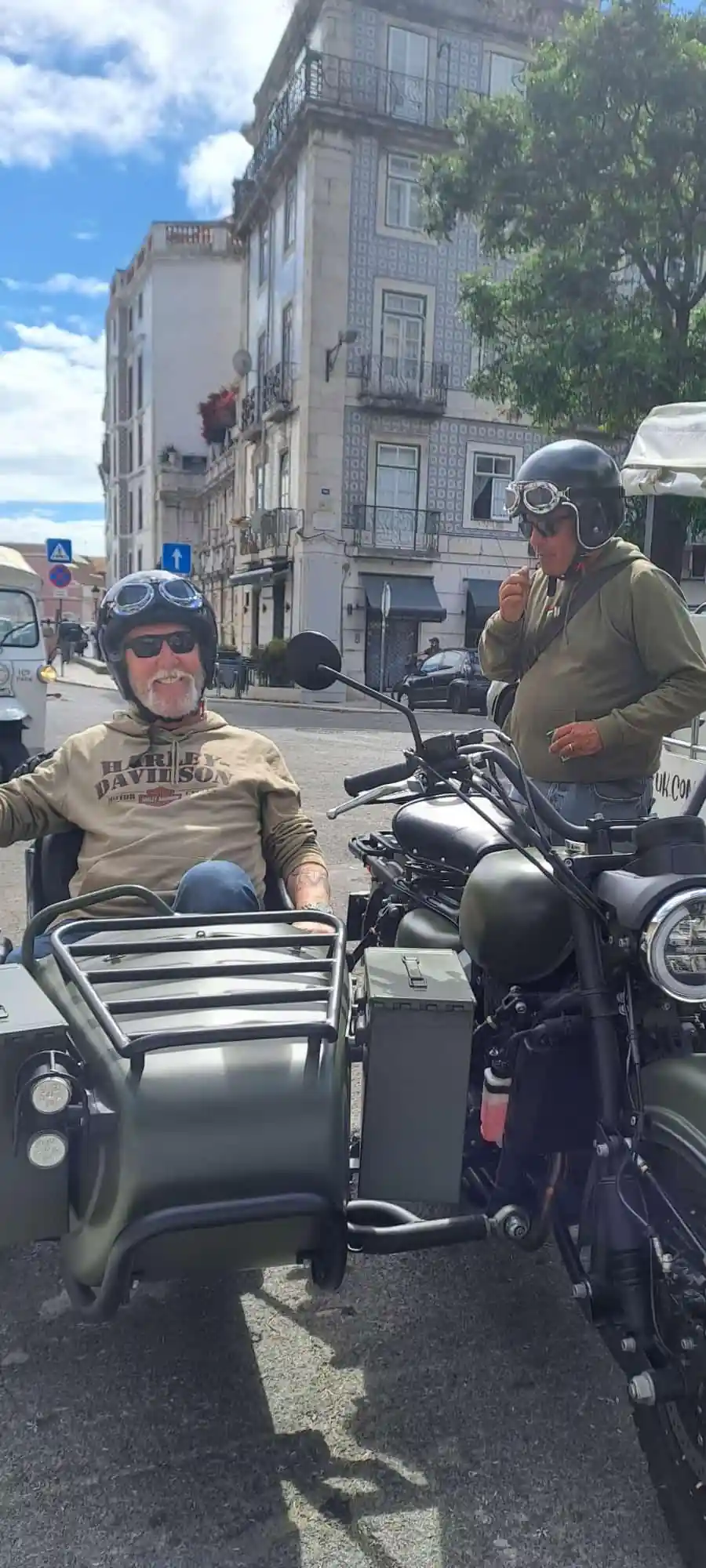
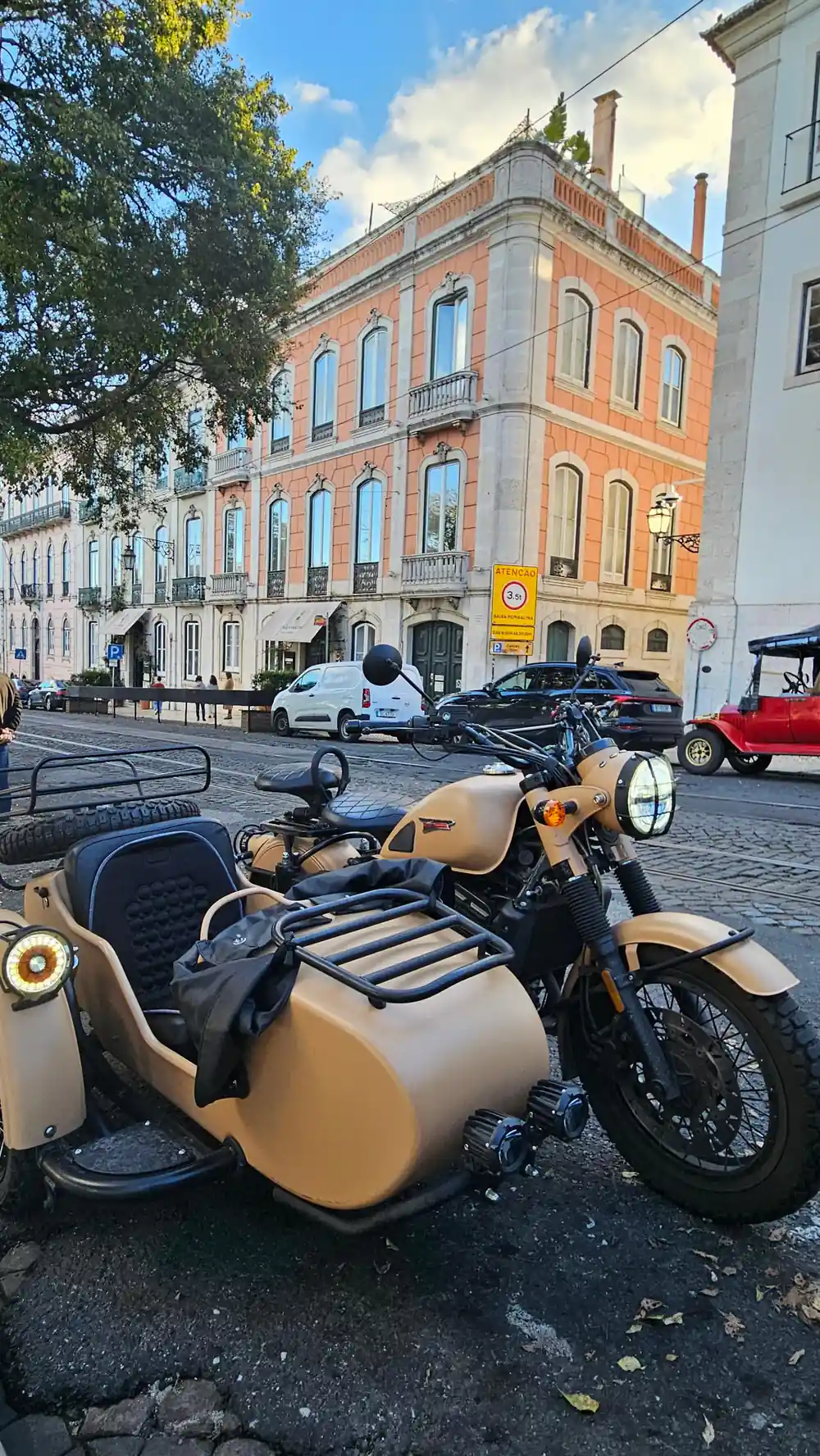
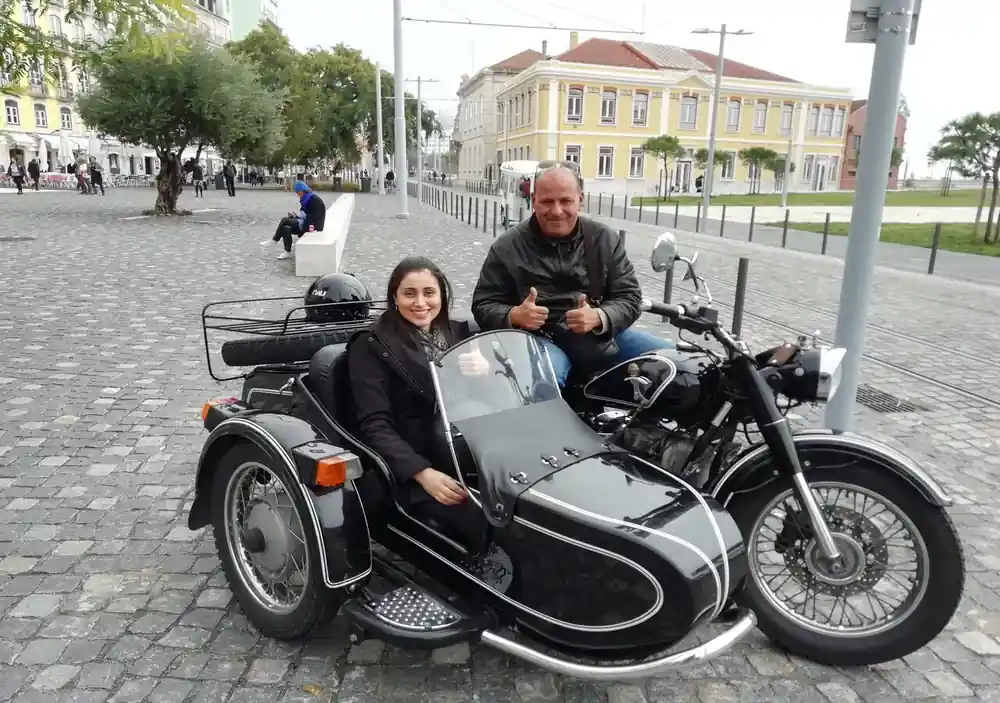
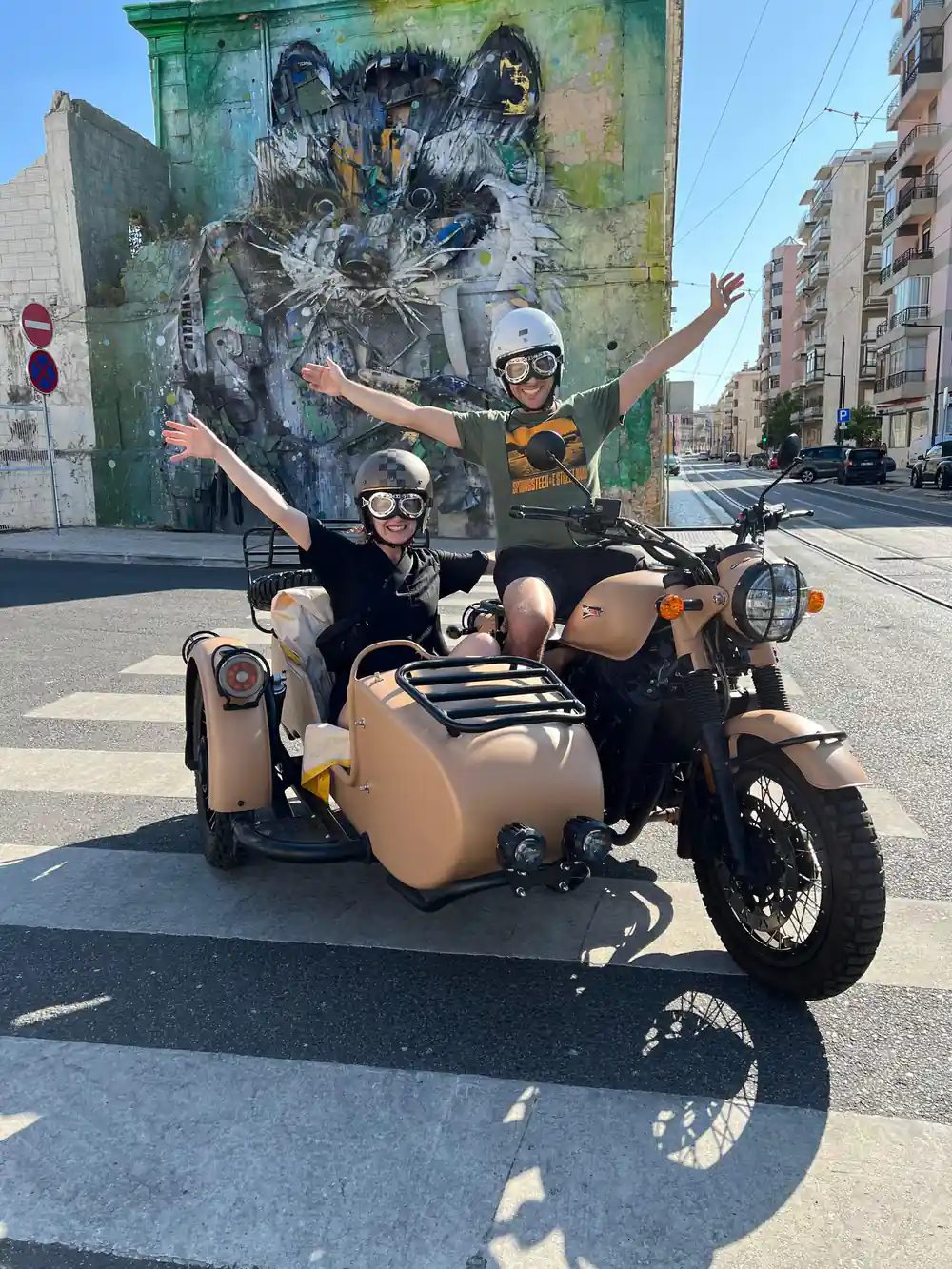
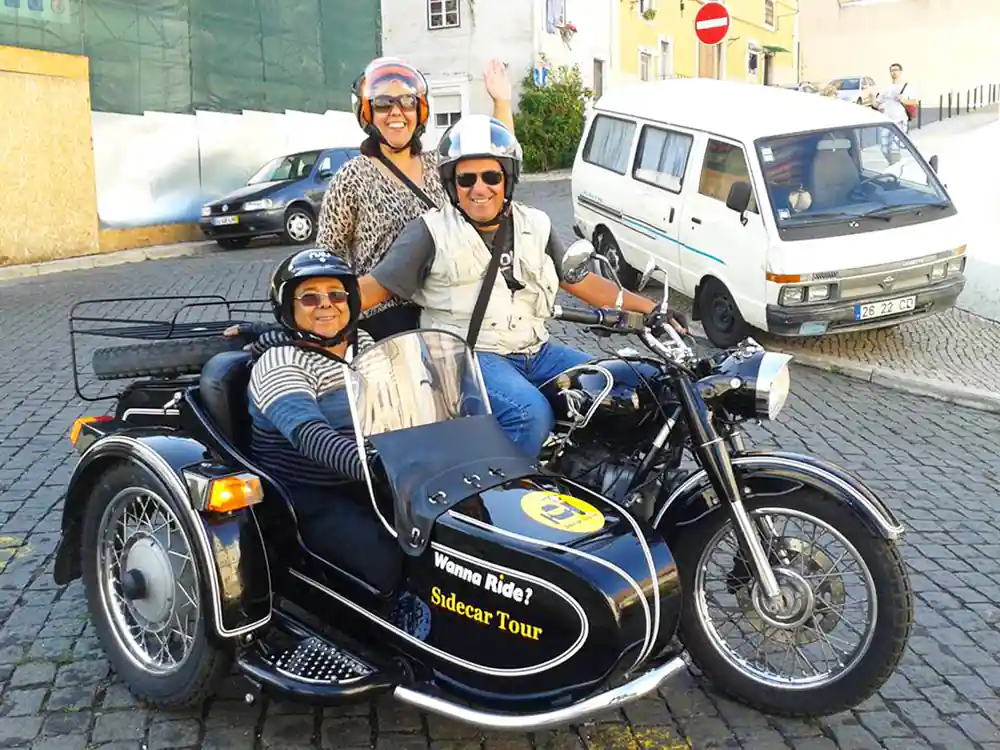
A sidecar motorcycle is three things joined together: a motorcycle, a chassis that reaches out sideways from it, and a single-wheeled body on the end of that chassis with a seat inside. The whole assembly is an outfit, or a rig. The body is the chair, which is a very old piece of slang and the one that sticks once you have sat in it, because that is precisely what it feels like.
The chassis is the interesting part. It bolts to the motorcycle frame at three or four points and it is not a hinge: the chair does not move independently of the bike. That rigidity is what makes the machine stable and what stops it behaving like a motorcycle at all. The third wheel usually trails slightly behind the bike's rear wheel and carries very little of the weight until you turn.
Most chairs have a low door or a cutaway side, a windscreen of some kind, and a boot space behind the seat that is smaller than it looks. Older machines often have a folding hood for rain. What they do not have is a roof in any useful sense, which is the entire appeal.
Why it cannot lean, and why that matters
A solo motorcycle turns by leaning. The rider tips the machine into the corner and the geometry does the rest. A sidecar outfit cannot do this, because the third wheel holds it upright. It has to be steered like a vehicle, by turning the handlebars, and it resists the turn the whole way round.
This is not a defect, it is a different machine. But it means that anyone who can ride a motorcycle cannot automatically drive an outfit. The reflexes are wrong in a way that shows up immediately: a rider who tries to lean into a corner on a rig simply does not turn. Drivers who do this professionally have usually spent a long time learning it.
For the passenger the consequence is a flat, planted ride. You do not tip. On a steep cobbled lane with a camber, which describes a great deal of Lisbon, that stability is exactly what you want, and it is why the machine copes with surfaces that make a two-wheeler nervous.
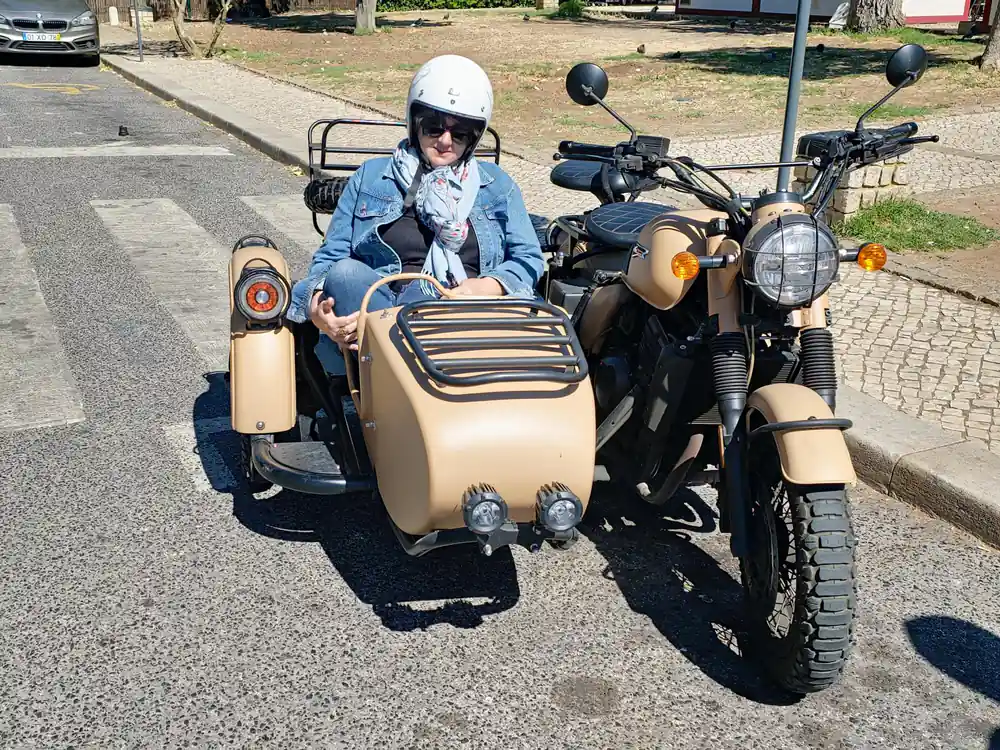
The chair, the chassis and the third wheel: one rigid machine rather than a bike towing something
The asymmetry problem
Everything about a sidecar is lopsided. The mass sits on one side, the driven wheel is on the other, and the third wheel is not driven at all on most machines. Accelerate hard and the outfit wants to turn away from the chair. Brake hard and it wants to turn towards it. A driver is correcting for this constantly, mostly without thinking about it.
Weight in the chair changes the balance, which is why the passenger is cheerfully referred to as ballast. An empty chair handles differently from a full one, and a driver who has spent years with the same machine can feel the difference between one passenger and two.
None of this is something you have to manage from the seat. It is worth knowing only because it explains why the ride feels deliberate rather than darting, and why the driver takes a line through a corner that looks wider than a car would need.
Which machines end up as tour outfits
Sidecar rigs used for city tours tend to be older, and there is a practical reason as well as a romantic one. Sidecars were a mass-market product for the first half of the twentieth century and a specialist one afterwards, so the supply of suitable machines is heavily weighted towards mid-century designs and towards the handful of manufacturers who never stopped.
The other reason is that an old outfit is a better advertisement than a new one. A vintage machine in good condition stops conversations in the street, and a tour that runs on one is selling the machine as much as the route. The maintenance burden is real, which is why operators who do this well tend to be obsessive about their vehicles.
What matters to a passenger is condition rather than age. A well kept forty-year-old outfit is a better ride than a neglected recent one, and it is usually obvious which you are looking at within a few seconds of walking up to it.
3 wheels
Three wheels on the road instead of two is the whole difference: the outfit stays flat through a corner and has to be steered rather than leaned.
What it is like to be in one
You sit low. The seat base is not far off the height of a car's sill, so your eye line is somewhere around the waist of a person on the pavement and well below the wing mirrors of the traffic. Looking up at buildings from that position is a genuinely different view of a city, and in a place with as much decorated facade as Lisbon it is most of the point.
It is loud, in a pleasant way, and it is windy at any speed above walking pace. You feel the road surface through the seat rather than hearing about it later. Conversation is possible at low speed and largely impossible at higher speed, which is why the talking tends to happen at the stops.
The last thing is social. A sidecar attracts attention constantly. People wave, children point, other drivers give way for no reason other than curiosity. It is a slightly absurd way to travel and everyone involved knows it, which is a large part of why it works.
Getting in and out
The chair is entered by stepping over a low side and lowering yourself into the seat, and left the same way in reverse. There is usually a handhold and the driver will steady the machine. It is not difficult, but it is a movement that requires bending and a certain amount of leg, and it is worth being honest with yourself about that before booking rather than on the day.
Once you are in, there is normally a blanket or an apron for your legs and somewhere to wedge a bag. Take the things you will want in the first hour and leave the rest at the hotel, because the storage is genuinely modest.
Then you sit, the machine starts, and the first corner arrives and does not feel like a motorcycle at all. That is the moment most people stop worrying about how they look and start enjoying it, and from there the rest of the ride takes care of itself.
See what the machine does with a city built on hills
from US$116Reserve now & pay later