At a glance
- Each reaches a different version of the city. Most people who enjoy Lisbon end up doing two or three of them, usually starting with whichever covers the most ground.
- Walking reaches everything and makes you climb every hill. Trams follow fixed rails. Tuk-tuks and sidecars both go where cars struggle, with different characters.
- Trams are enclosed, tuk-tuks are usually covered, a sidecar is open. In November that matters; in May the open vehicle is the obvious winner.
- A sidecar carries very few people, which is why it feels private. Larger parties are better served by a tuk-tuk or by splitting across machines.
What each one actually is
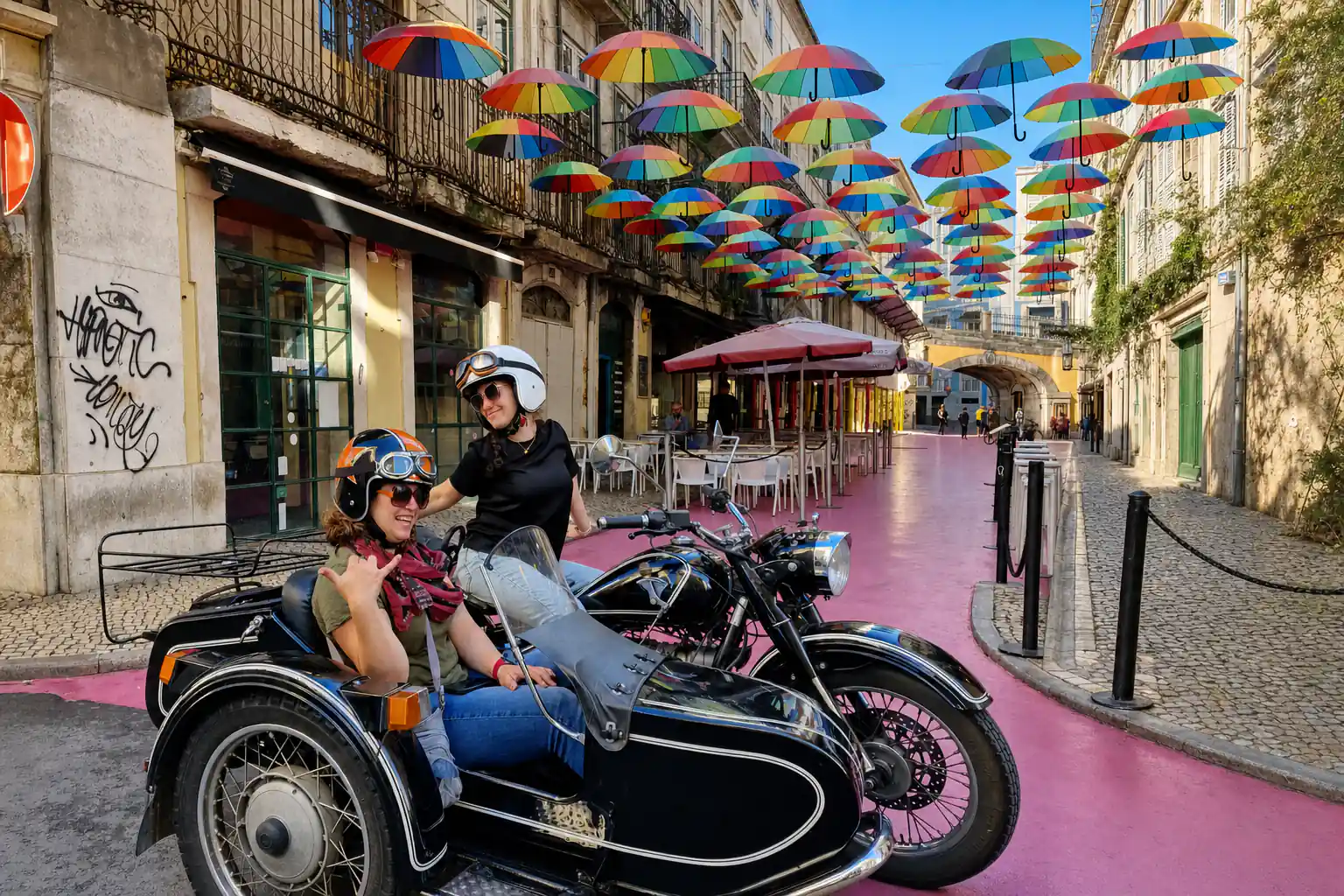
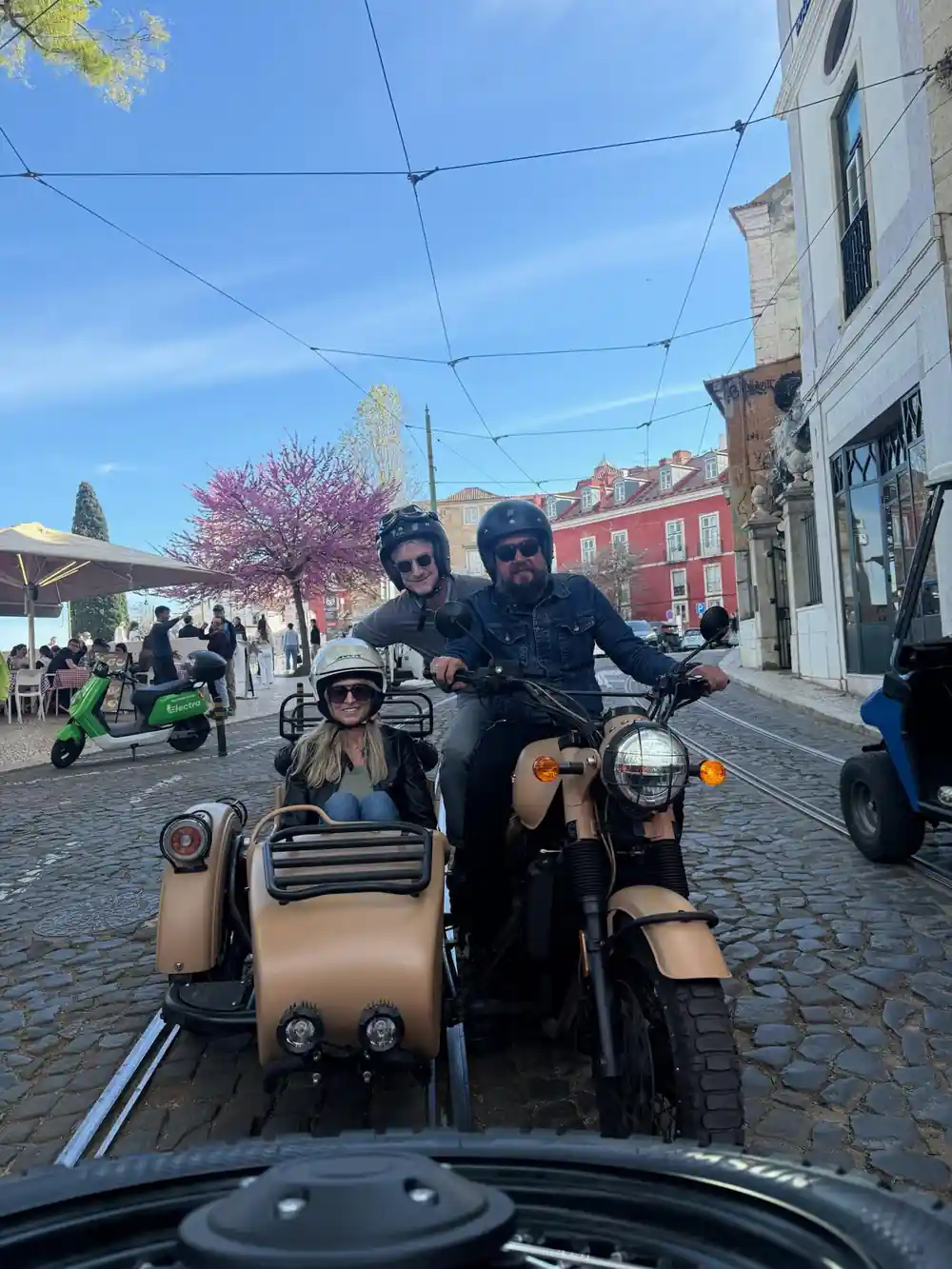
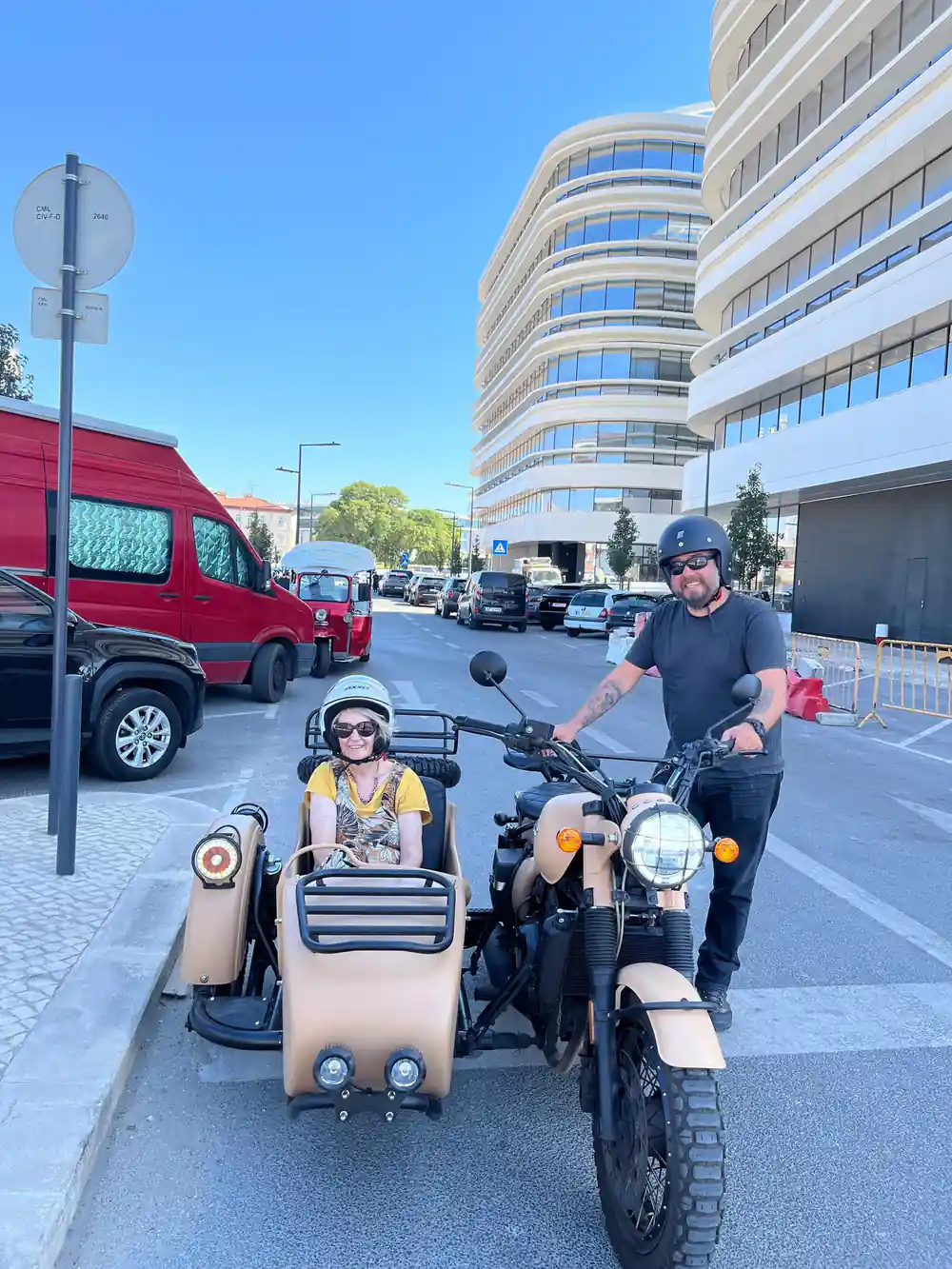
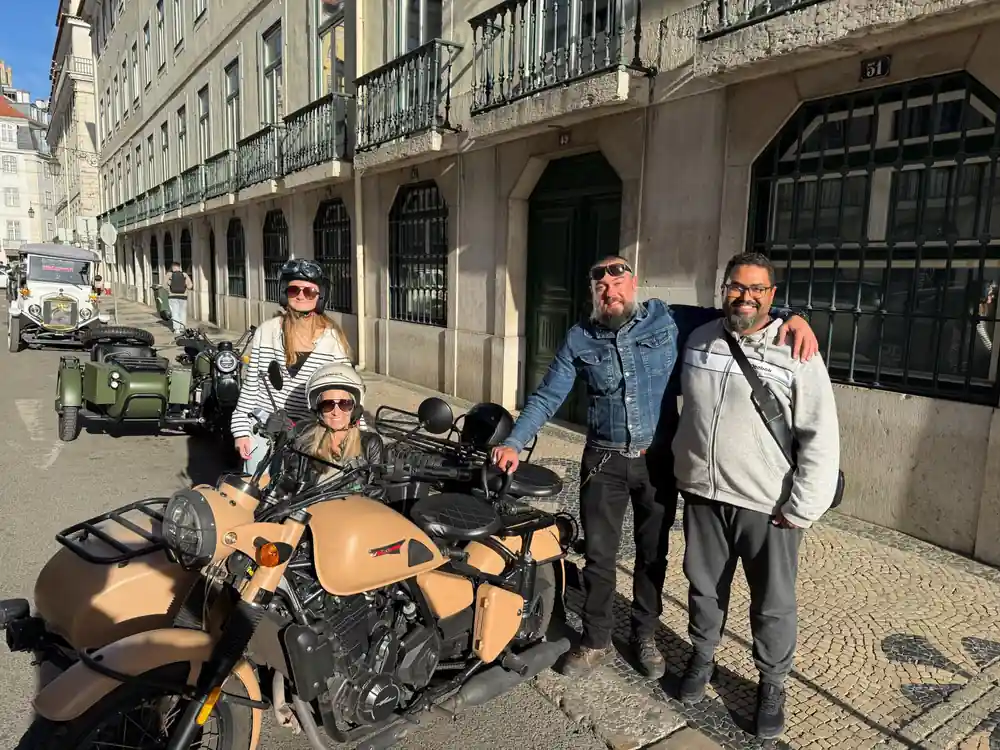
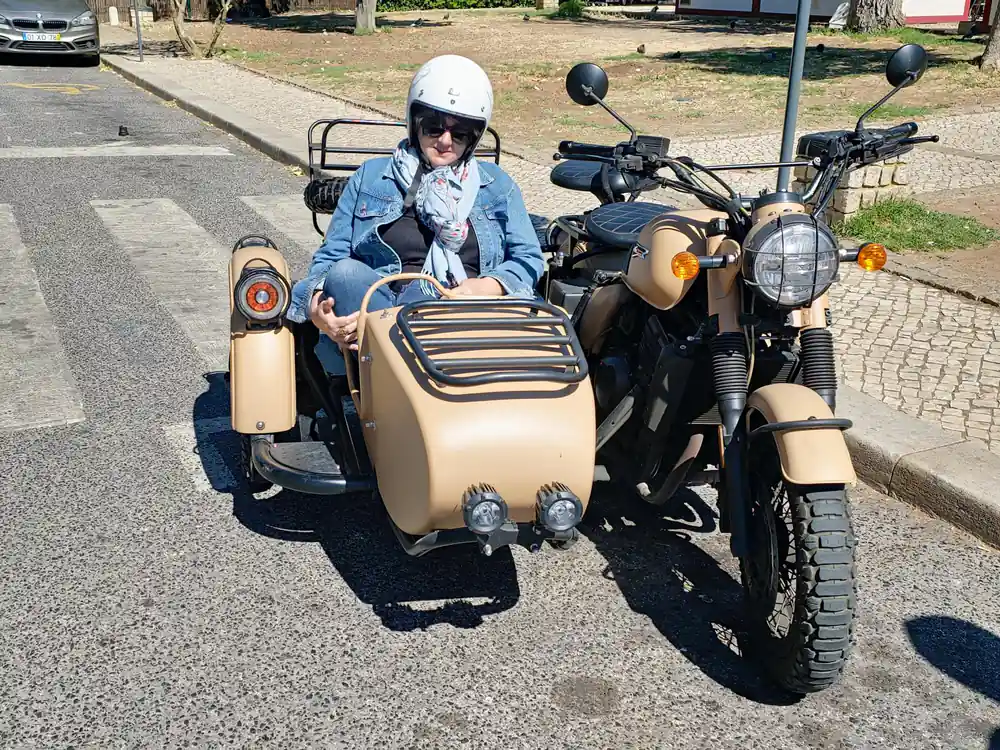
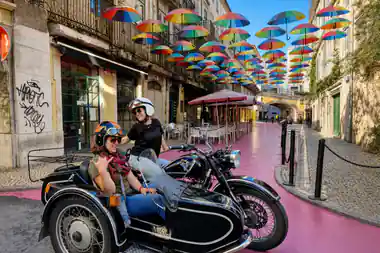
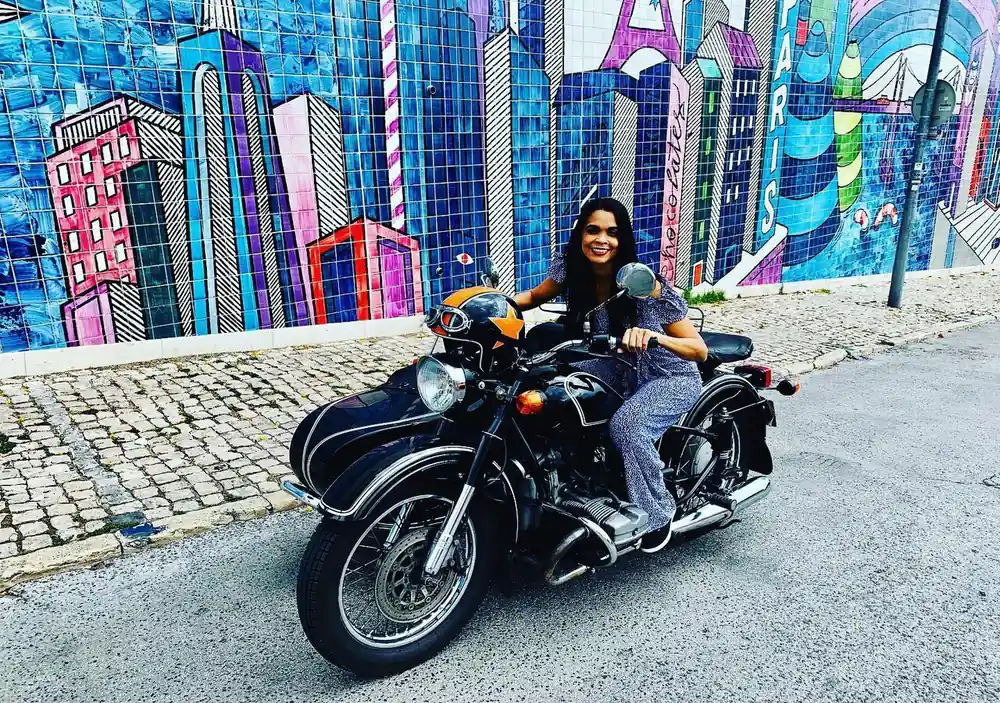
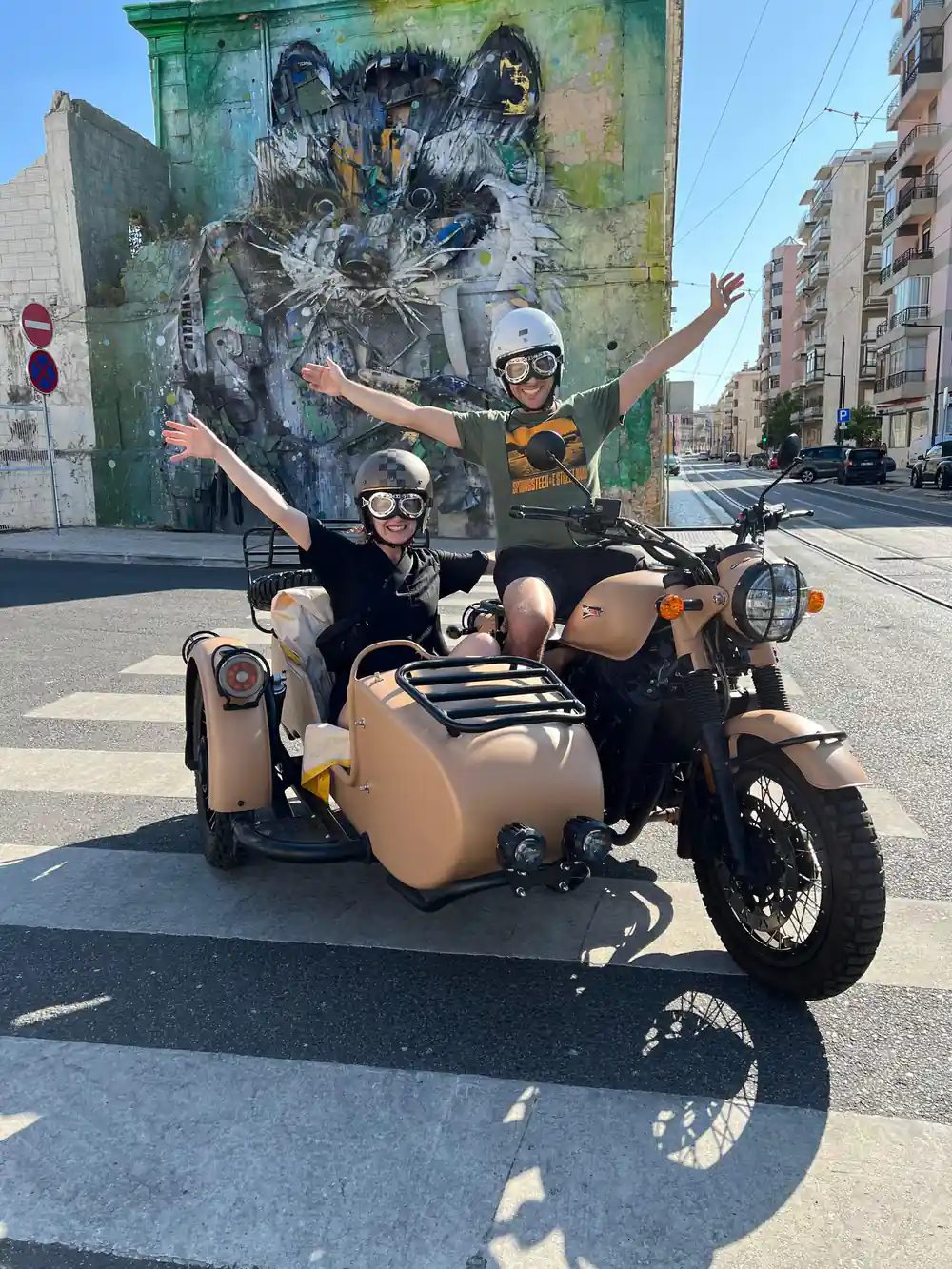
A sidecar tour is a vintage motorcycle outfit with a passenger chair on the side, driven by a guide, carrying one or two people. You sit outdoors at road level and the machine goes almost anywhere a small car goes plus a number of places one does not. It is a guided experience with a fixed duration rather than a way of getting from A to B.
A tuk-tuk in Lisbon is a small three-wheeled vehicle, usually electric now, with a bench seat under a roof and open sides. They are ubiquitous in the tourist quarters, they carry small groups, and they operate both as guided tours and as short hops uphill for people who have run out of legs.
The trams are public transport that happens to be historic. The famous route through the hill quarters uses genuinely old wooden cars on a line laid where the streets allowed, and it is used by residents going about their day as well as by visitors riding it end to end.
Where each one can go
Walking reaches everything, including the stairs, and that is not a small advantage in a city with as many stairs as this one. The limitation is entirely physical: the gradients are severe, the surface is uneven, and a full day of it in summer heat is genuinely demanding.
The tram goes where the rails go, which is a specific and historic route through some of the best streets in the city and nowhere else. As a way of experiencing one particular corridor it is unbeatable; as a way of seeing the city it covers a line rather than an area.
Tuk-tuks and sidecars occupy the same access category, and it is the useful one: narrow enough for the lanes, powered enough for the hills, small enough to stop at a terrace. Between the two the differences are of character and capacity rather than of where they can physically reach.
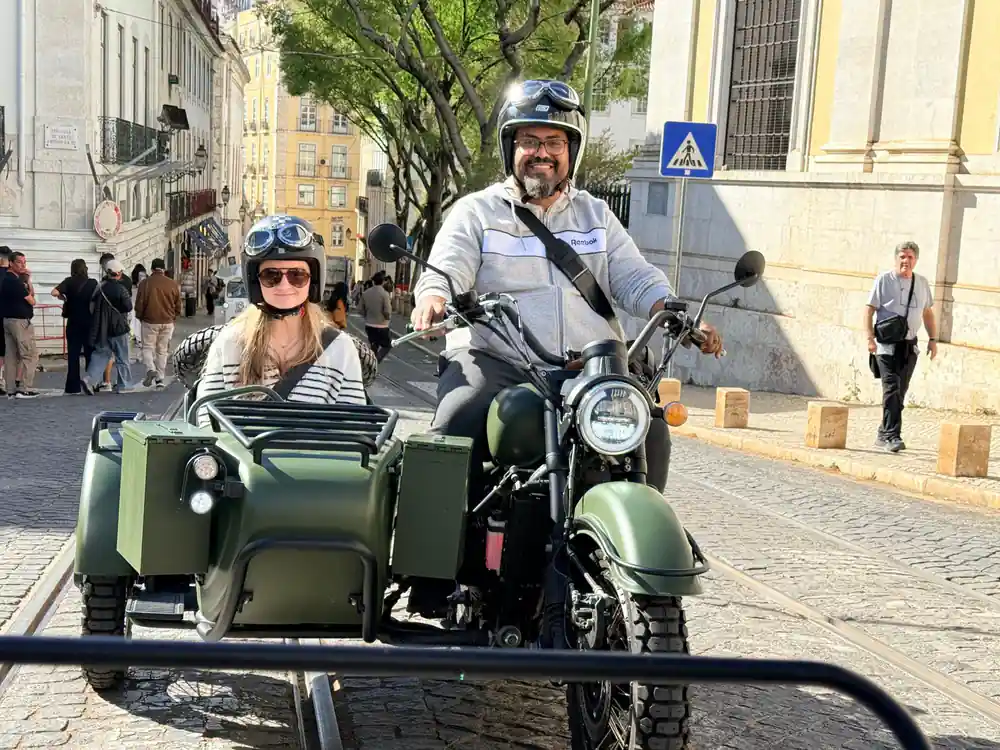
Four ways up the same hill, and only one of them is open at road level
What each one feels like
The sidecar is the most exposed and the most conspicuous. You are lower than everything else on the road, you feel the stone and the wind, and the machine draws attention constantly. It is a strong sensory experience and a slightly theatrical one, and people either love that immediately or take a few minutes to.
A tuk-tuk is calmer. You sit up on a bench under a roof, above the traffic rather than below it, with a driver in front and a group around you. The view is good and the ride is comfortable, and the character is closer to a small open bus than to a motorcycle.
The tram is a different pleasure entirely: wooden interiors, a bell, a route that squeezes between buildings with centimetres to spare, and, at busy times, a great many other people having the same experience simultaneously. Ridden early in the morning it is one of the best things in the city.
Practical differences that matter
Capacity is the first. A sidecar takes very few passengers, which makes it effectively private and makes it awkward for a group of five. A tuk-tuk takes a small group comfortably. The tram takes as many as fit, which on a summer afternoon is more than is pleasant.
Weather is the second. The tram is enclosed and the tuk-tuk is roofed, while the sidecar is open to whatever the sky is doing. Lisbon is kind about this for much of the year, but between November and March the open option needs a jacket and a certain attitude.
Luggage and mobility are the third. Getting into a sidecar chair is a low step down and a fold; a tuk-tuk is a normal step up onto a bench; a tram is a high step and often standing room only. If any of that matters for your party, it should decide the choice rather than the aesthetics.

Which to choose for a first visit
For a first visit with limited days, the argument favours a guided vehicle that covers several hills, because it gives you the geography quickly and shows you where things are in relation to each other. Both the sidecar and the tuk-tuk do that; the sidecar does it with more atmosphere and fewer people, the tuk-tuk with more shelter and more seats.
The tram is best treated as a thing to do rather than a way to see the city, and it is much better early in the day. Trying to use it as transport at peak times is how visitors end up with a poor opinion of it.
Walking should be part of any trip here, but it works best once you know where you are going. This is the strongest practical case for doing a vehicle tour early: everything you walk afterwards is chosen rather than stumbled into.
Which to choose on a return trip
If you already know Lisbon, the calculation changes. You do not need the orientation, so the question becomes which experience you actually want, and the sidecar's argument is strongest here: it is the one that is memorable as a thing in itself rather than as a means of covering ground.
A return visit is also the right time to be selective about viewpoints, and a small vehicle that stops on request is well suited to a list you have brought with you. Tell the driver what you already know and they will build around it.
And if you have done all of it before, the honest answer may be none of the above: pick one hill, walk it slowly, and sit on a terrace until the light goes. Lisbon rewards that too.
The open option, with the hills handled by the engine
from US$116Reserve now & pay later